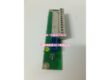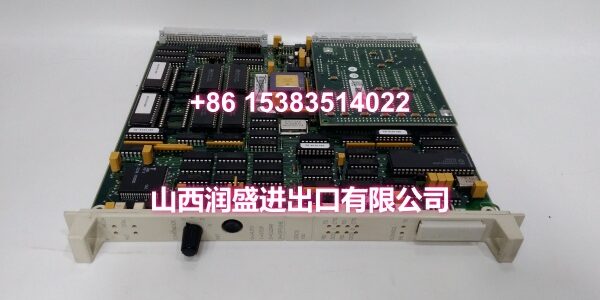
Product Core Brief
- Model: DSCS150
- Brand: ABB
- Series: ABB Advant Master Series
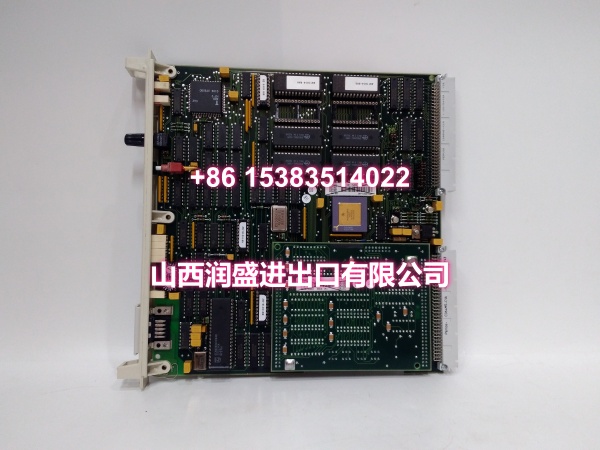
- Core Function: GCOM communication unit / processor module for enabling high-speed data transmission and device communication in ABB’s Advant Master distributed control systems.
- Product Type: GCOM Communication Unit / Processor Module
- Key Specs: 50MHz Processing Speed | 16MB Program Memory | 256MB Data Memory | 10/100 Mbps Ethernet | 18–56VDC Power Supply | Embedded Genius Bus Protocol Support | Self-Diagnostics
- Note: Condition: New Original (New Surplus). Origin: Sweden.
Key Technical Specifications
| Parameter | Value |
|---|---|
| Manufacturer Part Number | 57520001-FY |
| Device Model | |
| Device Type | GCOM Communication Unit / Processor Module |
| Series | ABB Advant Master Series |
| Function | High-speed communication and data processing |
| Processing Speed | 50MHz |
| Program Memory | 16MB |
| Data Memory | 256MB |
| Ethernet Interface | 10/100 Mbps |
| Power Supply | 18–56VDC (nominal 24VDC) |
| Operating Temperature | 0°C to +60°C |
| Humidity Range | 5% to 95% RH, non-condensing |
| Communication Protocol | Embedded Genius Bus protocol support |
| Weight | 0.2–0.585 kg (varies by source) |
| Features | Self-diagnostics, configurable filter response, open-circuit output settings |
| Typical Applications | Advant Master DCS, process control, power generation, oil & gas, chemical processing |
| Origin | Sweden |
| Condition | New Original (New Surplus) |
Product Introduction
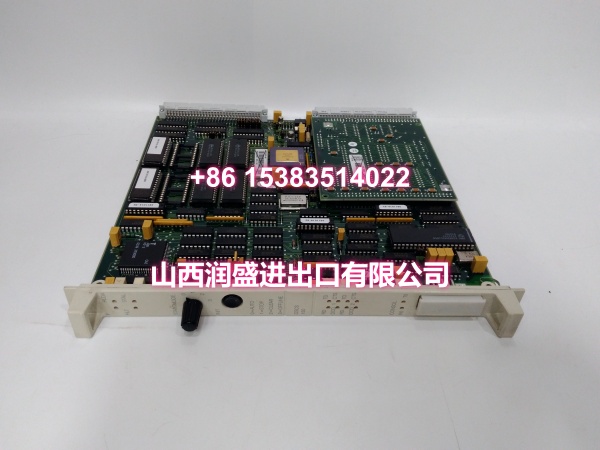
The ABB DSCS150 (order code 57520001-FY) is a GCOM communication unit and processor module designed for ABB’s Advant Master distributed control systems. It serves as a critical communication bridge between the DCS controller and field devices, enabling high-speed data transmission and real-time process control across the automation network.
In industrial environments where reliable communication and fast data processing are essential, the DSCS150 delivers robust performance with a 50MHz processor, 16MB of program memory, and 256MB of data memory. The module features a 10/100 Mbps Ethernet interface for network connectivity and embedded support for the Genius Bus protocol, allowing it to exchange I/O data with Genius Bus masters over the network. Its independent power supply design (18–56VDC, nominal 24VDC) provides flexibility in power distribution and tolerance for industrial voltage fluctuations.
The DSCS150 includes built-in self-diagnostics capable of detecting under-range, over-range, high alarm, and low alarm conditions. It features configurable filter response settings (software-adjustable from no filtering up to 1024ms) to stabilize received input signals, limit fluctuations, and provide more reliable readings. The module also supports configurable open-circuit output settings, allowing signals to enter under-range and over-range states when faults are detected.
For engineers maintaining or upgrading legacy Advant Master installations, the DSCS150 is a direct drop-in replacement for failed or end-of-life communication processor modules. Its standardized form factor and protocol compatibility ensure seamless integration with existing system architecture, avoiding costly redesign or reconfiguration.
QA & Testing SOP
Every unit goes through a structured verification process before shipment:
- Visual Inspection: Check the module housing for cracks, corrosion on connector pins, and physical damage to the PCB. Verify that communication port connectors (Ethernet, serial ports) are intact and undamaged.
- Connector Pin Verification: Inspect all communication and backplane connector pins for straightness, corrosion, or bending. Bent pins cause poor contact, leading to intermittent communication failures or data corruption.
- Power-On Self-Test: Apply 18–56VDC power and verify that the module’s status LED indicates normal operation. A red or flashing LED indicates a hardware fault, communication error, or configuration mismatch.
- Communication Loopback Test: Where test infrastructure allows, connect the module to a test network and verify bidirectional data transmission at 10/100 Mbps. Confirm that the module responds to bus commands and reports correct status information.
- Memory Verification: Verify that the module correctly reports 16MB program memory and 256MB data memory during initialization. Memory corruption or failure can cause erratic behavior or communication timeouts.
- Anti-Counterfeit & Packaging: Verify authenticity markings on the module body and PCB. Each unit is shipped in anti-static protective packaging with desiccant to prevent moisture absorption and connector oxidation during transit.
Installation Pitfalls & Guide
Installing or replacing a communication processor module requires careful attention to network configuration and electrical safety.
❗ Power-Down Before Installation: Always disconnect power to the rack or DIN rail section before removing or inserting the DSCS150 module. Communication processor modules should be replaced with power off to prevent communication bus disruption and potential damage to connected devices.
❗ Network Address Configuration: Before powering on the replacement module, verify that the network address (node ID) and communication parameters are correctly set via DIP switches, rotary switches, or software configuration. A duplicate address on the network will cause communication conflicts and may take down the entire network segment.
❗ Ethernet Cable Routing: Route Ethernet cables separately from power cables, maintaining at least 30cm distance to prevent electromagnetic interference. Use shielded Cat5e or Cat6 cables for industrial environments, with proper grounding at the control cabinet end. Avoid sharp bends in communication cables that could damage internal conductors.
❗ Power Supply Verification: Verify that the power supply voltage is within the 18–56VDC range before connecting the module. While the DSCS150 has wide input tolerance, sustained overvoltage or undervoltage can cause premature failure or erratic behavior.
❗ Firmware Version Matching: Before replacing a failed module, document the firmware version of the original unit. Installing a module with a significantly different firmware version may cause protocol incompatibility or require reconfiguration of the entire communication network. Match the firmware version as closely as possible to the original.
4-Step Replacement Guide:
- Pre-install: Document the existing network configuration (node addresses, protocol settings, IP addresses if applicable). Back up the DCS project. Verify the replacement module’s part number (57520001-FY) matches the original. Prepare anti-static protection and tools.
- Removal: Disconnect power to the rack. Wear an anti-static wrist strap. Disconnect all communication cables (Ethernet, serial) and note their positions. Loosen the module retention screws. Gently pull the module straight out of the backplane or DIN rail slot. Inspect the connector for damage.
- Install: Set the network address and communication parameters on the new module to match the original configuration. Align the module’s connector with the backplane or DIN rail slot. Push firmly and evenly until fully seated. Tighten retention screws. Reconnect communication cables in their documented positions. Reconnect power.
- Power-on Test: Apply power and verify the module’s status LED indicates normal operation. Enter the DCS diagnostic screen and confirm the module is recognized on the network with no fault codes. Verify communication with all connected devices on the network segment. Monitor the network for several minutes to confirm stable operation before returning to normal production.
Technical FAQ
1. What’s the difference between the DSCS150 and a standard communication module? The DSCS150 is a GCOM communication unit with integrated processor capabilities (50MHz CPU, 16MB program memory, 256MB data memory). It’s not just a passive communication interface—it actively processes data and manages communication protocols. Standard communication modules typically only handle data transmission without local processing power. The DSCS150’s embedded Genius Bus protocol support and self-diagnostics make it suitable for complex communication tasks in Advant Master systems.
2. What does “embedded Genius Bus protocol support” mean? The Genius Bus protocol is a fieldbus communication standard developed by GE Fanuc (now part of Emerson). The DSCS150’s embedded support for this protocol means it can directly communicate with Genius Bus I/O devices and masters without requiring a separate protocol converter or gateway. This allows the Advant Master system to integrate with Genius Bus field devices for distributed I/O applications.
3. Can the DSCS150 be used with ABB’s newer AC 800M or 800xA systems? The DSCS150 is designed for ABB’s Advant Master series systems. It is not directly compatible with newer platforms like AC 800M or 800xA, which use different communication architectures and module form factors. If you’re migrating to a newer system, you’ll need to use the corresponding communication modules designed for that platform.
4. What do the configurable filter response settings do? The DSCS150 allows software-adjustable filter response times ranging from no filtering up to 1024ms (with intermediate settings at 8, 16, 32, 64, 128, 256, and 512ms). These filters stabilize received input signals by averaging out rapid fluctuations and noise, providing more reliable and usable readings. Longer filter times provide more stable readings but slower response to actual signal changes. The appropriate setting depends on the application—fast processes need shorter filter times, while noisy environments benefit from longer filter times.
5. What’s the difference between New Surplus and Refurbished for communication processor modules? We supply this unit as New Original (New Surplus)—unused, original factory stock. This comes with a standard 12-month warranty. Refurbished communication processor modules carry risks including degraded connector contacts from previous insertion cycles, undocumented firmware version mismatches, latent memory corruption, and communication errors that may only manifest under high network load. For a module that serves as a critical communication and processing backbone, new surplus is the safer choice.
Need help verifying network configuration or troubleshooting a communication fault after DSCS150 replacement? Share your network topology, protocol type, and current error codes, and I’ll help you work through the diagnosis.