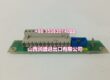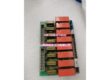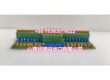
Product Core Brief
- Model: DSCA190V
- Brand: ABB
- Series: ABB Advant Master / S100 Series
- Core Function: 16-channel digital input module for acquiring switching signals from field devices (buttons, limit switches, proximity switches) and transmitting them to the DCS controller.
- Product Type: Digital Input Module
- Key Specs: 16 Independent Channels | Dry/Wet Contact Support | 24VDC ±20% Input Range | Individual Channel Isolation | LED Status Indicators | Rack-Mount Form Factor
- Note: Condition: New Original (New Surplus). Origin: Switzerland/Sweden.
Key Technical Specifications
| Parameter | Value |
|---|---|
| Manufacturer Part Number | 57310001-PK |
| Device Model | |
| Device Type | Digital Input Module |
| Series | ABB Advant Master / S100 Series |
| Function | Digital signal acquisition from field devices |
| Input Channels | 16 independent digital input channels |
| Input Signal Types | Dry contact (passive) and wet contact (active) |
| Input Voltage Range | 24VDC ±20% (for wet contact inputs) |
| Channel Isolation | Individual channel isolation |
| Operating Temperature | Industrial-grade (typically 0°C to +55°C) |
| Cooling Method | Passive (air-cooled) |
| Mounting | Rack-mount (Advant Master / S100 backplane) |
| Features | LED status indicators per channel, fault diagnostics |
| Typical Applications | Process control, power generation, oil & gas, chemical processing, manufacturing |
| Origin | Switzerland/Sweden |
| Condition | New Original (New Surplus) |
Product Introduction
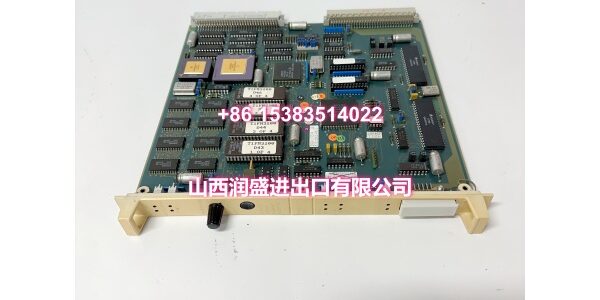
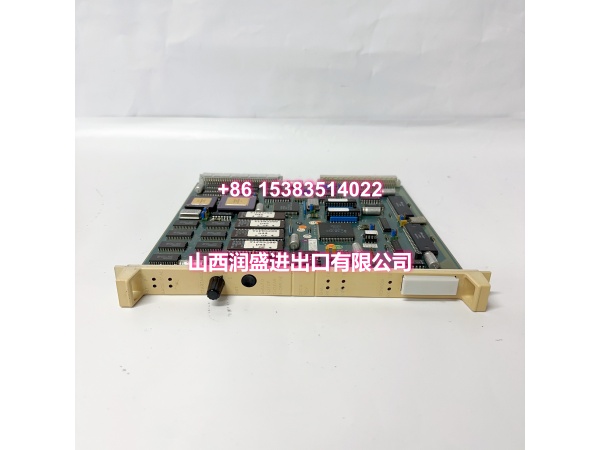
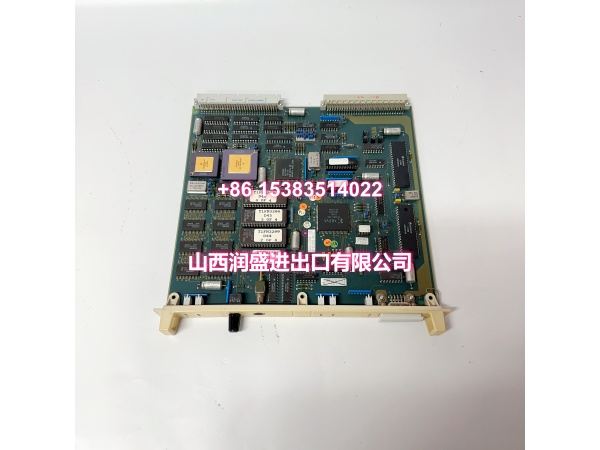
The ABB DSCA190V (order code 57310001-PK) is a 16-channel digital input module designed for ABB’s Advant Master and S100 distributed control systems. It serves as the critical interface between field switching devices and the DCS controller, accurately collecting status signals from buttons, limit switches, proximity switches, relay contacts, and other binary field devices, then transmitting them to the controller for process logic execution.
In industrial automation environments, reliable digital signal acquisition is the foundation of safe and efficient process control. The DSCA190V features 16 independent input channels, each electrically isolated from the others, preventing ground loop issues and cross-channel interference that can cause false triggering or signal corruption. The module supports both dry contact inputs (passive contacts requiring no external power) and wet contact inputs (active 24VDC signals), providing flexibility to interface with a wide variety of field devices without requiring additional signal conditioning hardware.
The module’s input voltage range of 24VDC ±20% provides tolerance for industrial power supply fluctuations, ensuring accurate signal acquisition even when field wiring experiences voltage drops or transient spikes. Per-channel LED status indicators allow maintenance personnel to quickly verify input states during troubleshooting, reducing mean time to repair (MTTR) and minimizing unplanned downtime.
For engineers maintaining legacy Advant Master or S100 installations, the DSCA190V is a direct drop-in replacement for failed or degraded digital input modules. Its standardized rack-mount form factor ensures compatibility with existing backplane configurations, avoiding costly mechanical rework or system redesign.
QA & Testing SOP
Every unit goes through a structured verification process before shipment:
- Visual Inspection: Check the module housing for cracks, corrosion on the backplane connector pins, and physical damage to the PCB. Verify that LED indicator lenses are intact and undamaged.
- Connector Pin Verification: Inspect the backplane connector pins for straightness, corrosion, or bending. Bent pins cause poor contact with the backplane, leading to intermittent channel failures or complete module communication loss.
- Channel Continuity Test: Using a multimeter or dedicated test fixture, verify that each of the 16 input channels responds correctly to applied dry and wet contact signals. Confirm that LED indicators illuminate appropriately for each channel state.
- Voltage Tolerance Test: Apply input voltages at the extremes of the 24VDC ±20% range (19.2VDC and 28.8VDC) to verify that the module correctly recognizes input states across the full specified voltage range.
- Isolation Verification: Verify electrical isolation between channels by testing for continuity between adjacent channel terminals. Any measurable continuity indicates a failed isolation barrier that could cause cross-channel interference.
- Anti-Counterfeit & Packaging: Verify authenticity markings on the module body and PCB. Each unit is shipped in anti-static protective packaging with desiccant to prevent moisture absorption and connector oxidation during transit.
Installation Pitfalls & Guide
Installing or replacing a digital input module requires careful attention to wiring and electrical safety.
❗ Power-Down Before Installation: Always disconnect power to the rack or I/O section before removing or inserting the DSCA190V module. While some ABB modules support hot-swap in specific configurations, digital input modules should be replaced with power off to prevent transient spikes from damaging the module or connected field devices.
❗ Wiring Verification: Before connecting field wiring to the new module, verify that each wire is correctly labeled and corresponds to the documented channel assignment. Miswired channels can cause false process signals, leading to incorrect control actions or safety system malfunctions. Cross-reference the wiring diagram before making any connections.
❗ Dry vs. Wet Contact Configuration: Ensure that the field devices connected to each channel match the expected input type. Dry contact devices (such as mechanical limit switches or relay contacts) should not have external voltage applied, while wet contact devices require the correct 24VDC supply. Mixing these incorrectly can damage the module or connected devices.
❗ Shielded Cable Grounding: For field wiring runs exceeding 30 meters or passing through electrically noisy environments, use shielded cables with the shield grounded at the control cabinet end only. Grounding at both ends creates ground loops that can introduce noise into the digital input signals.
❗ Channel Load Verification: Verify that the total current draw from all connected wet contact devices does not exceed the module’s per-channel and total current ratings. Overloading the module can cause overheating, premature failure, or inaccurate signal recognition.
4-Step Replacement Guide:
- Pre-install: Document the existing channel assignments and wiring configuration. Back up the DCS project. Verify the replacement module’s part number (57310001-PK) matches the original. Prepare anti-static protection and tools.
- Removal: Disconnect power to the I/O rack. Wear an anti-static wrist strap. Disconnect all field wiring from the terminal block and label each wire with its channel number. Loosen the module retention screws. Gently pull the module straight out of the backplane slot. Inspect the backplane connector for damage.
- Install: Align the new DSCA190V’s connector with the backplane slot. Push firmly and evenly until fully seated. Tighten retention screws. Reconnect field wiring to the correct terminals according to the documented channel assignments. Verify that all connections are secure and properly torqued.
- Power-on Test: Apply power to the rack. Verify that the module’s status LED indicates normal operation. Enter the DCS diagnostic screen and confirm that all 16 channels are recognized with no fault codes. Test each channel by actuating the corresponding field device and verifying that the DCS correctly reads the input state. Monitor for several minutes to confirm stable operation.
Technical FAQ
1. What’s the difference between dry contact and wet contact inputs? Dry contact inputs are passive—they connect to devices like mechanical switches or relay contacts that have no internal voltage source. The module provides the sensing current. Wet contact inputs are active—they connect to devices that provide their own 24VDC voltage signal (such as proximity switches or powered sensors). The DSCA190V supports both types, but you must ensure the field device type matches the expected input configuration for each channel.
2. Can the DSCA190V be used with 120VAC or 230VAC field devices? No. The DSCA190V is designed for 24VDC wet contact inputs and dry contact (voltage-free) inputs only. It cannot directly accept 120VAC or 230VAC signals. If you need to interface with AC-powered field devices, you must use an external relay or signal conditioner to convert the AC signal to a compatible 24VDC or dry contact signal before connecting to the DSCA190V.
3. What does “individual channel isolation” mean and why is it important? Individual channel isolation means each of the 16 input channels is electrically separated from the others and from the module’s internal circuitry. This prevents ground loops, cross-channel interference, and fault propagation—if one channel experiences a voltage spike or short circuit, it won’t affect the other channels. This is critical in industrial environments where field wiring runs through electrically noisy areas and where a single channel fault shouldn’t compromise the entire module.
4. Can the DSCA190V be used with ABB’s newer AC 800M or 800xA systems? The DSCA190V is designed for ABB’s Advant Master and S100 series systems. It is not directly compatible with newer platforms like AC 800M or 800xA, which use different backplane architectures and I/O module form factors. If you’re migrating to a newer system, you’ll need to use the corresponding digital input modules designed for that platform.
5. What’s the difference between New Surplus and Refurbished for digital input modules? We supply this unit as New Original (New Surplus)—unused, original factory stock. This comes with a standard 12-month warranty. Refurbished digital input modules carry risks including degraded connector contacts from previous insertion cycles, damaged isolation barriers from prior field wiring faults, and latent channel failures that may only manifest under specific operating conditions. For a module that serves as the interface between field devices and your control system, new surplus is the safer choice.