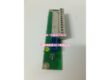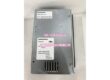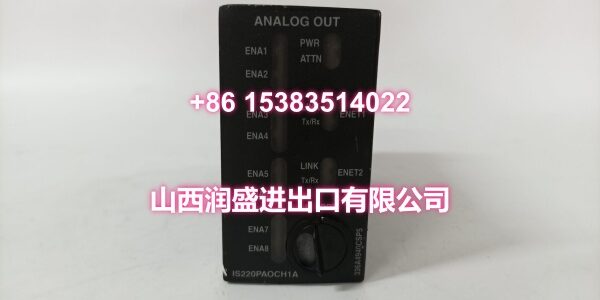
Product Core Brief
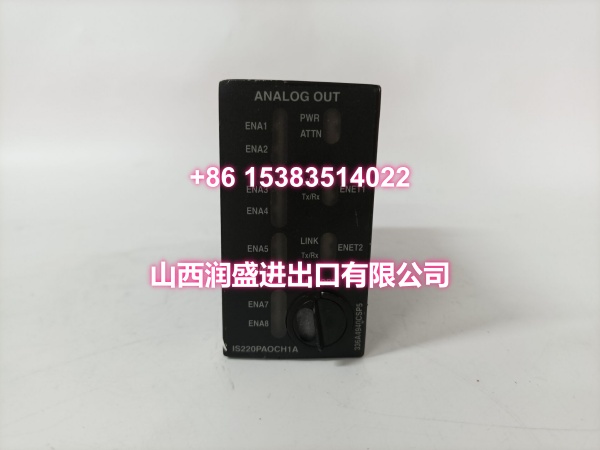
- Model: IS220PAOCH1A
- Brand: GE (General Electric)
- Series: Speedtronic Mark VIe — Analog Output I/O Pack (PAOA)
- Core Function: 8-channel analog output module for driving field actuators (control valves, fuel governors, damper actuators, etc.) in GE Mark VIe TMR/DCS turbine control systems.
- Product Type: Analog Output I/O Module
- Key Specs: 8 independent analog output channels | 4-20mA (≤500Ω) / 0-10V (≥10kΩ) | ±0.1% full-scale accuracy | 24VDC power (18-32VDC range) | Dual IONet Ethernet | Hot-swappable | Class 1 Div 2 / ATEX certified
- Condition: New Original / New Surplus
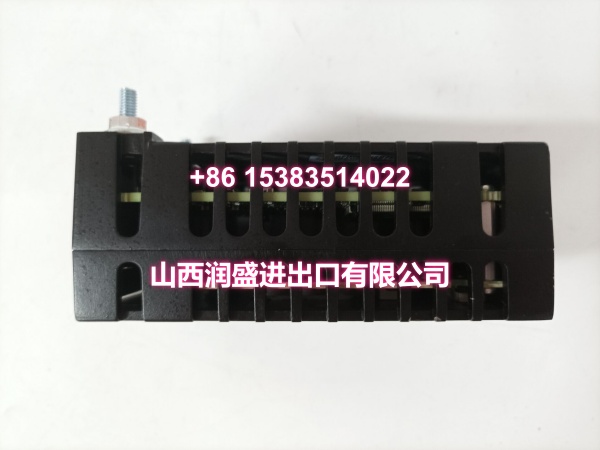
Product Introduction
The GE IS220PAOCH1A is an 8-channel analog output module from GE’s Mark VIe Speedtronic turbine control series. It serves as the critical interface between the Mark VIe controller’s dual IONet Ethernet network and field analog actuators such as control valves, fuel governors, damper actuators, and variable frequency drive (VFD) speed references. A failure in this module can directly prevent the controller from modulating critical process variables, potentially leading to turbine trip or unsafe operating conditions.
This module provides 8 independently isolated analog output channels, each supporting both current output (4-20mA DC, load capacity ≤500Ω) and voltage output (0-10V DC, load capacity ≥10kΩ) configurations. Output accuracy is ±0.1% of full scale within the normal operating temperature range, with a temperature drift of ≤0.01% full scale/°C. Each channel features built-in overcurrent protection that automatically limits current to a maximum of 30mA during short-circuit or abnormal load conditions, protecting both the module and external equipment. A single channel failure does not affect the operation of other channels, ensuring fault isolation.
The module communicates with the Mark VIe controller over dual redundant 100M full-duplex IONet Ethernet (RJ45) and is powered by a 24VDC input (allowable range 18-32VDC) with hot-swappable design, allowing maintenance without interrupting system operation. It features channel-level LED status indication, built-in self-test diagnostics, and remote monitoring via ControlST/ToolboxST software for rapid fault location. The module is certified for Class 1 Div 2 and ATEX hazardous area deployment, with an industrial-grade wide-temperature operating range of -40°C to 70°C.
Key Technical Specifications
| Parameter | Value |
|---|---|
| Manufacturer | GE (General Electric) Energy |
| Product Family | Speedtronic Mark VIe |
| Module Type | Analog Output I/O Pack (PAOA) |
| Output Channels | 8 independent analog outputs |
| Current Output | 4-20mA DC, load capacity ≤500Ω |
| Voltage Output | 0-10V DC, load capacity ≥10kΩ |
| Accuracy | ±0.1% of full scale (normal operating temperature) |
| Temperature Drift | ≤0.01% full scale/°C |
| Channel Isolation | Electrical isolation between channels, isolation voltage ≥250V AC |
| Update Rate | Up to 100Hz per channel (configurable) |
| Overcurrent Protection | Automatic current limiting, max 30mA |
| Power Input | 24VDC (allowable range 18-32VDC) |
| Power Consumption | ~6W at maximum load |
| Communication | Dual 100M full-duplex Ethernet (IONet redundancy) |
| Diagnostics | Channel-level LED status, built-in self-test, ControlST/ToolboxST remote diagnostics |
| Operating Temperature | -40°C to +70°C |
| Storage Temperature | -40°C to +85°C |
| Humidity | 5% to 95% RH (non-condensing) |
| Protection Rating | IP20 (control cabinet installation) |
| Certifications | Class 1 Div 2, ATEX, CE, UL (EN 61000 EMC compliance) |
| Mounting | DIN rail mount, hot-swappable |
Quality Control Process
Every IS220PAOCH1A module goes through a four-stage bench check before shipping. First, a visual inspection under magnification checks for cold solder joints, cracked traces, and DAC (Digital-to-Analog Converter) component damage — common failure points on analog output modules exposed to turbine-deck vibration and thermal cycling. Second, we power up the module on a verified Mark VIe test rack and confirm the 24VDC input circuit reads within spec using a Fluke 87V. Third, we individually stimulate each of the 8 analog output channels in both 4-20mA and 0-10V modes and verify output accuracy against a precision reference meter, confirming ±0.1% full-scale accuracy and overcurrent protection functionality. Fourth, we confirm both IONet Ethernet ports establish proper communication and that all channel-level LEDs indicate correct status. Finally, the module is sealed in anti-static foam with desiccant — no exceptions.
Replacement Pitfall Guide
❗ Current vs. voltage output configuration mismatch. The PAOA module supports both 4-20mA current output and 0-10V voltage output per channel. If the configuration in ControlST/ToolboxST doesn’t match the field wiring (e.g., the module is configured for 4-20mA but the field actuator expects 0-10V), the actuator will not respond correctly to control signals. Always verify the output mode setting in ControlST against the original configuration before swapping.
❗ Load impedance mismatch. Current output channels require a load impedance ≤500Ω, while voltage output channels require a load impedance ≥10kΩ. If the field load impedance is outside the specified range, the output signal will be distorted and the actuator will not respond accurately. Always verify the field load impedance matches the module’s output specification before connecting.
❗ Output scaling (range) configuration loss. The PAOA module’s output scaling (e.g., 4mA = 0% valve position, 20mA = 100% valve position) is configured in ControlST/ToolboxST. If this scaling is not properly restored after a module swap, the controller will send incorrect output values, potentially causing the actuator to move to an unsafe position. Always export the ControlST configuration from the original module before swapping.
❗ IONet redundancy configuration. The module supports dual redundant IONet Ethernet. If only one Ethernet cable is connected, you lose redundancy. In a trip-critical analog output application (e.g., fuel valve control), a single network fault could cause loss of control over all 8 analog output channels. Always verify both ENET1 and ENET2 LEDs are active after installation.
❗ Overcurrent protection not verified. The PAOA module features built-in overcurrent protection (max 30mA) on each channel. After a module swap, verify the overcurrent protection is functioning correctly by simulating a short-circuit condition on a test channel. A failed overcurrent protection circuit could allow excessive current to flow, potentially damaging both the module and the field actuator.
❗ Hot-swap procedure. While the module supports hot-swapping, always verify the redundant power supply and IONet communication are functioning correctly before removing the module. Removing a module without proper redundancy can cause a momentary loss of all 8 analog output channels, potentially triggering a turbine trip if critical actuators (e.g., fuel valves) lose their control signal.
Keep these in mind and you’ll cut 90% of rework time.
Compatibility Matrix & Benchmarks
| Original Model | Replacement / Successor Model | Compatibility Level | Migration Notes |
|---|---|---|---|
| IS220PAOCH1A (same part, new revision) | Direct | Verify firmware version and channel configuration in ControlST/ToolboxST | |
| Mark VIe equivalent PAOA (OEM surplus) | Direct | Must match 8-channel analog output and output mode/scaling configuration | |
| IS220PAICH1A | Not Compatible | PAICH1A is an analog input module; different function and pinout | |
| IS220PAICH2A | Partial | PAICH2A includes 2 analog output channels (0-20mA) but is primarily an analog input module; different channel count and configuration |
Benchmarks:
- 8 independently isolated analog output channels (4-20mA / 0-10V)
- ±0.1% full-scale accuracy with ≤0.01%/°C temperature drift
- Built-in overcurrent protection (max 30mA) per channel
- Dual redundant 100M IONet Ethernet with hot-swappable 24VDC power
- Class 1 Div 2 / ATEX certified for hazardous area deployment
Need me to pull up the ControlST/ToolboxST output scaling and mode configuration guide for the PAOA module? The output mode (current/voltage) and scaling setup are critical for a successful swap.