Product Core Brief
- Model: IS220PAICH1A
- Part Number: 336A4940CSP3
- Brand: General Electric (GE)
- Series: Mark VI (Speedtronic)
- Core Function: PAIC (Process Analog Input/Output) module — provides 10 configurable analog input channels (voltage or current) and 2 analog current outputs for gas/steam turbine control and industrial process applications.
- Product Type: PAIC Analog I/O Module (I/O Pack)
- Key Specs: 10 analog inputs (5V/10V/4-20mA) | 2 analog outputs (0-20mA, up to 200mA on first output) | Dual redundant Ethernet (IONet) | 27.4VDC power | TMR redundancy support | Hazardous location rated | Conformal coated
- Condition: New Original / New Surplus
Product Introduction
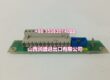
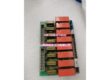
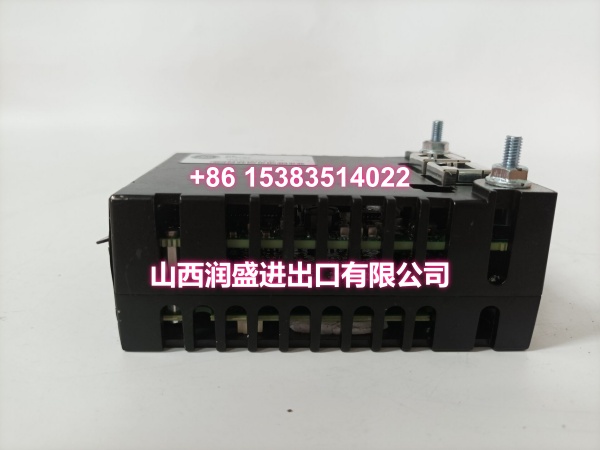
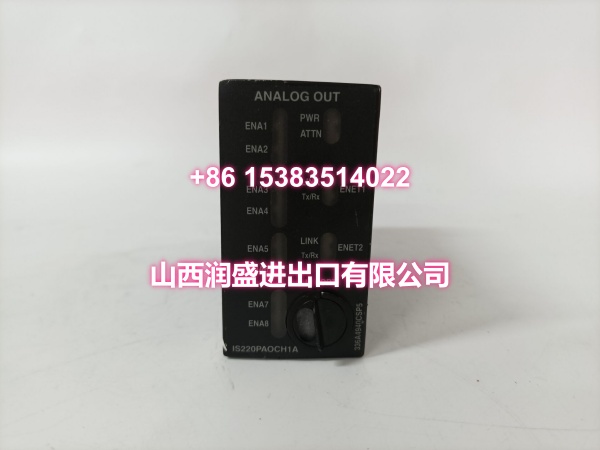
The GE IS220PAICH1A (part number 336A4940CSP3) is a PAIC (Process Analog Input/Output) module in GE’s Mark VI Speedtronic control system, serving as the critical interface for acquiring analog process signals and driving analog control outputs in gas turbine, steam turbine, and industrial process control applications. It converts field analog signals (voltage and current) into digital data for the Mark VI controller to process, and generates analog output signals to drive field devices such as control valves and actuators.
The module provides 10 analog input channels — the first 8 inputs are configurable as either 5V/10V voltage inputs or 4-20mA current loop inputs, while the last 2 inputs are configurable as 1mA or 4-20mA current inputs. For current loop inputs, the load terminal resistors are located on the terminal board, and the PAIC module senses the voltage across these resistors. The module also provides 2 analog current loop outputs (0-20mA range), with the first output supporting an extended range up to 200mA via additional hardware, making it suitable for driving high-current field devices.
The IS220PAICH1A communicates with the Mark VIe processor (such as the UCSAH or UCSBH series) via dual redundant 10/100Mbps Ethernet ports (IONet), ensuring that analog data continues to flow even if one network cable fails. The module connects to a compatible terminal board via a DC-37 pin connector, which routes the field wiring to screw terminals for easy installation and maintenance. Front-panel LEDs provide at-a-glance diagnostics for power, communication, and fault status.
The module supports two terminal board configurations:
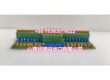
- IS200STAIH1A / IS200STAIH2A terminal boards — for simplex (single-pack) applications
- IS200TBAIH1C terminal board — for TMR (Triple Modular Redundant) applications
The module is approved for use in hazardous locations (Class 1, Division 2, Groups A, B, C, D; Class 1, Zone 2, Group IIC; ATEX Zone 2, Group IIC) and non-hazardous locations, making it suitable for installation in turbine enclosures and other areas where flammable gases or vapors may be present.
In turbine applications, the PAIC module is commonly used for:
- Reading temperature, pressure, and flow transmitter signals (4-20mA)
- Monitoring voltage signals from speed sensors and position transmitters (0-10V)
- Driving control valve positioners with 4-20mA output signals
- Providing analog feedback for fuel flow control and exhaust temperature monitoring
- Reading vibration and displacement sensor signals for machinery protection
- Outputting analog signals for turbine speed reference and load control
The module supports Triple Modular Redundant (TMR) operation — when three PAIC modules are configured in a TMR arrangement on a TBAIH1C terminal board, they vote on input and output states to provide fault-tolerant operation. If one module reads an analog input incorrectly or generates an incorrect output, the other two outvote it, preventing spurious control actions or missed safety signals.
Key Technical Specifications
| Parameter | Value |
|---|---|
| Manufacturer | General Electric (GE) |
| Product Type | PAIC Analog I/O Module (I/O Pack) |
| Part Number | 336A4940CSP3 |
| Series | Mark VI (Speedtronic) |
| Analog Input Channels | 10 (8 configurable 5V/10V/4-20mA, 2 configurable 1mA/4-20mA) |
| Analog Output Channels | 2 (0-20mA, first output supports up to 200mA) |
| Communication | Dual redundant 10/100Mbps Ethernet (RJ45, IONet) |
| Terminal Board Interface | DC-37 pin connector |
| Power Input | 27.4VDC minimum |
| Redundancy | Simplex and TMR supported |
| Operating Temperature | -30°C to +65°C |
| Hazardous Rating | Class 1, Div. 2, Groups A-D; Class 1, Zone 2, Group IIC; ATEX Zone 2 |
| Conformal Coating | Yes (for harsh environment protection) |
| Certifications | UL E207685, UL DEMKO 12 ATEX 1114875X, CE |
| Application | Turbine process control, analog signal acquisition, valve position control, temperature/pressure monitoring |
| Origin | USA |
Quality Control Process
Every IS220PAICH1A goes through a full functional bench test before it ships. We start with a visual PCB inspection — checking for cold solder joints, burnt traces, swollen capacitors, and verifying the integrity of the DC-37 pin connector and both RJ45 Ethernet jacks. We also inspect the conformal coating for any cracks or peeling that could compromise environmental protection.
Then we power it up on a regulated 27.4VDC supply and verify the power draw is within spec. We test each of the 10 analog input channels by applying known voltage signals (0V, 2.5V, 5V, 10V) and current signals (4mA, 12mA, 20mA), confirming the module correctly reads each input value via IONet. We verify the input accuracy is within ±0.1% of full scale as specified.
We test both analog output channels by commanding them to output specific current values (4mA, 12mA, 20mA) and measuring the actual output with a precision multimeter, confirming accuracy within spec. We test the extended range capability of the first output by commanding up to 200mA and verifying the output.
We test both Ethernet ports by connecting to a network switch and confirming link/activity LEDs illuminate on each port, then verifying the module registers on the IONet with its correct hardware ID. We test the redundant communication function by disconnecting one Ethernet cable and confirming the module continues to communicate over the remaining link without data loss. We verify the TMR voting function by connecting three PAIC modules together on a TBAIH1C terminal board and confirming they vote correctly on input and output states. We run a stability test by continuously reading all 10 inputs and driving both outputs for several hours, monitoring for drift or communication failures. We also verify the isolation between channels by measuring resistance between adjacent input/output channels and between I/O channels and module ground. Finally, we confirm the module is compatible with STAIH1A, STAIH2A, and TBAIH1C terminal boards by performing a physical connection test. Each unit ships in anti-static foam with a moisture barrier bag.
Replacement Pitfall Guide
❗ Verify the terminal board compatibility before installation. The IS220PAICH1A must be paired with either an IS200STAIH1A/IS200STAIH2A terminal board (for simplex applications) or an IS200TBAIH1C terminal board (for TMR applications). Using an incompatible terminal board can result in incorrect wiring pinouts, potentially causing analog signals to be misread or output signals to drive the wrong field devices — which could trigger incorrect turbine control actions or fail to respond to critical process changes. Always confirm the terminal board model matches the PAIC module specification.
❗ Confirm the input/output channel configuration matches your application. The PAIC module’s input and output channels are configured in the ToolboxST software. Each of the 10 inputs must be configured as either voltage (5V/10V) or current (4-20mA/1mA) mode to match the connected field device. If the replacement module’s channel configuration doesn’t match the original (e.g., wrong input type or different output scaling), the controller may read incorrect values or send wrong commands. After installing the replacement, verify the I/O configuration in ToolboxST matches your application’s I/O map.
❗ Check the TMR voting configuration if applicable. If the PAIC module is part of a TMR arrangement on a TBAIH1C terminal board, all three modules must be properly configured as voting members. If the replacement is configured as a simplex unit, it will not participate in the voting logic, leaving your system without analog I/O redundancy. Verify the TMR configuration in ToolboxST after installation.
❗ Don’t skip the analog input/output functional test. After installing the replacement, test each input channel by applying a known analog signal (using a calibrated signal generator or simulator) and confirming the module reads the correct value via IONet. Test each output channel by commanding a specific output value and measuring the actual output with a multimeter. A module that communicates correctly but reads inputs inaccurately or outputs incorrect values is a control hazard — particularly for critical functions like fuel flow control or turbine speed regulation.
❗ Verify the terminal resistor configuration for current inputs. For current loop inputs (4-20mA), the load terminal resistors are located on the terminal board, not on the PAIC module itself. Ensure the terminal board has the correct resistors installed for the current range you’re using. Missing or incorrect resistors will cause the module to read incorrect current values.
❗ Watch for Ethernet cable routing issues. The dual Ethernet ports provide redundant communication, but both cables must be routed through separate physical paths to provide true redundancy. If both cables run through the same cable tray and that tray is damaged, you lose both communication paths simultaneously. Route the primary and backup Ethernet cables through separate conduits or cable trays.
Keep these in mind and you’ll cut 90% of rework time.
Compatibility Matrix & Benchmarks
| Original Model | Replacement / Successor Model | Compatibility Level | Migration Notes |
|---|---|---|---|
| IS220PAICH2A | Direct | Mark VIe version; drop-in compatible with updated features | |
| IS220PAICH1B | Direct | Later revision; verify firmware match | |
| IS420PAICH1A | Needs Adaptation | Mark VIeS variant; requires I/O network migration | |
| Separate AI + AO packs | Functional Equivalent | Two separate modules replace one PAIC |
- Input Channels: 10 analog inputs (8 configurable 5V/10V/4-20mA, 2 configurable 1mA/4-20mA)
- Output Channels: 2 analog outputs (0-20mA, first output up to 200mA)
- Redundancy: Simplex and TMR supported
- Communication: Dual Ethernet ports for redundant IONet connectivity
Need me to pull up the specific STAIH1A/STAIH2A/TBAIH1C terminal board specifications and the Mark VI processor modules this PAIC integrates with? The terminal board matching and TMR voting configuration are critical for reliable analog I/O operation.