Product Core Brief
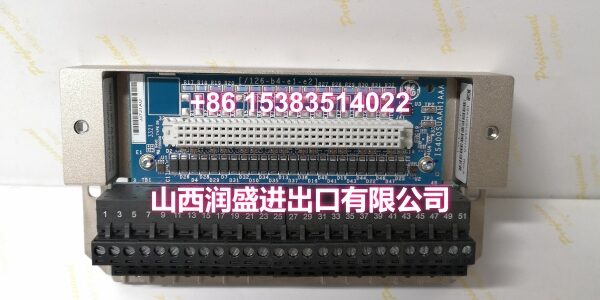
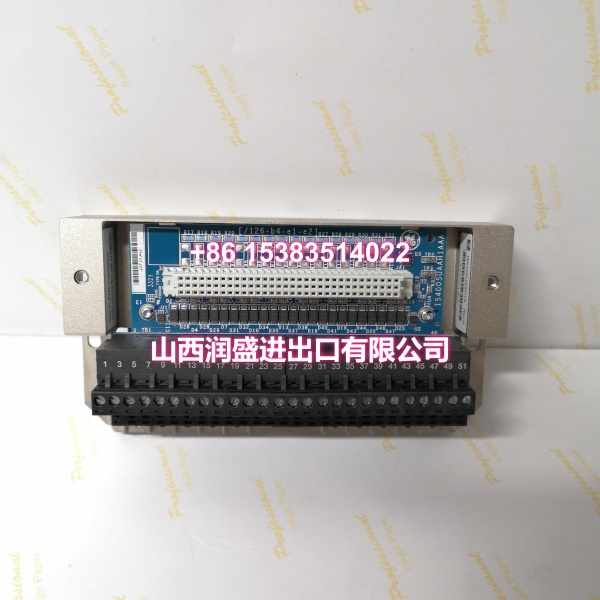
- Model: IS430SNUAH1A
- Brand: General Electric (GE)
- Series: Mark V / Mark VIe
- Core Function: Scales and conditions analog signals for gas turbine control systems.
- Product Type: RST Analog I/O Board (TCQA)
- Key Specs: -30°C to 65°C operating range | 4-20mA, LVDT, thermocouple, servo valve I/O | Dual network interface support
- Condition: New Original / New Surplus
Product Introduction
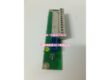
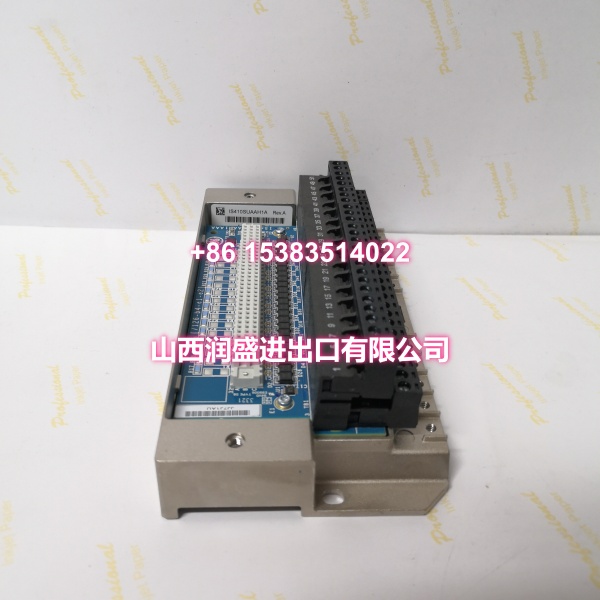
The GE IS430SNUAH1A is an RST analog I/O board from GE’s Mark V/VIe series, purpose-built for gas turbine control. It pairs a universal processor board with a device-specific data acquisition board to digitize, scale, and condition analog signals from field instruments, running local algorithms and communicating directly with the Mark VIe controller.
This unit handles LVDT inputs, servo valve outputs, thermocouple signals, 4-20mA loops, vibration inputs, and generator/line signals — all critical for turbine trip logic and process regulation. Its onboard temperature sensors are accurate to within 2°C, with each I/O block’s temperature logged to the database for alarm triggering.
Key Technical Specifications
| Parameter | Value |
|---|---|
| Manufacturer | General Electric (GE) |
| Product Type | RST Analog I/O Board (TCQA) |
| Series | Mark V / Mark VIe |
| Operating Temperature | -30°C to 65°C (free convection cooling) |
| Temperature Sensor Accuracy | ±2°C |
| Supported I/O Signals | LVDT, servo valve, thermocouple, 4-20mA, vibration, pulse, voltage, relay driver |
| Connectors | 2PL (power distribution), 3PL (data bus to STCA/TCQE), JE (generator/line signals), JD (trip signals) |
| Communication | Dual network interfaces; sends hardware/firmware ID packets to main controller |
| Application | Gas turbine control systems |
| Origin | USA |
Quality Control Process
Every IS430SNUAH1A goes through a hands-on bench test before it ships. First, we visually inspect the PCB for cold solder joints, burnt traces, or corrosion — turbine environments are brutal on older boards. Then we power it up on a controlled DC supply and verify the 2PL power rail voltages are within spec.
Next, we inject known 4-20mA signals through the JB connector and measure the conditioned output on the 3PL data bus with a Fluke multimeter, confirming scaling accuracy. We also verify the thermocouple input channels and LVDT excitation voltage. Finally, we check the dual network interface communication by confirming the board sends its hardware ID packet to the controller. Each unit ships in anti-static foam with a moisture barrier bag.
Replacement Pitfall Guide
❗ Verify your series compatibility before ordering. This board is listed under both Mark V and Mark VIe documentation. The physical form factor may be identical, but firmware and backplane communication protocols can differ between generations. Confirm your controller’s firmware revision before swapping.
❗ Watch the connector pinouts. The JD connector carries trip signals — if you’re cross-wiring from a different TCQA revision, a pinout change can bypass safety logic. Always compare the wiring diagram on your existing board’s label against the replacement.
❗ Check total backplane power draw. The 2PL connector distributes power from the TCPS board to the entire I/O core. Adding a new board without verifying the remaining headroom can cause brownouts on adjacent modules.
❗ Don’t ignore the temperature alarm threshold. The onboard sensor logs to the controller database. If your replacement board reports a different baseline temperature, you may get nuisance alarms or, worse, miss a real overtemp event. Calibrate after installation.
Keep these in mind and you’ll cut 90% of rework time.
Compatibility Matrix & Benchmarks
| Original Model | Replacement / Successor Model | Compatibility Level | Migration Notes |
|---|---|---|---|
| IS430SNUAH1AC | Direct | Suffix “C” variant; verify firmware revision match | |
| IS430SSUAH1A | Needs Adaptation | Different signal configuration; check I/O mapping | |
| GE Mark V TCQA (legacy) | Direct | Drop-in for Mark V RST cores | |
| GE Mark VIe I/O Pack | Direct | Native Mark VIe compatibility |
- Signal Conditioning Range: 4-20mA analog loops, ±10V DC inputs, thermocouple types J/K/T/E
- Communication Throughput: Dual redundant Ethernet interfaces with hardware ID packet response