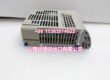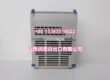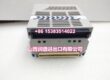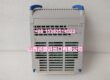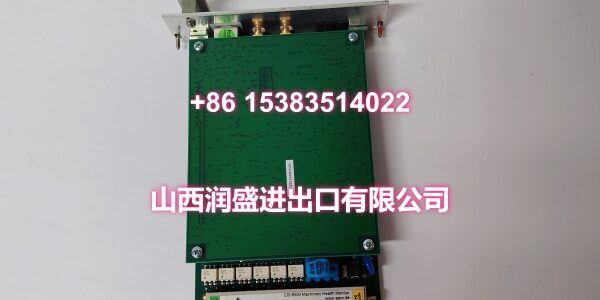
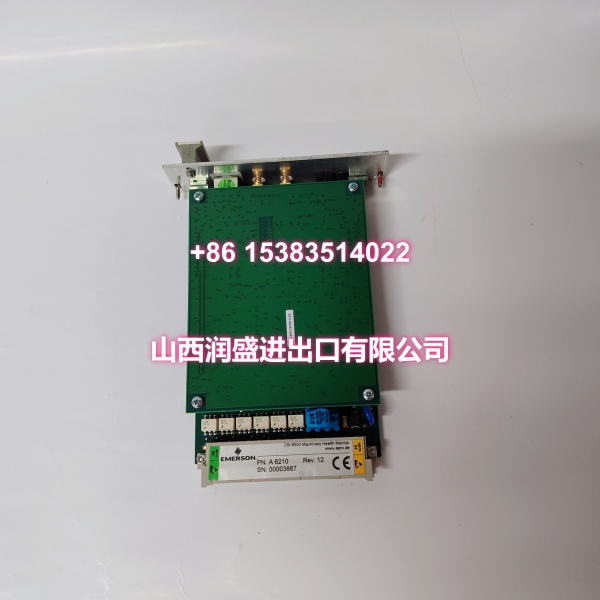
Product Core Brief
- Model: A6210
- Brand: Emerson (AMS 6500 Mechanical Health Monitor Series)
- Series: AMS 6500 Protection Module Family
- Core Function: Dual-channel monitor for turbomachinery protection — configurable in three modes: thrust position monitoring (prevents rotor-to-shell contact), differential expansion monitoring (tracks thermal growth mismatch), or average rod drop monitoring (detects rider band wear in reciprocating compressors).
- Product Type: AMS 6500 Dual-Channel Thrust Position / Differential Expansion / Rod Position Monitor
- Key Specs: Dual-Channel, 3U Single-Slot Module | Hot-Swappable | API 670 & API 618 Compliant | ≤40ms Response Time | Buffered/Proportional 0/4-20mA & 0-10V Outputs | Built-in Software Linearization | Self-Test Diagnostics | Compatible with EPRO 642X Series Sensors
- Condition: New Original / New Surplus
Key Technical Specifications
- Module Model: A6210 (Dual-Channel Thrust Position / Differential Expansion / Rod Position Monitor)
- Operating Modes (Configurable per application):
- Thrust Position Mode: Monitors axial shaft position by comparing measured displacement against alarm setpoints to trigger relay outputs — critical for preventing rotor-to-shell contact in turbines
- Differential Expansion Mode: Measures the relative difference between casing-mounted and shaft-mounted displacement sensors during turbine startup thermal transients — supports series/complementary or conical/ramp measurement patterns
- Average Rod Drop Mode: Monitors rider band wear in horizontal reciprocating compressors by tracking piston rod position decline over time — configurable with wear coefficients or direct rod movement readout
- Response Time: ≤40ms for thrust position detection — meets API 670 requirements for rapid axial movement detection to minimize rotor damage risk
- Channel Configuration: Dual-channel, 3U single-slot form factor — occupies half the rack space of traditional 4-channel 6U cards
- Output Signals: Front and rear buffered/proportional outputs — 0/4-20mA and 0-10V analog outputs for connection to DCS, PLC, or data acquisition systems
- Sensor Compatibility: Works with EPRO eddy current displacement sensors (6422, 6423, 6424, 6425 series) and CON xxx driver units
- Self-Diagnostics: Built-in self-test monitors hardware integrity, power input, hardware temperature, and sensor/cable connections — alerts to faults before they compromise protection
- Software Linearization: Built-in linearization simplifies post-installation sensor adjustment — no external calibration hardware required
- Standards Compliance: API 670 (machinery protection) and API 618 (reciprocating compressor) compliant
- Hot-Swap Capability: Supports hot insertion and removal without powering down the AMS 6500 chassis — critical for minimizing downtime during maintenance
- System Integration: Seamlessly integrates with Emerson DeltaV and Ovation process automation systems — includes pre-configured DeltaV Graphic Dynamos and Ovation Graphic Macros for rapid operator display development
- Physical Dimensions: 3U height, single-slot width (standard AMS 6500 module form factor)
- Weight: ~2kg (per module)
- Operating Voltage: 24V DC (supplied by AMS 6500 chassis backplane)
- Operating Temperature: Standard industrial range (chassis-dependent)
- MTBF: >1,000,000 hours (per industry standards)
Product Introduction
The A6210 is a dual-channel protection monitor in Emerson’s AMS 6500 Mechanical Health Monitor family — a system trusted across power generation, oil & gas, petrochemical, and heavy industry for safeguarding critical rotating and reciprocating machinery.
In turbomachinery, axial thrust position is one of the most critical measurements you can make. When a turbine’s thrust bearing begins to wear or a hydraulic anomaly pushes the rotor axially, the rotor can contact the stationary shell within milliseconds — causing catastrophic damage. The A6210 in thrust position mode continuously monitors the axial position of the shaft using non-contact eddy current sensors mounted at the thrust collar or shaft end. If the measured position exceeds the alarm setpoint, the module drives relay outputs to trip the machine — all within 40ms or less, meeting API 670 requirements for machinery protection.
During turbine startup and shutdown, the casing and rotor expand at different rates due to thermal gradients. The A6210’s differential expansion mode measures this relative growth by comparing signals from casing-mounted and shaft-mounted sensors. If the differential expansion exceeds safe limits — indicating that the rotor is growing faster than the casing (or vice versa) — the module triggers an alarm or trip to prevent rubbing damage. The module supports both series/complementary and conical/ramp measurement patterns to accommodate different turbine designs.
For reciprocating compressor applications, the A6210 can be configured in average rod drop mode. Over time, the rider bands that center the piston in the cylinder wear due to gravity and friction. As the bands wear, the piston sags lower in the cylinder bore — and if it sags too far, the piston can contact the cylinder wall, causing progressive damage and eventual failure. The A6210 monitors piston rod position via eddy current sensors and tracks the average rod drop over time. You can configure the module with wear coefficients to translate rod drop into actual rider band wear percentage, or read raw rod movement directly. When wear exceeds the trip threshold, the module triggers a shutdown to prevent catastrophic compressor damage.
The A6210’s dual-channel, 3U single-slot design is a significant space saver — it provides two independent monitoring channels in half the rack space of traditional 4-channel 6U cards. This matters when you’re fitting protection for multiple machines into a compact 19-inch AMS 6500 chassis.
Built-in self-diagnostics continuously monitor the module’s hardware, power input, temperature, and sensor/cable connections — alerting you to faults before they compromise protection. The built-in software linearization feature simplifies post-installation sensor adjustment, eliminating the need for external calibration hardware.
For system integrators, the A6210’s integration with DeltaV and Ovation is a major advantage. Pre-configured graphic dynamos and macros mean you can get operator displays up and running quickly, without building graphics from scratch. The AMS software suite provides maintenance teams with advanced predictive and performance diagnostics — helping you identify machine faults early, before they cause unplanned downtime.
Bottom line: if you’re protecting steam turbines, gas turbines, or reciprocating compressors in a power plant, refinery, or chemical facility, the A6210 is the AMS 6500 monitor you spec for thrust, differential expansion, or rod drop protection.
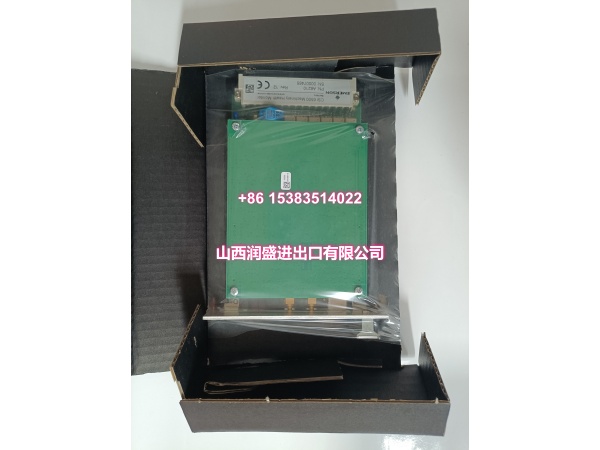
QA & Testing SOP
Protection monitors are the last line of defense for critical machinery — a failed monitor can leave a turbine unprotected or cause a nuisance trip. Our validation protocol tests both measurement accuracy and protection functionality:
- Physical & Anti-Counterfeit Inspection: We verify the OEM chassis integrity, check for authentic Emerson/EPRO labeling and correct part number (A6210), and inspect the front-panel connectors and backplane pins for bent pins, corrosion, or wear.
- Power-On Self-Test (POST): The module is inserted into an AMS 6500 chassis and powered up. We verify that the POST completes successfully, with no fault LEDs illuminated and the module registering correctly with the chassis backplane.
- Sensor Simulation Test: We connect EPRO 642X series eddy current sensors (or a calibrated sensor simulator) to each channel and verify that the module reads displacement values accurately across the full measurement range — confirming that the analog-to-digital conversion and linearization are functioning correctly.
- Thrust Position Mode Test: We configure the module for thrust position mode and simulate axial shaft movement. We verify that alarm and trip setpoints trigger correctly at the configured thresholds, with response time ≤40ms — confirming API 670 compliance.
- Differential Expansion Mode Test: We configure the module for differential expansion mode and simulate casing/shaft thermal growth scenarios (series/complementary and conical/ramp patterns). We verify that the module correctly calculates and reports the differential expansion value and triggers alarms/trips at configured thresholds.
- Rod Drop Mode Test: We configure the module for average rod drop mode and simulate gradual piston rod position decline. We verify that the module correctly tracks average rod drop over time and triggers alarms/trips when the wear threshold is exceeded.
- Output Signal Verification: We verify that the front and rear buffered/proportional outputs (0/4-20mA and 0-10V) accurately track the measured displacement values — confirming that the analog outputs are correctly scaled and calibrated for connection to DCS/PLC systems.
- Self-Diagnostics Test: We simulate sensor open/short circuit, power supply anomalies, and internal hardware faults — verifying that the module’s self-test correctly detects and reports each fault condition.
- Hot-Swap Verification: We remove and reinsert the module while the AMS 6500 chassis is powered and verify that adjacent modules remain unaffected and that the module re-registers correctly after reinsertion.
- DeltaV/Ovation Integration Test (Sample Batch): For batch validation, we verify that the module integrates correctly with Emerson DeltaV and Ovation systems — confirming that pre-configured graphics display correct measurement values and alarm states.
- Anti-Static Packaging: After validation, the module is sealed in industrial-grade ESD shielding bags with connector protectors installed for transit.
Installation Pitfalls & Guide
Protection monitor installation mistakes can leave machinery unprotected or cause nuisance trips. These are the critical traps to avoid:
- ❗ Mode Configuration: The A6210 must be configured for the correct operating mode (thrust position, differential expansion, or rod drop) before installation. Installing the module in the wrong mode will cause incorrect measurements and potentially dangerous protection gaps. Verify the mode configuration in the AMS 6500 software before downloading to the module.
- ❗ Sensor Compatibility: The A6210 is designed for use with EPRO 642X series eddy current displacement sensors and CON xxx drivers. Using incompatible sensors (e.g., Bently Nevada probes with different scaling) will cause measurement errors. Verify sensor part numbers and scaling factors before connecting.
- ❗ Setpoint Calibration: Alarm and trip setpoints must be calibrated based on the specific machine’s design limits — not copied from a generic template. Incorrect setpoints can cause nuisance trips (set too tight) or leave the machine unprotected (set too loose). Consult the machine manufacturer’s specifications and API 670/API 618 guidelines when setting thresholds.
- ❗ Redundancy for Critical Applications: For extremely critical safety applications (e.g., large steam turbines), Emerson recommends redundant sensors with voting logic — or upgrading to the A6250 monitor, which provides triple-redundant thrust protection on a SIL 3 overspeed protection system platform. The A6210 is a dual-channel module but does not provide SIL 3 triple redundancy.
- ❗ Cable Routing: Eddy current sensor cables are susceptible to electromagnetic interference. Route sensor cables away from power cables, VFD output cables, and other high-EMI sources. Use shielded cables with proper grounding to minimize noise.
- ❗ Thermal Expansion Reference: For differential expansion measurements, the reference sensor (casing-mounted) must be installed at the correct location per the turbine manufacturer’s specifications. An incorrectly positioned reference sensor will produce erroneous differential expansion readings.
- ❗ Rod Drop Sensor Mounting: For rod drop monitoring, the eddy current sensor must be mounted to measure vertical piston movement accurately. Misaligned sensors will produce incorrect rod drop readings and may miss rider band wear entirely.
- ❗ Hot-Swap During Active Protection: While the module supports hot-swapping, removing an active protection monitor from a live chassis temporarily removes protection for that machine. Coordinate module replacement with operations and verify that redundant protection (if available) is active before removing the module.
Replacement Procedure:
- Pre-Install: Back up the AMS 6500 configuration. Verify that the replacement A6210 is configured for the correct operating mode (thrust/differential expansion/rod drop) and that setpoints match the existing configuration. If replacing an active module, verify that the machine can tolerate a brief protection gap or that redundant protection is available.
- Removal: Release the module’s front-panel locking mechanism and gently pull it straight out of the AMS 6500 chassis slot. If the module is actively protecting a machine, be aware that protection is temporarily lost for that channel.
- Install: Insert the new A6210 into the same chassis slot, ensuring it mates correctly with the backplane connector. Engage the front-panel locking mechanism. The module will power up and begin its POST sequence.
- Configuration Download: Download the saved configuration to the new module via the AMS 6500 software. Verify that the module registers correctly and that all channels show healthy status.
- Verification: Verify that measured values are correct by comparing against known reference values or live sensor readings. Verify that alarm and trip setpoints are correctly loaded. Perform a setpoint test (if safe to do so) to confirm that relay outputs trigger correctly.
- Restoration: If the module was replaced during operation, verify that protection is fully restored and that the AMS 6500 system shows the module as healthy. Monitor the module for at least 30 minutes to confirm stable operation.
Technical FAQ
What’s the difference between the A6210 and the A6250? The A6210 is a dual-channel monitor for thrust position, differential expansion, or rod drop. The A6250 is a higher-end module that provides triple-redundant thrust protection on a SIL 3 overspeed protection system platform — designed for extremely critical safety applications where single or dual redundancy is not sufficient.
Can the A6210 monitor thrust position and differential expansion simultaneously? No. The A6210 is configured for one operating mode at a time — either thrust position, differential expansion, or rod drop. If you need to monitor both thrust position and differential expansion on the same machine, you’ll need two separate A6210 modules (or one A6210 for one function and another module for the other).
What sensors does the A6210 work with? The A6210 is designed for use with EPRO eddy current displacement sensors from the 6422, 6423, 6424, and 6425 series, along with CON xxx driver units. Using sensors from other manufacturers may require scaling adjustments and is not guaranteed to produce accurate results.
Is the A6210 compatible with non-Emerson DCS systems? Yes. The A6210 provides standard 0/4-20mA and 0-10V analog outputs that can connect to any DCS, PLC, or data acquisition system that accepts these signal types. The pre-configured DeltaV/Ovation graphics are an added convenience for Emerson system users, but the module’s core protection functionality is independent of the host DCS.
What does the 40ms response time mean? The 40ms response time is the maximum delay between a thrust position exceeding the trip setpoint and the module driving its relay output to trip the machine. This meets API 670 requirements for machinery protection — ensuring that the turbine is tripped quickly enough to minimize rotor-to-shell contact damage.
Can I use the A6210 for radial vibration monitoring? No. The A6210 is designed for axial displacement measurements (thrust position, differential expansion, rod drop). For radial vibration monitoring, you need the A6110 (shaft relative vibration) or A6120/A6125 (casing seismic/piezoelectric vibration) modules in the AMS 6500 family.
Do you offer volume pricing for plant MRO stocking? Yes. Protection monitors are critical spare parts for any AMS 6500 installation — a failed monitor can leave a turbine or compressor unprotected, so having tested spares on hand is essential. We offer flexible pricing tiers for bulk MRO orders. Contact our sales team with your required quantity for a competitive quote.
Need the full A6210 configuration manual, the AMS 6500 system architecture diagram, or the API 670/API 618 setpoint calculation guide? I can pull those up for you.