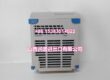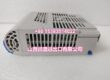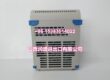
Product Core Brief
- Model: 1X00416H01
- Brand: EMERSON (Ovation / Westinghouse)
- Series: Ovation DCS
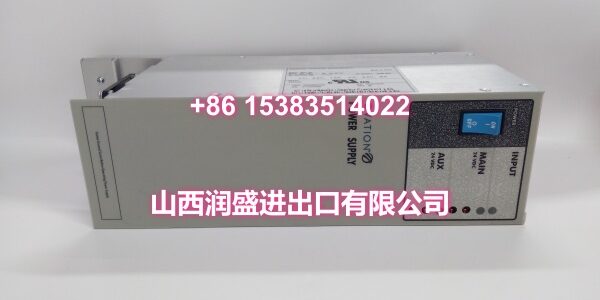
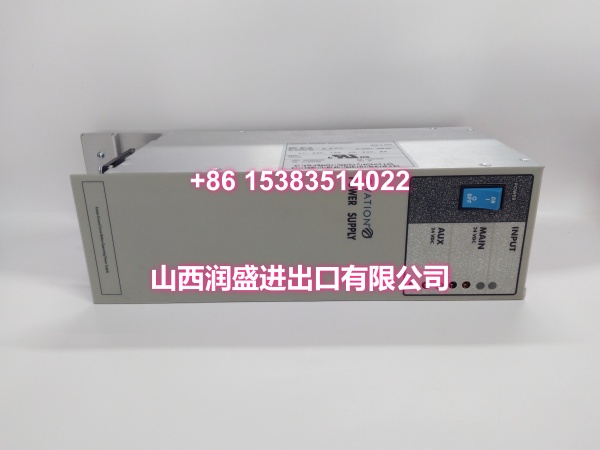
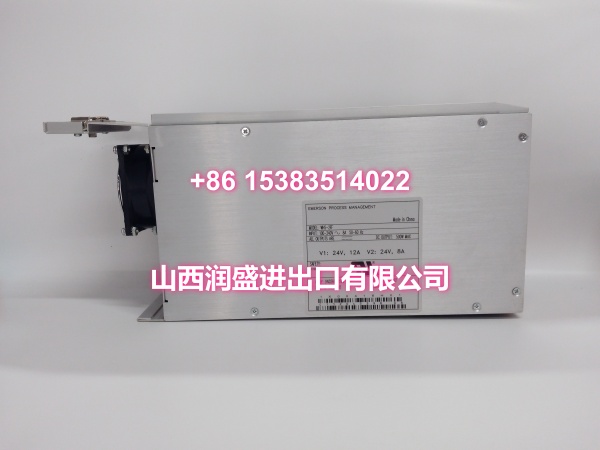
- Core Function: 2-output, 240W power supply module (WH5-2FF) that converts wide-range AC input into regulated DC power for the Ovation controller rack and I/O modules.
- Product Type: Power Supply Module (PSU)
- Key Specs: 240W Output | 90-264VAC Input | Over/Under Voltage & Short Circuit Protection
- Condition: New Original / New Surplus
Key Technical Specifications
- Output Power: 240W total, 2 independent outputs
- Input Voltage Range: 90 to 264 VAC (wide-range, auto-sensing)
- Output Voltage: 24VDC (standard Ovation rack voltage)
- Output Current: 1A per output
- Protection Features: Overvoltage protection, undervoltage protection, short-circuit protection
- Efficiency: High-efficiency AC-to-DC conversion with minimal energy loss
- Operating Temperature: -40°C to +75°C
- Storage Temperature: -40°C to +85°C
- Dimensions: 2.5 × 10.2 × 5.1 inches (63.5 × 259 × 129.5 mm)
- Weight: 2.2 lbs (1.0 kg)
- Compliance: RoHS compliant
- Compatibility: Ovation DCS controller racks; direct replacement for Westinghouse WH5-2FF power supply
Product Introduction
The 1X00416H01 is a 2-output, 240W power supply module (WH5-2FF) for the Emerson Ovation DCS. It is the backbone of the controller rack’s power distribution system, converting wide-range 90-264VAC utility power into regulated 24VDC that feeds the Ovation controller, I/O modules, and backplane. You’ll find this module installed in every Ovation controller rack across power plants, water treatment facilities, and petrochemical operations—wherever the Ovation DCS is deployed.
What makes the WH5-2FF a reliable choice for critical control applications is its combination of wide input voltage tolerance and comprehensive protection circuitry. The 90-264VAC auto-sensing input means the same module works on both 110V and 220V grids worldwide without manual jumper changes. The integrated overvoltage, undervoltage, and short-circuit protection safeguards the entire rack from power quality issues—brownouts, surges, and transient spikes—that commonly occur in industrial power environments. The high-efficiency AC-to-DC conversion minimizes heat generation, which is critical in densely packed control cabinets where thermal management directly impacts module lifespan.
QA & Testing SOP
Power supplies are the single most critical component in a DCS rack. A failed PSU takes down the entire controller. Here’s how we verify every unit:
- Visual & Anti-Counterfeit Inspection: We inspect the PCB for burnt traces around the switching transformer and output rectifiers, verify the OEM holographic label, and cross-check the silkscreen part number against the Ovation master parts list. Counterfeit power supplies in the surplus market often use substandard capacitors that fail prematurely under thermal cycling.
- Input Voltage Sweep Test: Using a variable AC power supply, we sweep the input from 90VAC to 264VAC and verify the module maintains a stable 24VDC output across the entire range. We specifically test at the boundary voltages (90V, 110V, 220V, 264V) where regulation is most challenging.
- Full-Load Output Test: We apply a calibrated electronic load to both outputs simultaneously at rated current (1A each) and verify the output voltage remains within ±5% of 24VDC. We also measure ripple and noise on the DC output—excessive ripple can cause erratic behavior in sensitive I/O modules.
- Protection Circuit Validation: We intentionally trigger each protection circuit:
- Overvoltage: We raise the input above 264VAC and verify the module shuts down output gracefully.
- Undervoltage: We lower the input below 90VAC and verify the module shuts down before output regulation degrades.
- Short-Circuit: We short each output and verify the module enters current-limit mode and recovers automatically when the short is removed.
- Thermal Stress Test: We run the module at full load in a temperature chamber at 60°C for 4 hours and monitor output stability. Thermal drift in the feedback circuitry is a common failure mode on aged power supplies.
- Anti-Static Packaging: Passed units are sealed in static-shielded bags with desiccant, then double-boxed for transit.
Installation Pitfalls & Guide
Power supplies seem straightforward—plug it in and go. But getting the details wrong can take down an entire Ovation rack.
- ❗ Input Voltage Verification: Although the 1X00416H01 auto-senses 90-264VAC, always verify the actual site voltage with a multimeter before energizing. If your site has a known power quality issue (frequent brownouts, voltage sags), consider adding an upstream UPS or voltage regulator. The PSU’s undervoltage protection will shut down the rack if input drops below 90VAC—which protects the hardware but causes an unplanned outage.
- ❗ Output Load Balancing: The 240W rating is the total for both outputs combined. If you’re powering a heavily loaded rack, verify that the combined current draw of the controller and I/O modules does not exceed the PSU’s capacity. Overloading the PSU causes thermal shutdown and can permanently damage the switching regulator.
- ❗ Grounding: The PSU chassis must be bonded to the control cabinet ground. A floating ground can cause common-mode noise that couples into the DC output and affects sensitive analog I/O readings. Verify the ground bond resistance is less than 1Ω.
- ❗ Redundancy Configuration: In critical Ovation applications, racks are often configured with dual redundant power supplies. If you’re replacing one PSU in a redundant pair, verify that both units are the same model and firmware revision. Mismatched PSUs can cause load-sharing issues where one unit carries disproportionate current and fails prematurely.
4-Step Replacement Guide:
- Pre-Install: If the rack has redundant PSUs, verify the surviving unit is carrying the full load before removing the faulty one. If this is a single-PSU rack, schedule the replacement during a planned outage—replacing a single PSU on a live rack will cause a controller shutdown. Backup the current Ovation controller configuration.
- Removal: Disconnect the AC input power from the terminal block. Carefully disengage the locking lever and pull the faulty module straight out of the rack. Do not twist or rock the card.
- Install: Align the new module with the rack guides and slide it in firmly until the backplane connector seats fully. Engage the locking lever. Reconnect the AC input wiring to the correct terminals, verifying line and neutral are not reversed.
- Power-on Test: Apply AC input power. Monitor the PSU status LEDs—green indicates normal operation, red indicates a fault. Verify the output voltage is 24VDC ±5% using a multimeter at the terminal block. If the rack has redundant PSUs, verify both units share the load equally. Monitor the Ovation diagnostic screen for any power-related alarms.
Technical FAQ
Q: What’s the difference between 1X00416H01, 1X00024H01, and 1X00163H01? A: These are all Ovation power supply modules but with different output configurations. The 1X00416H01 (WH5-2FF) is a 240W, 2-output module for standard controller racks. The 1X00024H01 (WH1-2FF) is a 24V power supply with an auxiliary 24V output, typically used in older Westinghouse Ovation configurations. The 1X00163H01 (WH3A-2DF) is a pluggable power supply variant. Always match the exact part number called out in your Ovation system documentation—substituting a different PSU model can result in incorrect output voltage, insufficient current capacity, or physical incompatibility with the rack.
Q: Can I hot-swap this power supply? A: Only if the rack is configured with redundant power supplies. In a redundant configuration, you can remove and replace one PSU while the other carries the full load. In a single-PSU rack, removing the power supply will cause an immediate controller shutdown and process upset. Never attempt to hot-swap a single PSU on a live rack.
Q: Why does my PSU trip on undervoltage during plant startup? A: Undervoltage trips during startup are typically caused by one of two things: (1) the plant’s utility power experiences a voltage sag when large motors start (compressors, feedwater pumps), temporarily dropping the input below 90VAC, or (2) the AC input wiring has excessive resistance (undersized cable, loose connections) causing a voltage drop between the distribution panel and the PSU. Check the input voltage with a power quality analyzer during motor starts. If sags are confirmed, add an upstream UPS or voltage regulator.
Q: Is this module compatible with Ovation 4.0? A: The 1X00416H01 is a legacy Westinghouse Ovation power supply that remains supported on Ovation 4.0 and later versions. Power supply modules are hardware-level components that are largely version-agnostic—as long as the physical form factor and output specifications match the rack requirements, the PSU will function correctly regardless of the Ovation software version. For greenfield 4.0 installations, Emerson may recommend newer PSU models, but for brownfield replacements, the 1X00416H01 is a direct drop-in replacement.
Q: What is the warranty on surplus units? A: We provide a 12-month warranty from the date of delivery on both new original and new surplus stock. This covers manufacturing defects, DOA failures, and any output regulation drift discovered during commissioning. It does not cover damage from improper installation—such as reversed AC input wiring, output overloading, or ESD damage from handling without proper grounding.