Product Core Brief
- Model: PXIe-8135
- Brand: National Instruments (NI)
- Series: PXI Express Embedded Controllers
- Core Function: Serves as the high-performance computational core for PXI Express test, measurement, and control systems.
- Product Type: PXI Express Embedded Controller
- Key Specs: Intel Core i7-3610QE (Quad-Core) | 2.3 GHz Base / 3.3 GHz Turbo | Dual-Channel DDR3 | PCIe Gen2
- Condition: New Original (New Surplus)
Product Introduction
The NI PXIe-8135 is a high-performance embedded controller designed to be the computational heart of demanding PXI Express systems. Built for processor-intensive applications, it leverages a quad-core Intel Core i7-3610QE processor with Turbo Boost technology, providing the raw horsepower needed for complex signal processing, real-time control, and high-speed data acquisition.
Engineered for the PXI Express platform, the PXIe-8135 utilizes PCI Express technology to deliver high-bandwidth communication with modular instruments. Its support for real-time operating systems and compatibility with NI software ecosystems like LabVIEW make it an ideal choice for automated test equipment (ATE), machine vision, and industrial monitoring applications where deterministic performance and reliability are non-negotiable.

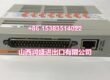
NI PXIE-8135
Key Technical Specifications
| Parameter | Value |
|---|---|
| Module Type | PXI Express Embedded Controller |
| Processor | Intel Core i7-3610QE (Ivy Bridge) |
| Core/Thread Count | 4 Cores / 8 Threads |
| Clock Speed | 2.3 GHz Base, up to 3.3 GHz (Turbo Boost) |
| Memory | Dual-Channel DDR3, 1,600 MHz (Up to 16 GB) |
| Bus Interface | PCI Express Gen2 |
| Onboard I/O | Gigabit Ethernet, USB, Serial, VGA/DVI |
| Storage | 2.5″ SATA Drive Bay |
| Operating System Support | Windows 7/10, LabVIEW Real-Time, Linux |
| Form Factor | PXI Express System Slot |
Quality Control Process (Engineer’s Perspective)
We don’t just box these and ship them. Here is our actual bench test workflow.
- Incoming Verification: We verify the serial number against NI traceability records. A visual inspection checks for bent pins on the PXI Express connector, ensures the SATA drive bay is intact, and verifies all front-panel LEDs and ports are undamaged.
- Live Functional Test: We mount the unit in a live PXIe chassis (e.g., PXIe-1085). We verify the i7-3610QE boots correctly, initializes the DDR3 memory, and successfully enumerates all PXIe modules in the chassis via NI MAX.
- Performance Benchmark: We run a multi-core stress test to confirm the processor maintains clock speeds under load and that the dual-channel memory configuration is active and error-free.
- Peripheral & I/O Test: We test all Gigabit Ethernet ports, USB interfaces, and the onboard display output to ensure full connectivity.
- Final QC & Packaging: The module is sealed in an anti-static bag with silica gel. A QC sticker showing the test date and technician initials is applied to the exterior.
Replacement Pitfall Guide
Field replacements on PXIe controllers are unforgiving. Watch out for these traps.
- Chassis Compatibility: ❗ Critical. The PXIe-8135 is a PXI Express controller. It will not work in a standard PXI or CompactPCI chassis. Verify your chassis is PXIe-compatible (e.g., PXIe-1078, PXIe-1085). Forcing it into an incompatible chassis can cause physical and electrical damage.
- OS & Driver Mismatch: ❗ Critical. This controller was originally designed for Windows 7. If upgrading to Windows 10, be aware that NI does not officially support this OS for the PXIe-8135. You may encounter issues with legacy drivers, particularly for the NI Watchdog Timer and NI Trigger Router. These require manual driver updates via Device Manager using specific INF files from NI’s knowledge base.
- BIOS/UEFI Boot Mode: ❗ Critical. The PXIe-8135 uses a Legacy BIOS and does not support UEFI or GPT partition tables. If creating a bootable USB for OS installation, you must use MBR partitioning and a traditional BIOS bootloader. UEFI-based images will not be recognized.
- Graphics Driver Limitations: The onboard ATI Radeon E4690 GPU lacks official Windows 10 drivers. After an OS upgrade, the display may default to the Microsoft Basic Display Driver with limited resolution. This is a known limitation; plan your application’s display requirements accordingly.
- ESD Damage: The quad-core processor and PCIe interfaces are highly sensitive to electrostatic discharge. Always wear a grounded wrist strap when handling the bare PCB. I’ve seen controllers fail POST because they were handled without ESD protection.
Keep these in mind and you’ll cut 90% of rework time.

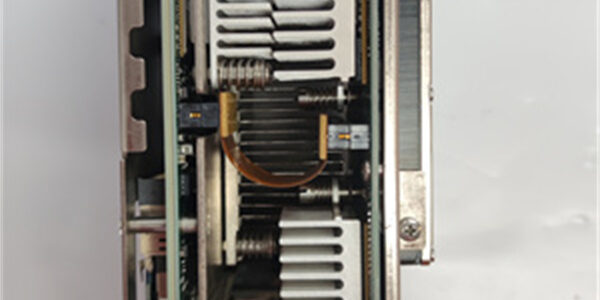
NI PXIE-8135
Compatibility Matrix & Benchmarks
Compatibility
- NI PXIe-8135 → PXIe-8135 : Direct Replacement — Verify OS and driver configuration.
- NI PXIe-8133 → PXIe-8135 : Upgrade Path — PXIe-8135 offers a quad-core i7 vs. dual-core; verify application performance gains and thermal requirements.
- NI PXIe-8135 → PXIe-1085 Chassis : Companion Hardware — The PXIe-1085 is a common 18-slot chassis paired with this controller for high-channel-count systems.
Benchmarks
- Boot Time: < 45 s (from power-on to OS desktop, Windows 7)
- PCIe Bandwidth: Up to 4 GB/s per slot (Gen2 x4)
- Memory Bandwidth: ~25.6 GB/s (Dual-Channel DDR3-1600)
Need the Windows 10 driver installation guide for the NI PXIe-8135? I can pull up the step-by-step instructions for manually installing the NI Watchdog Timer and Trigger Router drivers, along with the MBR USB creation steps for Legacy BIOS boot.