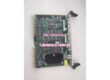
Product Core Brief
- Brand: GE (General Electric)
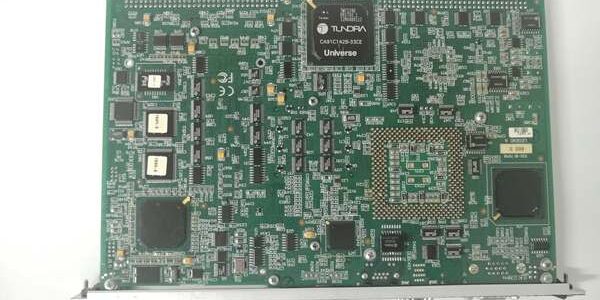
- Model: IS215UCVEH2AE
- Series: Speedtronic Mark VI
- Core Function: VME single-board CPU executing turbine governing logic, overspeed protection, and EGD peer-to-peer communications for gas and steam turbine assets
- Type: 6U VMEbus controller card
- Condition: New Original (New Surplus)
- Status: ⚠️ Discontinued OEM production; finite remaining inventory
- Key Spec Highlights: 300 MHz Intel Celeron, QNX preemptive RTOS, 32 MB DRAM, 16 MB onboard flash, native EGD protocol support
Key Technical Specifications
- Processor: Intel Celeron 300 MHz
- Operating System: QNX Neutrino real-time preemptive OS
- Memory: 32 MB DRAM, 16 MB CompactFlash storage
- Form Factor: Single-slot 6U VME Eurocard
- Front Panel Interfaces: 1 × 10/100Base‑TX RJ45 Ethernet, 2 × RS‑232 COM diagnostic ports
- Protocols Supported: Ethernet Global Data (EGD), ISBus, Modbus RTU
- Backplane Interface: VME64 standard bus
- Power Draw: +5 VDC, typical 6 A, maximum 8 A
- Operating Temperature: −30 °C to +65 °C
- Humidity: 5%–95% non‑condensing
- Mechanical: Conformal coated PCB, integrated passive heat sink
- Compatible Hardware: 13‑slot and 21‑slot Mark VI VME racks
- Application Scope: Turbine governing, sequencing, emergency shutdown protection
Product Introduction
Unexpected Mark VI controller faults trigger costly turbine curtailments and unplanned outages at power generation sites. GE serves as the primary computing node for legacy Speedtronic Mark VI racks, running closed-loop governing algorithms and safety protection logic for gas and steam turbines.
This unit delivers deterministic scan timing required for overspeed trip functions and communicates with field I/O via EGD messaging. The passive cooling architecture eliminates fan-related failure modes, and its standardized VME footprint enables direct hardware exchange during scheduled maintenance windows.
Key Selling Points & Differentiators
- GE is the factory specified CPU for Mark VI architectures; generic VME single-board computers cannot maintain required EGD timing profiles for safety turbine controls.
- Conformal coated circuit board provides improved resistance to condensation, dust, and EMI common within power plant control cabinets.
- Every unit undergoes full bench validation in a Mark VI test rack prior to shipment; signed test documentation available on formal request. Warranty runs 12 months after delivery.
- Supports simplex, dual redundant, and triple redundant Mark VI rack configurations to match existing site safety architecture.
- Not recommended for Mark VIe or Mark VIeS upgrades. This component uses legacy VME bus architecture and lacks native IONet compatibility.
- Identical mechanical pinout and faceplate layout as original factory hardware, eliminating rack wiring modifications during spare replacement.
Quality Transparency SOP
- Incoming Verification: Serial traceability validation, anti-counterfeit visual inspection, front-panel connector hardware cross-check.
- Live Bench Test: Dedicated Mark VI test rack, power-on self-test, EGD multi-node handshake simulation, continuous 24-hour load cycling, COM port communication verification.
- Electrical Tests: 500 V megger insulation resistance testing, backplane continuity validation.
- Firmware Verification: Record baseline factory firmware revision; no unauthorized firmware modifications performed.
- Final QC & Packaging: Anti-static shielding, shock-dampened transit carton, signed QC Pass label. Test images and logs available on request. No zero-failure performance guarantee.
Technical Risk Avoidance Section
Firmware Mismatch Risk Risk: Deploying with unaligned firmware revisions creates EGD packet delays, intermittent I/O dropout, and nuisance protection alarms. Prevention: Cross-reference firmware build against the existing site controller revision before scheduling hardware swap. Field note: Multiple combined-cycle facilities logged transient speed deviation alarms after mixing mismatched UCVE firmware during outage maintenance.
Backplane Contact Degradation Risk Risk: Oxidized VME edge connectors create intermittent communication loss that is difficult to replicate during offline testing. Prevention: Clean VME slot contacts before installation; seat the module fully and secure both faceplate mounting screws.
ESD Damage Risk Risk: Unprotected handling can damage onboard PHY circuits without immediate visible fault indicators. Prevention: Use grounded wrist straps; keep the module inside anti-static packaging until rack insertion.
Power Budget Miscalculation Risk Risk: Overloading shared rack 5 VDC power supplies with multiple controller cards introduces voltage sag and spontaneous module resets. Prevention: Aggregate total DC load for all VME cards and verify supply headroom before adding spare hardware.
Critical Summary: Confirm hardware revision and firmware compatibility against site Mark VI documentation. This component cannot be substituted with Mark VIe UCSA series controllers on legacy VME racks.
FAQ
- Q: Can I install inside a Mark VIe IONet cabinet? A: No. This module relies on VME backplane architecture and EGD communications. Mark VIe platforms use IONet and UCSA controller hardware; direct interoperability does not exist.
- Q: Does this card support hot-swap replacement while the turbine remains online? A: Hot swap is supported only in fully redundant TMR or dual-redundant racks. Simplex installations require controlled turbine shutdown before removal.
- Q: What lead times apply for available inventory? A: In-stock units ship within 1–3 business days. Backordered allocations require 5–7 week lead times subject to global surplus availability.
- Q: I operate a combined-cycle Mark VI rack with overspeed safety loops. Is this hardware suitable for protection logic? A: Yes, matching the OEM bill of materials for Mark VI safety systems. Confirm site documentation for formal protection scheme validation records.
- Q: What failure modes fall outside warranty coverage? A: The 12-month limited warranty covers manufacturing defects. Damage from overvoltage, ESD, improper VME seating, or unapproved firmware edits is excluded.
- Q: Are there alternate UCVE part number variants with larger flash memory? A: GE produced multiple UCVE revisions. Always cross-check part number suffix against existing hardware to avoid memory or communication feature mismatches.
- Q: Can the RS‑232 COM ports be used for continuous HMI connection? A: These ports are intended for engineering commissioning and diagnostics. Sustained production HMI traffic should route through the primary Ethernet interface.