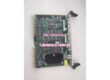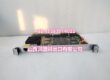
Product Core Brief
- Model: IS420UCSBH4A
- Brand: GE (GE Vernova Speedtronic)
- Series: Mark VIe UCSB Universal Control System Board Controller Line
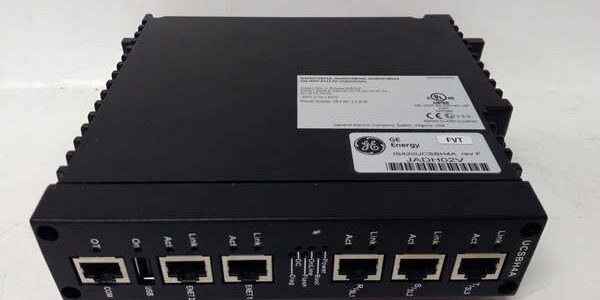
- Core Function: Fanless embedded real-time CPU executing turbine control logic, managing IONet I/O packs, and supporting TMR triple redundant fault-tolerant rack operation for Mark VIe gas/steam turbine systems
- Product Type: Compact DIN-rail mount passive-cooled UCSB main controller module
- Key Specs: 1066 MHz Intel EP80579 CPU | 256 MB DDR2 SDRAM | 5 independent IONet RJ45 ports | TMR R/S/T redundant rack support; Condition: New Original Surplus, ⚠️ EOL — limited stock remaining
Product Introduction
GE runs QNX Neutrino real-time OS to execute deterministic turbine startup, load regulation, trip protection, and SOE sequencing logic. It communicates with all Mark VIe I/O packs over proprietary IONet Ethernet to exchange analog metering and discrete actuator data. This unit differs from simplex IS420UCSBH3A by adding full TMR triple modular redundancy support and expanding front-panel IONet port count to five. It maintains consistent 1 ms control scan latency across -40 °C to +70 °C cabinet temperature bands and stores critical trip setpoints in non-volatile onboard flash memory.
Key Technical Specifications
| Parameter | Value |
|---|---|
| Central processor | Intel EP80579 industrial Pentium-class @ 1066 MHz, 2 MB L2 cache |
| System memory | 256 MB total DDR2 SDRAM soldered to PCB |
| Non-volatile program storage | 4 MB onboard flash for firmware/configuration; USB front port for CompactFlash boot |
| IONet communication ports | 5 independent front-panel 10/100 Mbps RJ45 copper Ethernet links |
| Rack topology support | Simplex single-controller or TMR triple R/S/T redundant rack configuration |
| Auxiliary supply rating | 28 V DC ±10 % SELV, maximum 1.1 A continuous draw |
| Fixed control scan cycle | 1 ms full rack I/O data refresh |
| Operating cabinet temperature | -40 °C to +70 °C with minimum 150 LFM airflow |
| Storage temperature range | -40 °C to +85 °C |
| Mechanical mounting | EN 50022 standard 35 mm DIN rail clip-in heat sink housing |
| Net unit weight | 0.82 kg |
| Supported ControlST software | ToolboxST V07.04 and newer runtime builds |
| Compliance standards | IEC 61000-6-2, UL 61010, ATEX Ex ec IIC T4, CE industrial certification |
Quality Control Process (Engineer’s Perspective)
- Incoming Verification: Cross-reference serial numbers against GE Mark VIe turbine spare asset database to flag counterfeit hardware. Inspect front RJ45 Ethernet ports, USB service port, and front tri-color status LED array with a 10x magnifier for pin oxidation or cracked heat sink housing; log serial numbers for power plant traceability.
- Live Functional Test: Mount the unit on a grounded Mark VIe test rack paired with IS420YDOAS1B discrete output I/O packs and analog signal simulators. Run continuous 26-hour load testing while logging cabinet temperature shifts and measuring IONet packet throughput consistency under full rack I/O load.
- Electrical Parameter Test: Use a 500 V Megger to measure insulation resistance between all signal circuits and chassis ground; pass threshold set at >10 MΩ. Verify PE protective ground loop resistance below 0.5 Ω with a Fluke 115 multimeter.
- Firmware Verification: Extract and record onboard boot firmware revision printed on PCB silkscreen. Photograph IONet bus termination jumper positions and TMR mode select headers for field commissioning reference.
- Final QC & Packaging: Wipe finned metal heat sink housing with anti-static microfiber cloth, cap all RJ45 Ethernet and USB ports with plastic dust covers. Seal inside a shielding ESD bag, attach a QC Passed label stamped with full test completion date.
Replacement Pitfall Guide
❗ Firmware Mismatch: boot firmware v1.3 drops backward compatibility with Mark VIe ToolboxST V07.03 or older runtime software. Match exact controller firmware and ControlST versions before rack power-up, or TMR rack synchronization fails and turbine control logic halts at POST indefinitely. ❗ DIP Switch / Jumper Misconfiguration: Factory default IONet bus termination jumper is disabled. All TMR triple-controller turbine racks require termination enabled on the last UCSB module in the DIN rail chain; missed settings create cyclic Ethernet timeouts and missing analog metering values. ❗ Terminal / Cable Incompatibility: This unit uses standard RJ45 IONet pinout, unlike legacy VME VMIVME series D-Sub bus connectors. Unshielded CAT5 cabling routed alongside high-current turbine power wiring generates persistent Ethernet CRC errors; shield drain wires must land on dedicated cabinet ground bars only. ❗ Power Supply Mismatch: Full CPU + 5-port IONet peak draw hits 30.8 W at 28 V DC. Calculate rack power budget with 20 % overhead; undersized station DC power supplies trigger under-voltage lockout and blank front panel status LEDs. ❗ ESD Damage: Dry cabinet environments above 40 % relative static risk degrade onboard Ethernet PHY and memory controller chips on the unit. Always use an anti-static mat and grounded wrist strap when handling exposed PCB edge connectors and front RJ45 ports. Keep these in mind and you’ll cut 90% of rework time.
Compatibility Matrix & Benchmarks
Compatibility Matrix
- IS420UCSBH3A → : Needs Adaptation — 3A is simplex-only, TMR mode parameters require full rack reconfiguration after swap
- IS420YDOAS1B Relay Output I/O Pack → : Direct — native IONet communication, no wiring or bus modification required
- V7768-312000 VME SBC → : Incompatible — separate VME64 backplane architecture, no IONet Ethernet protocol support
- URRHH UR Series Power Supply → : Incompatible — 24 V UR chassis power rails do not match 28 V UCSB input rating