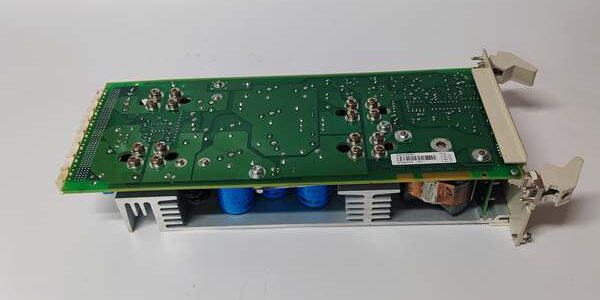
Product Core Brief
- Model: SW-1200063 (Type 40-200K 65/40/7,5/2 DURACROM Pump)
- Brand: ABB
- Series: DURACROM industrial close-coupled stainless steel centrifugal pump line
- Core Function: Transfers clean, mildly corrosive process liquids for cooling, dosing and circulation plant loops
- Product Type: Close-coupled single-stage centrifugal pump assembly
- Key Specs: 7.5kW three-phase motor | DN65 suction / DN40 discharge flanges | 316 stainless steel wetted parts
- Note: Active production lifecycle; factory sealed new units and fully performance-tested surplus stock available for refinery, water and chemical plant equipment replacement
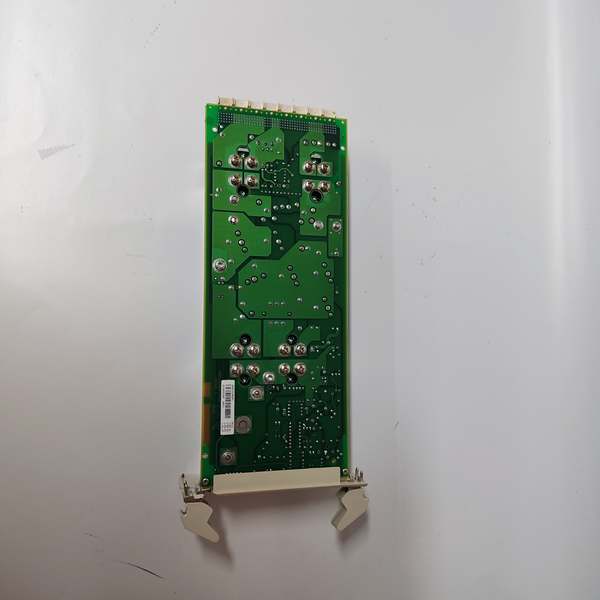
Key Technical Specifications
- Motor power rating: 7.5 kW continuous duty
- Voltage supply: 230/400 VAC three-phase, 50 Hz
- Pump casing & impeller material: AISI 316 stainless steel (wetted surfaces)
- Flange sizing: DN65 inlet, DN40 outlet standard PN16
- Mechanical construction: Close-coupled single-stage volute centrifugal design
- Dry weight: 70 kg complete pump + motor assembly
- Overall footprint dimensions: 630 mm base length
- Maximum operating fluid temperature: 120°C continuous
- Ambient cabinet operating range: -10°C to +40°C
- Humidity rating: ≤85% RH non-condensing
- Protection class: IP55 motor enclosure
- Customs tariff classification: 84137081
- Origin manufacturing: Italy / Germany dual production sourcing
Product Introduction
This fully integrated pump assembly couples a high-efficiency IE3 three-phase motor to a stainless steel single-stage centrifugal volute, built to handle clean water, diluted chemical solutions and cooling circuit fluids without galvanic corrosion. Its thick 316 stainless wetted components eliminate rust pitting common with cast iron pumps, and the close-coupled layout reduces shaft alignment drift during long-term continuous 24/7 plant operation.
QA & Testing SOP
- Incoming Inspection: Cross-reference serial number against ABB fluid equipment asset database to filter counterfeit assemblies; inspect impeller casing flanges, motor terminal box and shaft seal housing with a 10x magnifier for casting defects or surface corrosion; log serial numbers for full plant asset traceability records.
- Live Testing: Mount the unit on a hydraulic test bench with calibrated flow and pressure sensors; supply rated 400V three-phase power; run a continuous 24-hour cycle test including full flow, partial throttling and dead-head pressure hold to verify motor current draw and seal leakage limits.
- Electrical Testing: Use a Fluke 115 insulation tester to verify ≥10MΩ winding insulation between motor phase terminals and chassis ground; measure PE chassis continuity resistance below 0.5Ω.
- Motor/Mechanical Backup: Photograph flange dimensional layout and terminal block wiring terminal mapping; record factory motor IE3 efficiency rating and mechanical seal part number printed on pump nameplate for field matching.
- Final QC & Packaging: Wipe stainless wetted surfaces with water-dissipative microfiber cloth; cap inlet/outlet flanges with plastic dust covers; seal the assembly inside a moisture-barrier crate with desiccant packs, attach a printed QC tag with full 24-hour hydraulic performance test timestamp, then secure with wooden transit bracing for shipping.
Installation Pitfalls & Guide
❗ Voltage phase imbalance creates permanent motor winding burnout: Three-phase supply voltage deviation exceeding 3% generates uneven heat buildup inside the stator, cutting motor service life by 70%. ❗ Flange misalignment cracks stainless pump casing: Offset pipe flanges create lateral mechanical stress that propagates casing cracks under thermal cycling; use flexible expansion joints on both inlet and discharge lines. ❗ Dry run destroys internal mechanical seal within 60 seconds: No built-in dry run protection; operators must confirm full liquid priming before motor startup to avoid seal face scoring and catastrophic fluid leakage. ❗ ESD contact damages internal motor winding insulation: Bare finger contact with exposed terminal board wiring can introduce static charge that weakens phase insulation over time. ❗ Hot-swap energized motor wiring creates arc flash hazards: Disconnecting live three-phase power leads while the pump assembly remains mounted generates sustained electrical arcs that damage terminal lugs and adjacent pipework.
4-step replacement guide
- Pre-install: Lock out and tag the three-phase motor supply breaker; drain all fluid from inlet/discharge piping and vent trapped pressure; don ESD wrist strap; capture photos of flange piping alignment and motor terminal block wiring sequence.
- Removal: Disconnect all electrical motor leads one by one; unbolt inlet and discharge flange fasteners; unfasten base mounting bolts, slide the old unit horizontally off the foundation skid without bending pipe flanges.
- Install: Align the new unit on the foundation skid and torque base bolts to OEM specs; fit flexible expansion joints to both flanges and re-torque flange fasteners evenly to prevent casing distortion; re-terminate three-phase motor wiring matching photographed phase sequence.
- Power-on Test: Close fluid isolation valves and fully prime the pump casing; restore three-phase power supply; run no-load priming cycle then full flow test for 1 hour; record motor amp draw and check flange/seal surfaces for persistent fluid leakage under rated operating pressure.
FAQ
Q: Can this unit transfer undiluted strong acids or abrasive slurry media? A: No. The 316 stainless steel wetted parts only tolerate mild neutral and weakly acidic fluids; concentrated corrosive media or particle-laden slurry will erode the impeller and casing rapidly. Verify chemical compatibility with the OEM datasheet before commissioning. Q: Is hot-swapping energized motor wiring supported while process piping remains full of fluid? A: It is not supported. Live three-phase disconnection creates arc flash hazards and risks unintended pump rotation from residual fluid pressure, which can injure field technicians. Full electrical lockout and complete fluid draining are mandatory before removal. Q: What warranty coverage applies to stocked units? A: Factory-new original pump assemblies carry a 12-month OEM warranty covering motor windings, stainless pump casing, impeller and mechanical seal hardware. Hydraulically tested surplus units come with a 6-month functional warranty. Damage from dry run operation, unbalanced three-phase supply or misaligned pipe flanges voids all coverage. Q: What hardware replaces this unit for high-corrosion process builds? A: ABB offers the SW-1200064 variant with Hastelloy C wetted components for harsh chemical loops. For new plant builds with higher flow demands, the DURACROM 40-250K series pump is specified as a direct performance upgrade. Q: Will stored motor winding insulation degrade after long-term warehouse storage? A: The factory motor winding insulation is sealed with moisture-resistant varnish, but units stored over 12 months require a bench insulation resistance test before field installation. No permanent parameter settings are stored on the assembly, so no configuration loss occurs post-replacement. Q: What are the most common failure modes for a faulty unit? A: Excessive motor current draw under rated flow (impeller fouling), mechanical seal weeping or full fluid leakage after dry run events, uneven stator heating from phase voltage imbalance, cracked pump casing from pipe flange misalignment, and total loss of flow output from air entrapment in the volute chamber.