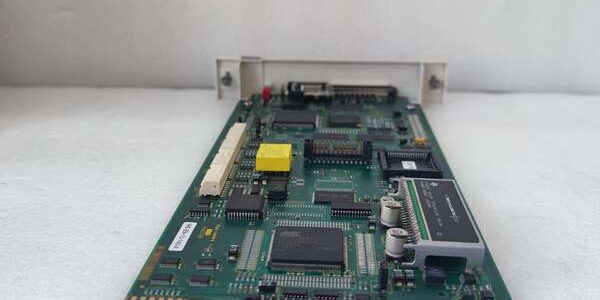
Product Core Brief
- Model: SPBRC400
- Full OEM Part Number: PSPBRC400 (complete assembly includes core board + power unit)
- Brand: ABB Hitachi Energy (Bailey Legacy Series)
- Series: Symphony Plus / Bailey INFI 90 Harmony rack bridge main controller
- Core Function: High-performance bridge CPU controller installed in dedicated Harmony rack slots, serving as the central data routing and logic processing core for Symphony Plus distributed control systems. It undertakes three critical system-level tasks:
- Executes continuous process control logic, interlock sequences, PID regulation and fault event logging for plant production loops;
- Acts as multi-protocol communication gateway to convert proprietary INFINET rack bus into external serial protocols (Modbus RTU, Bailey serial, custom auxiliary bus) for HMIs, third-party PLCs and remote monitoring systems;
- Realizes cross-rack data exchange between multiple Harmony controller racks, enabling distributed multi-section plant process synchronization.Supports redundant hot-standby pairing with identical modules for bumpless switchover if one controller fails. Powered by matching PSPBRC400 dedicated rack power supply unit, cannot run standalone without PSPBRC400.
- Product Type: Rack-slotted DCS bridge main CPU controller module
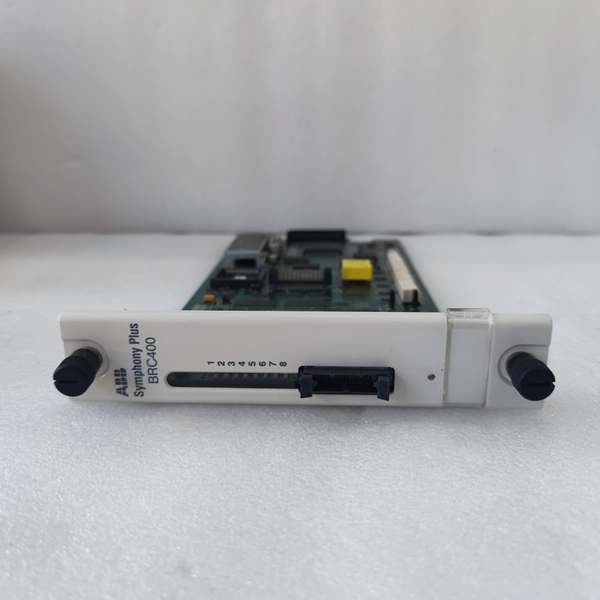
- Key Specs: High-capacity non-volatile Flash memory for permanent logic storage; dual INFINET backplane bus interfaces; multi-channel serial communication terminal blocks; supports redundant active/standby architecture; front RUN/FAULT diagnostic LED indicators; conformal anti-corrosion PCB coating; powered via PSPBRC400 24VDC rack power supply; compatible with all S800 series analog/digital I/O modules (SPASI23, SPASO11, etc.)
- Note: The entire Bailey INFI 90 / Symphony Plus platform is fully end-of-life. Only limited remaining factory-sealed assemblies and fully cyclic load-tested surplus units are supplied as maintenance spares for thermal power plants, chemical processing facilities, pulp & paper mills and municipal distribution substations. Cannot be cross-replaced with higher-performance SPBRC410 heavy-load bridge controller without recalculating total system communication load.
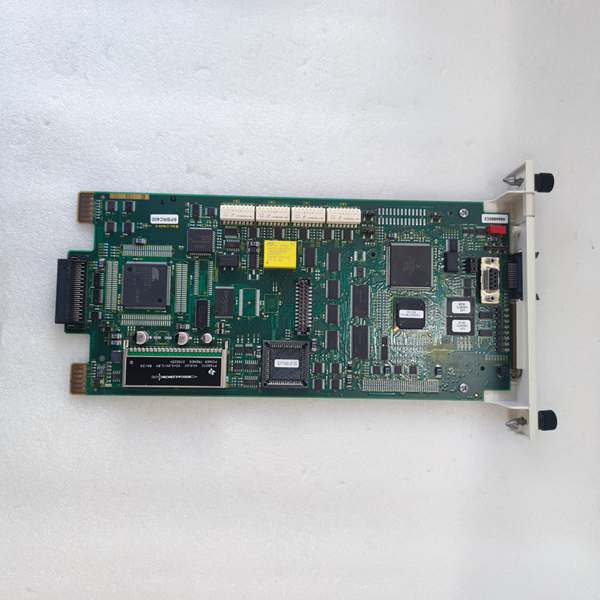
Key Technical Specifications
| Parameter | Value |
|---|---|
| Full OEM Article Code | (complete assembly PSPBRC400) |
| Processor Core | High-speed dedicated bridge control microprocessor |
| Non-Volatile Memory | Large Flash memory for permanent storage of control logic, PID parameters and event logs (no backup battery required) |
| Primary Internal Bus | INFINET proprietary Symphony Plus rack backplane bus |
| Supported External Serial Protocols | Modbus RTU, Bailey serial, point-to-point RS232/RS485 |
| Redundancy Function | Supports two identical units in hot redundant pairing with automatic bumpless failover |
| Logic Power Supply | 24 VDC ±10% SELV power supplied by dedicated rack PSU |
| Front Panel Indicators | Green RUN LED (normal operation), Red FAULT LED (communication loss / logic failure) |
| PCB Protection | ISA 71.04 G3 conformal coating for high-humidity, mild salt fog industrial environments |
| Mechanical Installation | Standard dedicated controller slot inside Harmony DCS rack |
| Operating Ambient Temperature | -10 °C ~ +60 °C sealed control cabinet; storage: -40 °C ~ +85 °C |
| Humidity Tolerance | ≤75% RH non-condensing indoor control room rated |
| Overall Module Dimensions | 358 mm H × 130 mm W × 71 mm D |
| Net Weight | Approx. 0.5 kg |
| Compliance Standards | IEC 60255 process control equipment standard, IEC 61158 fieldbus standard, TÜV type-tested, CE certified |
Product Introduction
The is the standard medium-capacity bridge CPU for all single-rack ABB Symphony Plus DCS control rooms, acting as the brain of the entire plant distributed control system. It upgrades older MFP controller performance and simplifies multi-device interconnection via built-in multi-protocol gateway functions.
Four Core Functional Modules
- Independent Process Control Logic ExecutionAll closed-loop regulation algorithms, safety interlock logic, equipment startup/shutdown sequences and fault alarm threshold parameters are stored in on-board Flash memory. The controller runs real-time scanning of S800 I/O analog/digital channels (SPASI23 analog input, SPASO11 analog output) to execute automatic plant control without relying on upper-level SCADA systems. No backup battery is needed to retain program data after power outages.
- INFINET Rack Bus & Cross-Rack Data RoutingThe dual INFINET backplane interfaces enable the to collect all I/O signal data from local rack modules and exchange synchronized process data with other remote Harmony controller racks. Multi-rack parallel control systems for large chemical and power plant production lines rely on this cross-bridge communication function to maintain coordinated operation.
- Multi-Protocol Serial Gateway ConversionBuilt-in serial transceivers convert native Symphony INFINET data into universal Modbus RTU or Bailey serial signals. Plant engineers can connect third-party HMIs, auxiliary PLCs, remote monitoring RTUs and vibration analysis systems without installing additional separate communication submodules, greatly reducing cabinet component count and spare part inventory cost.
- Redundant Hot-Standby Safety Architecture SupportTwo matched modules form active/standby redundant pairs. The standby unit continuously mirrors all control logic, I/O status and historical event logs of the primary controller. If the primary suffers hardware failure or power loss, the standby unit takes full control within milliseconds without process data corruption or unplanned plant shutdown, critical for SIL-rated power plant and chemical safety-critical control loops.
Conformal coating treatment prevents PCB oxidation and signal drift in coastal distribution substations and metallurgical workshops with corrosive vapor. It must be paired with power supply and Symphony rack backplane to operate, and cannot function standalone without I/O and power supporting hardware.
QA & Testing SOP (Transparency Building)
- Incoming Visual Inspection: Cross-check full model and OEM assembly code against ABB legacy DCS spare parts database to reject higher-capacity SPBRC410 mismatched controllers; inspect front RUN/FAULT LED indicators, INFINET backplane connectors, serial communication terminal blocks and PCB conformal coating for blackened overheating marks, pin bending or discoloration; record serial numbers and production batches for full maintenance traceability.
- Full Redundant Linkage Bench Test: Mount into standard Harmony rack test bench, connect matched power supply and multiple SPASI23/SPASO11 I/O modules; run 24-hour cyclic testing including single-controller full-load operation, dual redundant load-sharing bumpless switchover simulation, Modbus serial data exchange verification, INFINET backplane communication fault trigger and diagnostic log recording function.
- Electrical Safety Test: Use insulation resistance tester to confirm isolation resistance ≥ 10 MΩ between low-voltage logic power circuits and external serial communication terminals; test chassis protective earth continuity resistance below 0.5 Ω.
- Hardware Record Backup: Photograph front LED status definitions, rear rack backplane connector pin assignments and redundant pairing wiring rules for field commissioning reference.
- Final QC Packaging: Wipe module housing with anti-static microfiber cloth, cover all serial and backplane connectors with insulating dust caps, place the controller into independent ESD shielding bag, attach unified printed QC test tag with full 24-hour redundant control test runtime timestamp, then pack into foam shockproof carton for long-distance industrial plant transportation.
Installation Pitfalls & 4-Step Replacement Guide
Common Installation Hazards
❗ Residual 24VDC Power Surge Risk: Before extracting the controller, fully lock out the cabinet 24VDC auxiliary power supply feeding the PSU, wait minimum 10 minutes for internal power supply capacitors to fully discharge to avoid signal surge damaging rack backplane circuits.❗ Redundant Pair Matching Rule: Only identical units can be used for redundant pairing; mixing with SPBRC410 high-power controllers will break load-sharing balance and cause frequent controller unplanned restarts.❗ Serial Wiring Polarity Error: Reversed RS485/Modbus terminal positive/negative wiring will disable all external third-party device communication without fault alarm indication.❗ ESD PCB Damage Risk: Wear certified anti-static wrist strap during all disassembly and installation work; bare finger contact with internal CPU Flash memory and communication processing chips permanently impairs logic storage and multi-protocol gateway function.❗ Over-Load I/O Calculation Error: Do not connect more than the designed maximum quantity of S800 I/O modules to one controller; excessive total signal traffic will trigger persistent communication fault lockout and process data loss.
4-Step Bridge Controller Replacement Guide
- Pre-install Preparation: Lock out and tag out the cabinet 24VDC auxiliary power supply feeding the power unit, wait 10 minutes for complete capacitor discharge, wear ESD wrist strap, photograph INFINET rack backplane connector wiring, Modbus serial communication terminal wiring and dedicated controller slot fixed position of inside the Harmony DCS cabinet.
- Removal Operation: Unplug all external serial communication cables first, release the front module latch, slide the old controller fully out of the rack backplane slot.
- Installation & Wiring: Align the new module with the dedicated controller slot rail, slide fully inward until the front latch clicks locked; re-terminate all Modbus serial and INFINET backplane wiring strictly following photographed sequence, confirm no loose wire strands cause short-circuit risks.
- Power-on Commissioning Test: Restore cabinet 24VDC auxiliary control power, observe front green RUN LED steady on and red FAULT LED off; download validated plant control logic via Symphony engineering tool, run continuous I/O signal exchange test with SPASI23/SPASO11 analog I/O modules, simulate single controller power loss in redundant setup to confirm bumpless switchover without process data interruption, verify stable Modbus data upload to plant SCADA system.
FAQ
Q: What is the core difference between and SPBRC410?
- : Medium-standard bridge controller, limited I/O and communication load capacity, the most widely used model for single standard Harmony rack DCS bays; supports basic Modbus serial gateway function.
- SPBRC410: High-power heavy-load bridge controller, larger memory capacity, higher INFINET bus throughput, mandatory for multi-rack large DCS systems with dozens of I/O and fieldbus modules, supports additional Ethernet communication expansion.The two cannot be cross-replaced without recalculating total cabinet I/O and communication load consumption.
Q: Can operate without connecting power supply?No. has no built-in power conversion circuits; all 24VDC logic operating power is supplied by the matched dedicated rack PSU. Without a functional , the controller cannot boot up or execute any process control logic.
Q: Can be hot-swapped with cabinet 24VDC auxiliary power energized?Strictly prohibited. The controller mates directly with the live Harmony rack INFINET backplane logic bus; live disassembly will generate signal surge voltage and permanently damage CPU processing chips and rack backplane connectors. Full auxiliary power lockout and capacitor discharge waiting time are mandatory before replacement.
Q: What warranty applies to stocked controllers?Factory-new original legacy DCS bridge controllers carry a 12-month official ABB manufacturer warranty covering CPU logic processing circuits, Flash memory storage, dual INFINET backplane interfaces and multi-protocol serial transceivers. Bench-tested surplus units provide a 6-month functional warranty; damage caused by residual power surge, serial wiring polarity reversal, sustained overload operation or ungrounded ESD handling voids all warranty coverage.
Q: Has ABB discontinued production?Yes, the entire ABB Bailey INFI 90 / Symphony Plus DCS platform including bridge controller is fully end-of-life. New industrial and power plant process control DCS projects adopt ABB Ability 800xA systems with integrated high-speed Ethernet CPU modules without separate SPBRC series bridge hardware. is only supplied as maintenance spare parts for legacy Harmony control room renovation.
Q: What typical faults indicate a defective controller?Common failure symptoms: Permanent red FAULT LED alarm after power restoration with intact power supply, random full process data loss after brief cabinet power cut (Flash memory failure), severe Modbus serial communication distortion without field cable damage, failure of redundant load-sharing function when paired with identical units, repeated controller cold restarts under normal I/O load, inability to exchange cross-rack INFINET data with remote Harmony cabinets, loss of stored PID interlock logic requiring full re-download after every power cycle.