Product Core Brief
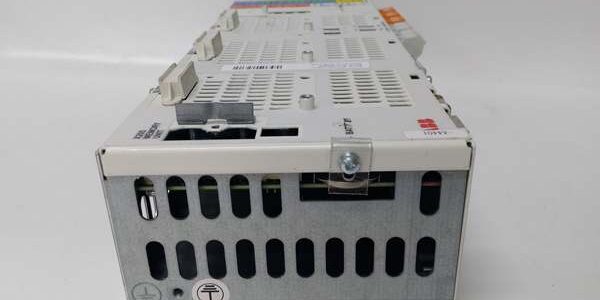
- Model: BCU-02, OEM Article Code 3AUA0000110429
- Brand: ABB Drives
- Series: ACS880 Multidrive Cabinet Control Platform
- Core Function: Executes master motor control logic, communicates with power modules via fiber optic DDCS links, stores runtime fault logs and coordinates multi-inverter synchronization for parallel drive stacks.
- Product Type: Rack-mount multidrive main control unit
- Key Specs: 2 fiber optic DDCS ports | 3 expansion option slots | Removable parameter memory unit | SDHC fault data loggingNote: Active production OEM spare, new original surplus stock available; external 24 V DC auxiliary power required, non hot-swap rated.
Key Technical Specifications
- Auxiliary supply: 24 V DC ±10 %, typical draw 150 mA, max power dissipation 3.6 W
- Fiber optic DDCS interfaces: Dual V1/V2 optical ports for connection to ACS880 power modules
- Expansion slot layout: 3 universal slots for fieldbus adapters, encoder cards, FSO safety function modules, RDCO DDCS communication boards
- Local communication: 10/100 Mbps Ethernet for PC tool connection; XD2D RS-485 master/follower drive daisy chain bus
- Data storage: Removable pluggable memory unit (retains all drive parameters); built-in SDHC slot for 10+ years of fault/performance data loggingManualsLib
- Status indicators: 7-segment numeric fault display, multi-color LED bank for power, bus, fiber link, slot module health
- Isolation: 1500 VAC dielectric isolation between fiber logic, fieldbus ports and 24 V supply
- Supported drive configurations: Single inverter stack, master/follower multi-motor, parallel power module current sharing
- Mechanical form: Vertical DIN rail mount slide-in cabinet card, no hot-swap capability
- Operating ambient: 0 °C to +55 °C continuous duty; storage -40 °C to +70 °C, non-condensing 5–95 % RH
- Physical dimensions: 245 mm L × 150 mm W × 65 mm D
- Net weight: 1.10 kg
- Certifications: CE, UL, IEC 61800-3 adjustable speed drive compliance
Product Introduction
This master drive controller is the central processing hardware for all ACS880 multidrive cabinet systems. It runs closed-loop motor control algorithms and exchanges high-speed power module feedback over noise-immune fiber optic links to eliminate VFD EMI interference.The removable memory unit eliminates full parameter reconfiguration during unit swap; onboard SDHC logging captures transient fault waveforms to cut troubleshooting downtime for mining, marine and compressor multidrive stacks.
QA & Testing SOP (Transparency Building)
- Incoming Inspection: Cross-reference serial numbers and 3AUA part code against ABB drive spare databases. Inspect fiber port lens integrity, memory slot contacts, front display LED functionality and intact factory anti-static packaging to filter counterfeit inventory.
- Live Testing: Mount the unit in an ACS880 multidrive test cabinet paired with ZCU control board simulator. Run continuous 24-hour cyclic load simulation across fiber DDCS ports while logging stable 24VDC supply with a Fluke 115 multimeter. Simulate fiber link loss, fieldbus disconnection and safety module trips to validate fault display and data logging behavior.
- Electrical Testing: Use a 500V Megger to measure insulation resistance between fiber communication circuits and 24 V DC supply; pass threshold set at ≥10 MΩ. Inject 50Hz ground-loop noise to confirm no dropped DDCS fiber frames or false drive trips.
- Firmware/Config Backup: Record factory default master/follower synchronization parameters via Drive composer PC tool. Capture high-resolution photos of expansion slot pinouts and fiber port labeling for cabinet commissioning reference.
- Final QC & Packaging: Fit dust caps over fiber optic transceivers and SD card slot. Place the unit inside foam-lined anti-static shielding bag, affix a dated QC pass label before sealing in original factory metal shipping crate.
Installation Pitfalls & Guide (Engineer to Engineer)
❗Firmware Rev Mismatch Risk: BCU-02 firmware older than v2.1.4 lacks register mapping for parallel power module current sharing logic. Post-replacement, the multidrive stack shows uneven load distribution and intermittent FIBER LINK LOSS alarms. Remediation: Flash matching firmware revision via Drive Composer before cabinet installation.❗Non Hot-Swap Hardware Warning: This unit carries no ABB hot-swap certification. Removing or inserting while cabinet 24 V auxiliary power remains active creates destructive fiber transceiver voltage transients that damage all connected power module DDCS circuits. Full cabinet lockout/tagout of auxiliary supply is mandatory for replacement.❗Fiber Contamination Risk: Fingerprint smudges or dust on fiber port lenses attenuate optical signals below communication threshold, triggering persistent intermittent drive trips. Only use lint-free optical cleaning wipes before seating fiber jumpers; cap unused ports at all times.❗Backplane Auxiliary Power Draw Changes: A degraded cabinet 24 V supply with less than 20% current headroom cannot support the unit plus 3 fieldbus expansion cards during cold startup, triggering repeated Ethernet/XD2D bus resets and total loss of motor control. Recalculate total cabinet auxiliary load before swapping the unit.❗ESD Dangers: Ungrounded handling exposes fiber DDCS transceiver and memory interface traces to static discharge from dry cabinet air. Field records show unprotected handling burns optical communication circuits; full multidrive process downtime labor cost exceeds $2,450. Remediation: Place anti-static mat under the cabinet DIN rail, wear grounded wrist strap, touch bare cabinet chassis ground for 3 seconds before handling the unit.
4-step replacement guide
- Pre-install: Execute full cabinet lockout/tagout of 24 V auxiliary power. Extract the removable memory unit from the old unit and store in static-safe sleeve; photograph fiber jumper port assignments and expansion slot module layout. Stop all connected motor loads and engage mechanical brakes for safety-critical equipment.
- Removal: Unlatch DIN rail retention clip, slide the old unit upward off the rail, disconnect fiber jumpers one port at a time and unplug expansion slot wiring harnesses. Transfer the saved memory unit to the new unit immediately to preserve all drive parameters.
- Install: Seat the preloaded memory unit into the new unit’s memory slot, re-seat all expansion modules and reconnect fiber jumpers to matching V1/V2 ports. Snap the unit fully onto the DIN rail and lock the retention clip.
- Power-on Test: Restore 24 V auxiliary power first; verify front 7-segment display shows normal ready state, confirm all fiber link LEDs illuminate steady green, run a full multidrive stack auto-tune routine before releasing mechanical brakes and restoring automatic motor operation.
FAQ (Frequently Asked Questions)
Q: Can this master control unit be hot-swapped while the ACS880 cabinet remains powered?A: No. The fiber DDCS transceivers are sensitive to live voltage transients generated during card removal. Live extraction will break communication to every power module in the stack and can permanently damage optical receiver hardware. Complete 24 V auxiliary power isolation is required for replacement.Q: Does this drive control unit carry original OEM factory warranty when purchased as new surplus?A: ABB factory warranty follows standard drive component lifecycle coverage. All surplus inventory passes full in-house bench QA testing and carries a 12-month internal stock replacement warranty, limited to manufacturing defects detected during validation testing.Q: Can BCU-22 serve as a drop-in functional replacement for the unit?A: DIN rail mechanical fit and memory unit compatibility match, but BCU-22 features additional fiber optic ports for larger multidrive stacks. Swapping BCU-22 in place requires unused port configuration adjustment in Drive Composer; no field wiring or fiber rework is required for 2-module stacks.Q: What minimum BCU firmware version enables stable parallel power module current sharing?A: firmware v2.1.4 or newer. Older firmware revisions fail to balance output current across parallel inverters under dynamic load transients, creating overcurrent fault trips at partial motor load.Q: Will drive motor parameters and fault history persist after unit replacement?A: All tuning, motor and I/O parameters store on the removable memory unit; transferring this component preserves full configuration. Runtime fault waveform logs store locally on the unit’s SDHC card and do not transfer automatically; extract SD data before removing the old unit for failure analysis.Q: Is the unit compatible with standalone ACS880 single drives?A: No. is designed exclusively for cabinet-based multidrive stacks. Standalone wall-mounted single drives use integrated ZCU control boards with no separate BCU master controller hardware.Q: What maximum distance is supported for fiber DDCS jumpers connected to optical ports?A: Standard plastic fiber jumpers support up to 10 meters between the unit and power modules; glass fiber cabling extends maximum link distance to 50 meters for large multi-section cabinet layouts.