Product Core Brief
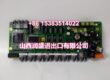
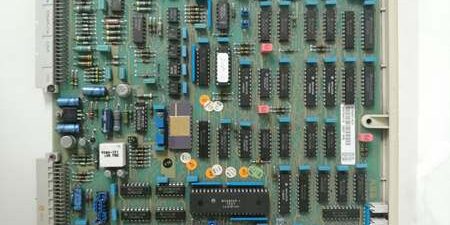
- Model: DSDP140B, OEM part number 57160001-ACX, upgraded variant of DSDP140A
- Brand: ABB
- Series: S100 rack digital output hardware for Advant Mod300 legacy DCS systems
- Core Function: Drive 24VDC field solenoid valves, pump starters, and safety interlock relays from Mod300 controller discrete logic commands
- Product Type: Slide-in S100 rack digital output PCB, mates exclusively with DSTA001 / DSTA001B field termination unit
- Key Specs: 16 sinking digital output channels | 0.5A per channel max load | Group 500VAC isolation | Hot-swap certifiedNote: Discontinued legacy discrete I/O module, stocked inventory is New Surplus with intact factory anti-static sealed packaging.
Key Technical Specifications
- Auxiliary rack operating supply: 24VDC ±20% logic feed, total module power draw ≤1.2W
- Field output rating: 24VDC sinking transistor outputs, maximum 0.5A continuous per channel
- Channel grouping: Four isolated groups of four output channels each
- Galvanic isolation: 500VAC dielectric separation between each group and S100 backplane logic
- Circuit protection: Per-channel self-resetting PTC short-circuit foldback, reverse field voltage blocking, EMC surge clamping
- Onboard diagnostics: Front panel LED per-channel status, global undervoltage and short-circuit fault indicator
- Hot-swap rating: Fully hot-swappable on energized Mod300 S100 backplane racks
- Continuous operating temperature: -20°C to +60°C full rated channel load; linear performance derate above 60°C
- Storage environmental limits: -40°C to +85°C, 5%–95% RH non-condensing
- Physical dimensions: 210mm D × 18mm W × 226mm H; unit mass 0.38kg
- Compliance standards: CE, UL, RoHS, IEC 61000-6-2 Class A industrial EMC
- System compatibility: Advant Mod300 racks with AC410 / AC460 controllers; incompatible with S800, AC800M, Symphony HR, UNITROL, S400 remote I/O platforms
Product Introduction
This high-density discrete output rack card delivers transistor-based 24VDC drive signals to field actuators for Mod300 process control systems. Four separate isolated channel groups limit fault propagation, so a shorted solenoid coil only disables four channels instead of the full 16-point bank.Self-resetting PTC overcurrent protection prevents permanent transistor burnout from wiring shorts, and hot-swap capability enables targeted module replacement without full rack power shutdown for non-critical interlock segments.
QA & Testing SOP (Transparency Building)
- Incoming Inspection: Cross-reference serial numbers against ABB Mod300 legacy component trace databases; inspect backplane gold edge fingers for oxidation, front channel LED segment integrity, PCB conformal coating for peeling; verify factory static packaging seal remains unbroken for surplus inventory.
- Live Testing: Mount the module to a Mod300 rack test bench paired with a controller simulator and miniature solenoid load banks drawing 0.5A max per channel; run uninterrupted 24-hour cyclic on/off switching across all 16 channels; use a Fluke 115 to log steady 24VDC auxiliary supply voltage through the full test cycle.
- Electrical Testing: Perform 500VAC hipot insulation testing between every four-channel isolated group and rack backplane logic ground; pass threshold set at >10MΩ insulation resistance; inject short-circuit and reversed 24VDC field faults to confirm PTC foldback activates without damaging output transistor semiconductors.
- Firmware/Config Backup: No user-programmable onboard firmware; photograph DSTA001 terminal pin layouts and document factory group isolation wiring rules for site commissioning reference.
- Final QC & Packaging: Torque all DSTA001 terminal screw connections to OEM torque specifications; enclose the board in static-dissipative foam; attach a printed QC tag listing serial number and completed test metrics before carton sealing.
Installation Pitfalls & Guide (Engineer to Engineer)
❗Firmware Mismatch Risk: Outdated Mod300 rack controller firmware lacks calibrated discrete output timing profiles for the module. Fault outcome: Slow or unresponsive solenoid actuation, delayed safety interlock trip signals during process load transients. Mitigation: Flash matching validated firmware revisions to the Mod300 CPU before rack power-up; archive compatible firmware files to plant engineering servers.❗Excessive Field Load Current Risk: Connecting solenoids drawing more than 0.5A per channel triggers continuous PTC foldback cycling. Fault outcome: Rapid cycling valve actuation, persistent module fault alarms. Mitigation: Install intermediate relay interposers for field loads exceeding the 0.5A single-channel limit.❗Platform Incompatibility Risk: Attempting to install the module into S800 or UNITROL racks creates mismatched backplane pinouts and unregulated supply exposure. Fault outcome: Burned output transistor circuits, permanent channel failure. Mitigation: Only deploy the unit within dedicated Mod300 racks paired with DSTA001 connection units.❗Cross-Group Common Wiring Error: Jumping negative return lines across separate isolated channel groups breaks galvanic separation performance. Fault outcome: Cross-group signal bleed creates unintended simultaneous solenoid energization events. Mitigation: Maintain isolated negative return wiring for each four-channel group per the DSTA001 wiring schematic.❗ESD Dangers: Low-humidity refinery control room air generates static charge that damages delicate output drive transistors on the PCB. Field service logs show ungrounded handling creates intermittent stuck-on actuator faults that require 5–9 hours of interlock diagnostic labor to isolate. Mitigation: Establish direct contact with bare cabinet chassis ground metal for three full seconds before touching backplane edge fingers or field terminal blocks.
4-Step Replacement Guide
- Pre-install: Set the Mod300 controller to manual hold mode to lock all discrete interlock logic states; photograph all solenoid and relay field wiring assignments on the DSTA001 connection unit, and record group isolation terminal layouts.
- Removal: Unlatch the module from the rack slot by releasing retention clips and pulling straight outward off gold backplane contacts; leave all field wiring terminated to the connection unit to eliminate full retermination labor.
- Install: Align the new unit’s rear backplane contacts with the rack slot and push fully seated until retention clips audibly lock; replicate group isolation wiring rules and discrete interlock logic parameter settings within Mod300 configuration software to match original process requirements.
- Power-on Test: Energize 24VDC auxiliary rack supply; cycle on/off commands to all 16 output channels via the controller simulator and confirm consistent solenoid actuation with zero short-circuit fault flags accumulating during 30 minutes of idle interlock testing before restoring live process control logic.
FAQ (Frequently Asked Questions)
Q: Can this unit directly replace lower-density DSDP140A hardware without Mod300 point database edits?A: No, DSDP140A uses an 8-channel layout with different DSTA terminal pin mapping. Cross swap requires full rework of all field solenoid wiring and re-indexing all discrete point addresses in the Mod300 database.Q: Does hot-swap capability remove the requirement to set the controller to manual hold mode during replacement?A: Hot-swap only protects the module’s internal circuits from power surge damage; it does not hold steady output states during the swap window. Manual hold mode remains mandatory to prevent unplanned valve or pump actuation.Q: What warranty coverage applies to surplus stocked units?A: A 12-month limited warranty only covers factory manufacturing defects. Damage from over-current field loads, ungrounded ESD handling, cross-platform rack installation, or sustained channel wiring short-circuits is excluded from warranty claims.Q: If one single channel inside a four-channel group fails, can individual transistor components be repaired on-site?A: Field repair of damaged output transistors is not recommended for critical safety interlock systems. Repaired PCB trace paths degrade group isolation performance and raise risk of unintended actuator energization events; full module swap is the standard site maintenance procedure.Q: Can multiple units share a single 24VDC auxiliary power circuit in one Mod300 rack?A: Multiple units may share one 24VDC supply only if the supply unit maintains 20% extra current headroom above total combined module power draw. Independent auxiliary feed wiring is recommended for racks with six or more installed digital output modules to eliminate voltage sag during simultaneous solenoid switching events.Q: Is this digital output module rated for Class 1 Div 2 hazardous cabinet deployment inside gas turbine MCC rooms?A: No, the open rack slide-in PCB design lacks intrinsic safety certification for flammable vapor environments. Flameproof dedicated discrete I/O enclosures are required for hazardous area process plant installations.Q: What long-term upgrade path exists as this component reaches ABB end-of-support status?A: Modern ABB control deployments use S800 DO810 digital output modules for new cabinet builds. Retrofit swaps require full Mod300 rack migration, DSTA wiring rework, and complete discrete channel parameter reconfiguration in the DCS control database.