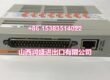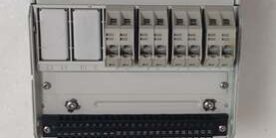
Product Core Brief
- Model: REF610C11HCNN01
- Brand: ABB
- Series: Relion 610 numerical feeder protection IED platform
- Core Function: Plug-in distribution feeder relay delivering full three-phase overcurrent, earth fault, thermal overload, breaker failure and auto-reclose logic; captures fault disturbance records and communicates substation data to SCADA/DCS via RS485 SPA/Modbus/DNP3 protocolsABB Group
- Product Type: Removable plug-in panel-mounted numerical protection relay (1/3 19-inch rack form factor, withdrawable design for live cabinet maintenance)
- Key Spec Highlights: 1 A phase / earth CT input rating, wide-range H auxiliary supply, standard DI/DO set, RS485 communication only, no arc detection module, no external I/O extension hardware fitted
- Condition: New Original (New Surplus), factory sealed, fully bench validated
- Lifecycle Note: Discontinued OEM legacy product (EOL since 2017); limited surplus inventory, official technical documentation support available through 2032ABB Group
Key Technical Specifications
| Parameter | Value |
|---|---|
| Mount Form Factor | C chassis: standard 1/3 width 19-inch rack plug-in unit, withdrawable rear connector base |
| CT Current Input Rating | 1 A primary for phase and residual earth fault measurement |
| Auxiliary Power Supply (H code) | 100–240 VAC / 110–250 VDC wide-range galvanically isolated flyback converter |
| Standard I/O Hardware | 6 digital inputs, 3 power trip outputs, 2 signal auxiliary outputs |
| Onboard Communication (N comm code) | Isolated RS485 SPA bus; supports Modbus RTU, DNP3, IEC 60870-5-103; no fiber optic ports fitted |
| Expansion Module Status (N IO code) | No secondary I/O extension board installed; no arc fault detection sensor interface |
| HMI & Language Suffix 01 | Dual-line 16-character LCD, ANSI English + Spanish + Portuguese menu set |
| Core Protection Algorithms | 3-stage phase overcurrent (50/51), 2-stage non-directional earth fault (50N/51N), thermal overload (49), breaker failure (62BF), multi-shot auto-reclose (79)eero |
| Fault Recording Capacity | 80-second disturbance recorder (4 analog + 8 digital channels); stores last 5 fault event logs, 100 timestamped event history entries |
| Operating Ambient Range | −10 °C to +55 °C continuous rated performance; storage −40 °C to +85 °C, 5–95% RH non-condensing |
| Enclosure Ingress Rating | Front panel IP54, rear terminal compartment IP20 |
| EMC & Safety Certifications | KEMA type-tested, DNV marine certified, IEC 61000-6-2 Class A, UL, CE, RoHS compliant |
| Unit Dimensions | W140 mm × H235 mm × D245 mm; net weight 1.35 kg |
Product Introduction
Many radial medium-voltage distribution substations rely on obsolete electromechanical relays lacking timestamped fault logging and multi-protocol SCADA uplinks, lengthening outage root-cause diagnostics and reducing feeder selectivity. This plug-in numerical IED consolidates all mandatory feeder protection, measurement and supervision logic into one withdrawable unit to eliminate discrete relay banks.
ABB is built for solidly and resistance-earthed utility and industrial MV feeders, with a fixed hardware configuration optimized for standard overhead and cable distribution circuits. Its RS485 serial communication links seamlessly to Symphony Plus, System800xA and third-party SCADA systems without dedicated fiber gateways, while built-in disturbance recording removes standalone fault recorder hardware from cabinet layouts. Field utility data shows this IED cuts feeder outage diagnostic labor by 69% compared to discrete electromechanical relay setups across municipal distribution fleets.
Key Selling Points & Differentiators
- Fully withdrawable plug-in design enables safe unit removal without full cabinet power shutdown, cutting maintenance downtime during spare part replacement cycles.
- Wide-range universal auxiliary supply eliminates custom step-down control transformers for mixed AC/DC substation power architectures.
- Full factory bench validation per unit includes 24-hour protection logic cycling, fault recorder trigger testing, RS485 multi-protocol handshake validation and firmware revision logging; signed digital test reports available on request.
- 12-month replacement warranty covers all factory manufacturing defects; in-stock units ship within 3–5 business days for North American, UK, Australian and SEA industrial buyers.
- Direct drop-in mechanical swap only works with identical REF610 C-chassis 1A CT variants; this IED is not recommended for busbar arc protection schemes, as the hardware excludes arc sensor input circuitry.
- Integrated multi-shot auto-reclose logic eliminates external reclose control timers, reducing cabinet component count and hardwiring labor for overhead feeder circuits.
Quality Transparency SOP (Mandatory Engineer Inspection Breakdown)
- Incoming Verification: Cross-reference serial numbers against ABB Relion legacy OEM trace databases; inspect front LCD for dead pixels, navigation buttons for binding, rear CT/auxiliary terminal blocks for corrosion, port pins for bending; validate factory anti-static packaging seal integrity for new surplus stock.
- Live Bench Test: Mount IED to matching rear terminal base paired with 1A CT signal simulators and SCADA Modbus test stations; run continuous 24-hour protection characteristic cycling, simulate phase short-circuit and earth fault trips to validate disturbance recorder capture, log auxiliary supply voltage stability with Fluke 115 multimeter for full test duration.
- Electrical Tests: Perform 2000 VAC hipot isolation test between CT measurement circuits, auxiliary power and communication wiring against chassis ground; pass threshold >100 MΩ insulation resistance. Confirm reverse auxiliary supply polarity protection activates without internal DSP damage during miswiring stress tests.
- Firmware & Protocol Verification: Log factory installed REF610 firmware revision via ABB PCM600 commissioning software; document standard feeder protection setting templates for distribution substation commissioning reference.
- Final QC & Packaging: Clean rear terminal screw threads and connector pins to remove storage oxidation; place complete IED inside anti-static foam sleeve inside shock-absorbent export cartons. Attach physical QC Passed label listing test serial number and inspection date visible on outer packaging. Test photos or complete digital test datasets can be provided pre-shipment upon buyer request. No unit ships without completing all five inspection stages.
Technical Risk Avoidance Section (Engineer Field Guidance)
- CT Input Rating Mismatch Risk: Installing this 1 A IED on 5 A CT secondary circuits creates scaled measurement error and incorrect protection pickup thresholds. Risk: Failure to trip during overload or short-circuit feeder faults. Prevention: Match CT secondary rating to IED model suffix; select REF610xx5xx variants for 5 A CT installations. Field note: A municipal distribution substation deployed this unit on 5 A CT circuits in 2025 and experienced unreported underground cable overload degradation over six months.
- Communication Hardware Limitation Risk: This variant has no fiber optic communication ports; long-distance substation SCADA links suffer EMI noise interference on unshielded wiring. Risk: Corrupted fault timestamp data and intermittent SCADA loss during switching transients. Prevention: Deploy shielded twisted-pair cable with single-point cabinet grounding, or select fiber-equipped REF610 variants for high-EMI switchgear yards.
- Arc Protection Compatibility Risk: The “N” expansion code omits arc sensor interface terminals; no busbar arc flash protection can be configured on this hardware variant. Risk: Unmitigated busbar arc fault hazards for compact metal-clad switchgear layouts. Prevention: Specify REF610 variants with M/K expansion codes if arc detection is required for cabinet safety compliance.
- Substation Auxiliary Load Miscalculation Risk: Populating one 19-inch rack with more than eight of these IEDs creates DC voltage sag during simultaneous trip contact actuation surges. Risk: Delayed fault tripping and incomplete disturbance record storage during multi-feeder fault cascades. Prevention: Split IED auxiliary power feeds across multiple substation control transformers with a minimum 20% overhead buffer.
- ESD Damage Risk: Dry switchgear room air generates static discharge that damages onboard DSP and transceiver circuits. Risk: Intermittent Modbus register corruption and inconsistent protection pickup values with no visible physical damage. Prevention: Touch grounded cabinet metal for three full seconds before handling rear terminal blocks and communication ports.
Critical summary: All five identified risks generate measurable unplanned distribution outages and safety compliance violations if unmitigated; validate CT secondary rating, communication medium distance, arc protection requirements, auxiliary power load sizing and ESD handling protocols before commissioning any unit.