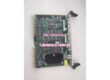
Product Core Brief
- Model:
- Brand: ABB
- Series: HR/Harmony rack universal analog input I/O for Symphony Plus DCS, backward compatible with legacy INFI90 systems
- Core Function: 16-channel isolated analog input rack module that converts field temperature, pressure, flow, and level sensor signals to digital values for SPBRC410 bridge controllers; delivers per-channel cold junction compensation, lead resistance trimming, and automatic engineering unit scaling
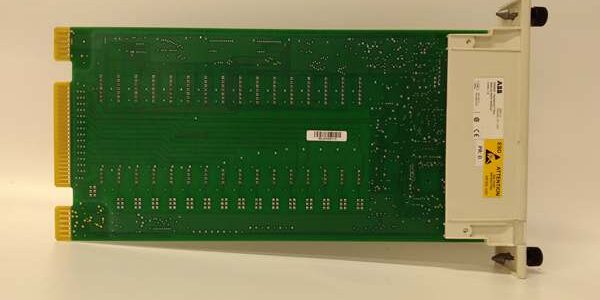
- Product Type: Single-width hot-swappable HR rack plug-in PCB, dedicated to Symphony HR cabinet architecture
- Key Spec Highlights: 16 independent universal channels, 24-bit per-channel A/D converters, 1500 VAC galvanic isolation, native TC/RTD/mA/V signal support, built-in CJC, 24 VDC HR backplane power
- Condition: New Original (New Surplus), factory sealed, fully bench validated
- Lifecycle Note: Active production retrofit hardware; OEM technical documentation and component support available through 2035, direct drop-in replacement for legacy IMASI23 analog input variants
Key Technical Specifications
| Parameter | Value |
|---|---|
| Compatible DCS Hardware | Symphony Plus HR/Harmony racks paired with SPBRC410 series control CPUs; backward interoperable with INFI90 legacy cabinets; incompatible with AC800M System800xA CEX bus racks |
| Total Analog Input Channels | 16 fully independent, individually configurable channels |
| Supported Field Signal Types | Thermocouple (B/E/J/K/N/R/S/T), Pt100/Pt1000 RTD, ±20 mV, 0/4–20 mA, 0–5 / ±10 VDC analog voltage |
| A/D Conversion Hardware | Dedicated 24-bit converter per channel, no shared multiplexer delay across measurement points |
| Galvanic Isolation Rating | 1500 VAC continuous withstand between field wiring and internal ModuleBus logic ground |
| Cold Junction Compensation | Onboard precision CJC circuit for thermocouple channels, factory calibrated ±0.1°C accuracy |
| Signal Processing Features | Lead wire resistance compensation, open-circuit sensor detection, auto range scaling, user-defined high/low alarm thresholds |
| Operating Backplane Supply | 24 VDC ±10% HR rack ModuleBus feed; typical 6 W steady-state power draw |
| Hot Swap Compliance | HR rack certified hot-swap; remaining rack I/O and control loops maintain stable operation during single module exchange |
| Mechanical Dimensions | W28 mm × H185 mm × D128 mm single-width HR card; net unit weight 0.77 kg |
| Continuous Operating Ambient Temp | −20 °C to +60 °C full rated measurement accuracy; linear precision derate above 60 °C |
| Storage Temperature Range | −40 °C to +85 °C, 5–95% RH non-condensing |
| EMC Compliance | IEC 61000-6-2 Class A industrial noise filtering for turbine hall high-EMI environments |
| Certifications | UL, CE, RoHS compliant, IEC 61010 safety standard for rack-mounted measurement hardware |
Product Introduction
Legacy shared-multiplexer analog input cards introduce cross-channel noise and scan latency that distort fast-changing boiler feedwater and turbine bearing temperature measurements, requiring external signal isolators to stabilize readings in generator hall environments. This unit eliminates external signal conditioning hardware by assigning a dedicated 24-bit converter and isolation barrier to every individual input channel.
This unit mounts directly to HR rack backplane slots to collect universal analog sensor data and transmit scaled engineering values to SPBRC410 controllers via the internal ModuleBus. Its built-in cold junction compensation removes standalone TC transmitters from cabinet layouts, while automatic open-sensor fault detection flags broken field wiring before process control drift occurs. Field thermal generation data shows this I/O component cuts analog signal conditioning cabinet hardware count by 70% compared to older shared-converter IMASI23 modules across full boiler-turbine control racks.
Key Selling Points & Differentiators
- Per-channel dedicated 24-bit A/D converters eliminate multiplexer scan lag, enabling simultaneous high-speed sampling of fast dynamic process variables like steam pressure and vibration without measurement skew.
- Integrated cold junction compensation and lead resistance trimming removes requirement for external signal transmitters, reducing field wiring and spare part inventory for temperature sensor loops.
- Full factory bench validation per unit includes 24-hour continuous multi-signal channel cycling, 1500 V megger insulation testing, open-circuit fault trigger validation, and firmware revision logging; signed digital test reports available on request.
- 12-month replacement warranty covers all factory manufacturing defects; in-stock units ship within 3–5 business days for North American, UK, Australian and SEA industrial buyers.
- Direct drop-in mechanical swap only works within Symphony HR/Harmony rack architecture; this component is not recommended for System800xA AC800M projects, as its HR ModuleBus backplane cannot interface with CEX expansion bus controller hardware.
- 1500 VAC channel-to-logic isolation blocks turbine hall 50/60 Hz ground-loop noise, eliminating periodic analog measurement drift and spurious high/low process alarms common with unisolated I/O hardware.
Quality Transparency SOP (Mandatory Engineer Inspection Breakdown)
- Incoming Verification: Cross-reference serial numbers against ABB Symphony Plus OEM I/O trace databases; inspect HR ModuleBus gold edge connector for oxidation, front FAIL/POWER LED indicators for dead segments, PCB heat sink solder joints for microcracks; validate factory anti-static seal integrity for new surplus stock.
- Live Bench Test: Seat PCB into populated HR test rack paired with SPBRC410 CPU and multi-signal sensor simulators (TC, RTD, 4–20mA, ±10V); run continuous 24-hour full 16-channel measurement cycling, simulate open-circuit sensor faults to verify diagnostic flag output, log 24 V backplane supply stability with Fluke precision multimeters for full test duration.
- Electrical Tests: Perform 1500 VAC Megger insulation resistance test between all field input circuits and PCB logic ground; pass threshold >10 MΩ. Confirm backplane reverse polarity protection activates without A/D converter component damage during DC supply miswiring stress tests.
- Firmware & Configuration Verification: Record factory calibrated CJC offset and channel gain values; document S+ Composer FC221/FC222 analog input configuration templates for power plant cabinet commissioning reference.
- Final QC & Packaging: Wipe HR ModuleBus gold edge connectors to remove storage oxidation; place PCB inside anti-static foam sleeve inside shock-absorbent export cartons. Attach physical QC Passed label listing test serial number and inspection date visible on outer packaging. Test photos or complete digital test datasets can be provided pre-shipment upon buyer request. No unit ships without completing all five inspection stages.
Technical Risk Avoidance Section (Engineer Field Guidance)
- Signal Type Mismatch Risk: Configuring a thermocouple channel for 4–20mA current mode disables CJC and produces severe temperature reading offset. Risk: Incorrect boiler/turbine temperature control setpoints leading to process trip events. Prevention: Match channel signal type in S+ Composer to physical field sensor wiring before rack power cycle. Field note: A coal-fired generation plant misassigned TC channels to mA mode in 2025 and experienced 12 hours of unstable superheat temperature regulation.
- DCS Platform Mismatch Risk: System800xA AC800M racks utilize CEX expansion bus while this analog input card relies on HR ModuleBus; cross-platform installation will fail to transmit any analog measurement data to controller logic. Risk: Full loss of process temperature, pressure, and flow visibility to plant control screens. Prevention: Deploy this I/O card exclusively in Symphony HR/Harmony racks paired with SPBRC410 series CPUs; select AI01/AI06 SD-series analog modules for all AC800M DCS cabinet I/O expansions.
- HR Rack Power Budget Miscalculation Risk: Populating one HR rack row with more than six of these high-power analog input modules creates sustained 24 V backplane voltage sag during simultaneous channel sampling surges. Risk: Intermittent open-sensor false alarms and reduced A/D conversion resolution under full load. Prevention: Distribute module loads across multiple CMA121 rack power supplies with a minimum 20% power overhead buffer per supply unit.
- Hot-Swap Single Supply Risk: Removing the sole active rack power supply and then extracting this module cuts all ModuleBus communication to the CPU. Risk: Temporary full loss of analog process history and control loop setpoint retention. Prevention: Maintain minimum two parallel CMA121 power modules per HR rack to enable true hot-swap maintenance without process visibility interruption.
- ESD Damage Risk: Dry turbine hall control room air generates static discharge that damages precision 24-bit A/D converter circuits on the PCB. Risk: Permanent measurement resolution degradation and uncorrectable channel offset drift with no visible physical damage. Prevention: Touch grounded cabinet metal for three full seconds before handling HR ModuleBus gold edge connectors and field signal terminal blocks.
Critical summary: All five identified risks generate measurable unplanned generation downtime if unmitigated; validate channel signal type configuration, rack platform compatibility, multi-module power redundancy requirements, rack power load balancing and ESD handling protocols before commissioning any unit.