Product Core Brief
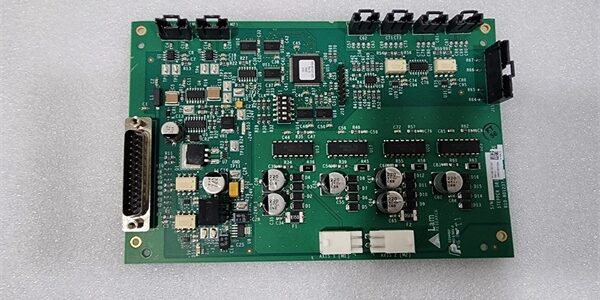
- Model: 810-801237-021 (Revision 021, stepper driver interface PCBA; cross compatible Rev 022 variant)
- Brand: LAM Research
- Series: Wafer Handling Robot Motion Drive Interface for Kiyo C Series / TCP9400 300mm plasma etch cluster platforms
- Core Function: Receive RS422 pulse/direction motion commands from VIOP III master control board, condition and amplify signals to generate high-resolution 1/128 micro-stepping bipolar drive waveforms for up to four robot stepper axes; monitor motor winding stall current, sample resolver encoder position feedback, execute soft-stop overtravel interlocks, and return closed-loop motion telemetry back to the VIOP host via differential serial bus.
- Product Type: Compact rack-mount stepper drive printed circuit board assembly with multi-channel motor terminal headers, DB25 VIOP communication connector, onboard H-bridge power drive ICs
- Key Specs: 4-axis micro-stepping drive outputs | 2–6A peak phase current per axis | 1500VAC galvanic RF noise isolation | <0.9ms stall/overtravel fault response latency
- Condition: New Original (New Surplus); Legacy OEM spare, limited factory stock reserved for active Kiyo/TCP9400 300mm etch fleets.
Key Technical Specifications
- Motion axis capacity: Four independent bipolar stepper motor drive channels for cluster tool wafer transfer robot arms
- Microstepping resolution: Native 1/128 fractional stepping to eliminate torque ripple and ensure ultra-smooth wafer handoff
- Drive output rating: Per-axis 2–6A peak winding current, short-circuit protected H-bridge power stages
- Command interface: Differential RS422 pulse/direction serial link for VIOP host communication, fixed 20Hz motion telemetry refresh rate
- Encoder feedback: Resolver analog stall current sampling + 5V differential A/B/Z position encoder input channels
- Operating supply: Regulated 24VDC cabinet logic power, maximum 23W continuous power draw under full four-axis load
- Fault detection latency: <0.9ms trip response for motor stall, winding short, axis overtravel, and encoder loss fault conditions
- Signal isolation rating: 1500VAC reinforced galvanic isolation separating field motor wiring and VIOP logic circuits to suppress 13.56MHz chamber plasma RF cross-talk
- EMI mitigation: Multi-layer segmented PCB ground planes, integrated ferrite filtering, shielded differential pulse traces
- Mechanical mounting: Standard compact vertical slot dedicated to chamber robot motion subrack assemblies
- Operating ambient range: 10°C to +50°C process cabinet; storage -40°C to +85°C, non-condensing 5–90% RH humidity limits
- Protection circuits: Per-channel ESD surge suppression (500V transient withstand), reverse polarity lockout, over-temperature auto drive output cutoff
- MTBF rating: ≥88,000 hours under continuous 24/7 high-volume fab 24/7 production duty cycle
- Compliance: CE, UL, SEMI S2 safety standard certified for front-end 300mm semiconductor wafer processing equipment
Product Introduction
LAM 810-801237-021 operates as the dedicated four-axis stepper power amplifier inside Lam Kiyo C and TCP9400 12-inch plasma etch cluster tools, acting as the physical motion execution layer paired with VIOP III master motion control boards. It converts low-voltage differential motion command signals from the VIOP controller into high-current micro-stepping drive outputs for robot transfer arms, continuously monitoring motor stall and position feedback to prevent wafer edge chipping, substrate misplacement, and batch scrap during chamber handoff cycles.
Its core differentiator is integrated multi-axis micro-stepping signal conditioning and full galvanic plasma RF noise isolation. Uncertified generic substitute driver boards lack matched differential noise filtering and suffer RF interference from process chambers, creating robot motion jitter, inconsistent wafer placement offset, and reduced production yield. The unit supports controlled hot-swap service without full robot motion power shutdown during scheduled preventive maintenance cycles.
Firmware/Software Versions & Upgrade Notes
- Supported Lam Process Control Software (PCS): v6.0 through v8.2; PCS v8.4 and newer releases drop native RS422 serial handshake compatibility with this Rev 021 stepper interface hardware.
- Recommended onboard firmware revision: Factory pre-flashed Rev 021 build; alternate Rev 022 variant features minor stall current threshold tuning differences and requires full axis re-calibration for cross-replacement.
- Upgrade risk warning: Downgrading tool VIOP III master board firmware below v7.3.0 breaks bidirectional motion setpoint and stall telemetry polling with the stepper driver card. Match VIOP host and stepper interface firmware release families before chamber PM work.
- Firmware storage location: Onboard small non-volatile flash memory integrated to the main PCBA. Export all four-axis velocity/acceleration profiles, stall current thresholds, and overtravel interlock limit values via the tool HMI before executing any firmware flash operation.
- OEM constraint: Lam Research restricts official firmware file distribution exclusively to certified fab service partners post-2023; validate local firmware archive files prior to field installation to avoid serial communication handshake failures.
Frequently Asked Questions
- Can I remove this stepper driver interface board while the process chamber remains pressurized and robot axes energized?RS422 serial bus buffering prevents full loss of robot motion telemetry data, but fully de-energize all chamber stepper motor power supplies, vent chamber vacuum, and engage cabinet safety lockouts before extraction. Live high-frequency plasma RF noise generates transient serial bus interference that corrupts robot axis stall threshold and position offset calibration values stored on the unit’s onboard flash memory. Always complete a full robot motion parameter backup via the tool HMI first.
- Can I source a direct drop-in OEM replacement given this hardware is a legacy Kiyo/TCP9400 robot motion spare?Lam Research maintains limited New Surplus factory stock of the part, but third-party aftermarket refurbished assemblies use uncalibrated generic H-bridge drive ICs and omit full 13.56MHz RF noise immunity thermal cycling testing. New Surplus unopened factory stock is the only plug-and-play option; refurbished units require a full 48-hour four-axis robot motion load bench calibration before installation into production etch chambers.
- Will swapping this stepper driver interface erase saved robot axis acceleration profiles or stall current safety limits?All four-axis trajectory tuning tables, stall current threshold calibrations, and mechanical overtravel safety trip thresholds reside on the board’s internal flash memory. Complete a full robot motion parameter backup via the tool HMI before any swap to restore calibration data if RS422 serial handshake communication errors occur post-installation.
- What warranty coverage comes with New Surplus OEM inventory versus refurbished units?Our New Surplus OEM stock carries a 12-month full functional warranty matching original Lam factory spare coverage. Refurbished aftermarket assemblies ship with only a 3–6 month limited warranty, as aged H-bridge drive semiconductors and differential signal receivers create unquantified risk of mid-run robot motion stall or wafer misplacement that cracks production wafer substrates.
- Why is New Surplus OEM hardware priced higher than aftermarket refurbished equivalents?New Surplus inventory retains factory-calibrated micro-stepping pulse timing tolerances, zero operating hour thermal fatigue on power drive ICs, and full traceability to Lam’s component validation batches. Refurbished units reuse aged PCBs, generic replacement H-bridge semiconductors, and skip full plasma RF interference cycling testing; hidden motion timing drift and stall detection offset defects lead to unplanned chamber downtime with far greater total wafer scrap cost than the upfront component price difference.
- What cross-compatibility differences exist between Rev 021 and Rev 022 of this stepper driver board?Rev 022 features revised onboard stall current detection thresholds optimized for newer lightweight robot arm assemblies; direct cross-replacement of Rev 021 with Rev 022 requires full four-axis motion load calibration and revalidation of all overtravel interlock limits. This board series only integrates with Kiyo C and TCP9400 300mm etch robot subrack assemblies, with zero cross-compatibility for older 200mm Lam etch fleets due to mismatched serial register mapping and motor terminal pinouts.
- What routine maintenance schedule applies to this stepper driver interface in high-volume production fabs?Execute full four-axis micro-stepping signal integrity and stall fault detection validation every 6 months during scheduled chamber PM cycles. Replace the complete unit after 39,000 operating hours, as onboard H-bridge drive ICs and differential signal conditioning circuits develop gain drift under continuous cabinet heat and 13.56MHz RF plasma exposure that degrades long-term wafer transfer placement repeatability.