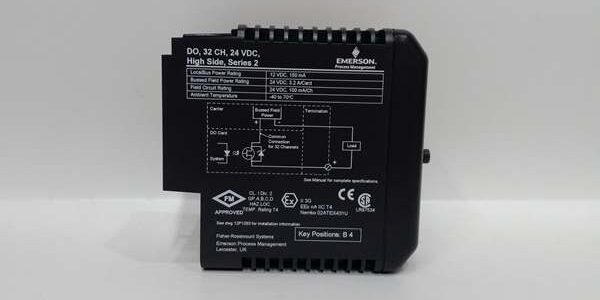
Product Core Brief
- Model: KJ3003X1-EA1 (cross reference PN 12P0921X032)
- Brand: Emerson DeltaV
- Series: M-Series Traditional I/O Terminal Infrastructure
- Core Function: D6 mechanical keyed passive wiring base for M-series serial communication front cards, routes RS232/RS485 Modbus field serial signals
- Product Type: Plug-in rack-mounted serial communication termination carrier, anti-loose screw-clamp field terminals
- Key Specs: D6 rotary mechanical key | RS485/RS232 signal pass-through | 0.2–4mm² wire gauge capacity | 35VDC signal rating
- Note: New original surplus stock; exclusive mating with KJ3241X1-BA1 serial front card, incompatible with S-series rack hardware
Key Technical Specifications
| Parameter | Value |
|---|---|
| Compatible Front Card | KJ3241X1-BA1 (VE4006P2) M-Series serial communication module |
| Mechanical Key Position | Rotary lock Key D6, blocks non-serial I/O card insertion |
| Field Termination Style | M3 anti-vibration screw clamp terminals |
| Supported Wire Sizes | 0.2–4 mm² solid or stranded copper wire |
| Signal Interface Types | Unfiltered RS232, RS485 Modbus RTU transparent routing |
| Max Signal Voltage Rating | 35 VDC field serial signal circuits |
| Mounting Standard | DeltaV M-Series 35mm DIN rail I/O carrier racks |
| Hot-Swap Rules | Front serial card supports hot-swap; full rack power shutdown required for base removal |
| Operating Temperature | -40°C to +70°C operational; -40°C to +85°C storage |
| Environmental Grade | ISA S71.04 G3 corrosive gas resistant, full PCB conformal coating |
| Vibration & Shock | 1mm pp (2–13.2Hz); 0.7g constant (13.2–150Hz); 10g half-sine 11ms shock |
| Physical Dimensions | 130mm W × 90mm H × 25mm D; net weight 0.31 kg |
| Hazardous Certifications | FM Class I Div2, ATEX Ex ec IIC Gc (Zone 2 cabinet mounting only) |
| Enclosure Rating | IP20, restricted to indoor control cabinet installation |
Product Introduction
This passive wiring carrier delivers fixed field termination for multi-drop Modbus RTU serial links connected to M-series serial communication cards. Unfiltered PCB signal traces preserve RS485 baud rate integrity up to 19200 bps for third-party transmitters, flow computers and PLC slave devices.Unique D6 rotary mechanical keying physically blocks accidental pairing with analog input, discrete input or analog output front cards, eliminating LocalBus handshake failures during rushed field maintenance cycles. Screw-clamp terminals maintain consistent low contact resistance under continuous cabinet vibration from cooling fans and pump motor drives.
QA & Testing SOP
- Incoming Inspection: Cross-reference serial numbers against OEM factory batch logs; inspect backplane gold edge connectors for oxidation and plastic housing for cracked key lock tabs. Reject units with stripped terminal screw threads.
- Mechanical Mating Test: Insert matching KJ3241X1-BA1 front serial card 500 times to validate full D6 key lock engagement and consistent low contact resistance across all signal pins.
- Continuity & Serial Path Test: Use Fluke 115 multimeter to verify unbroken signal paths between each field terminal and backplane pins; confirm no capacitive filtering that attenuates high-speed RS485 digital signaling.
- Key Incompatibility Check: Attempt insertion of DI/DO/AI/TC front cards to confirm the D6 mechanical lock fully blocks seating of mismatched I/O hardware.
- Final QC & Packaging: Purge PCB traces with dry nitrogen to remove industrial particulate contamination; seal unit in static-shield bag with printed test report capturing mechanical mating cycle and continuity data.
Installation Pitfalls & Guide
❗ ESD Component Failure Risk: Ungrounded contact with backplane traces damages serial signal routing circuits; full rack downtime labor costs exceed $2,500. Always attach a grounded anti-static wrist strap to cabinet safety ground before handling the base.❗ Zone 0/1 Hazardous Area Misapplication: The terminal base only holds Div2 safety certification. Deploying it in Zone 0 or Zone 1 flammable gas cabinets voids all safety approvals and creates ignition hazards.❗ S-Series Rack Cross-Installation: This hardware uses incompatible pinout and mechanical form factor with S-series carriers; forced insertion permanently bends rack backplane gold pins and disables LocalBus communication.❗ Improper Wire Torque: Under-tightened screw terminals loosen over vibration, triggering intermittent Modbus timeouts; over-torquing strips threads and fractures copper wire strands.❗ Live Base Removal Prohibition: The base carries shared serial signal rails. Removing the unit while rack power stays energized cuts all Modbus communication links simultaneously and breaks third-party device data collection.
4-Step Replacement Guide
- Pre-install: Execute full rack lockout/tagout and shut down rack power supply; photograph all /RS232 field terminal wiring pin assignments for rebuild reference. Hot-swap is not supported for the base assembly.
- Removal: Extract the paired KJ3241X1-BA1 front serial card first; unclip DIN rail mounting latches and slide the empty base horizontally off the carrier rail.
- Install: Clip the new unit firmly onto M-Series DIN rail; set rotary mechanical key to D6 serial comm profile; rewire each Modbus field trunk per pre-install photos and torque screw terminals to OEM specified value. Reinsert the matching front serial card until key lock fully engages.
- Power-on Test: Restore rack power; poll all connected Modbus slave devices at 9600 and 19200 bps to confirm unbroken serial communication, then monitor DeltaV diagnostic console for zero persistent bus error counters.
FAQ
Q: Can this base operate without the matching KJ3241X1-BA1 front serial card?A: No, the base is a passive wiring carrier with no serial processing hardware; all transceiver logic and Modbus polling functions reside entirely on the paired front communication module.Q: Is hot-swapping allowed for this terminal base assembly?A: Hot-swap functionality only applies to the front serial card. The base itself must be removed with full rack power disconnected to avoid simultaneous loss of all Modbus communication links.Q: What fault patterns indicate a damaged terminal base?A: Persistent Modbus CRC errors with stable field wiring, rising contact resistance on screw terminals, inability to lock the paired front card via rotary key, or bent backplane edge pins causing intermittent LocalBus timeouts.Q: Can multiple Modbus slave devices wire in parallel on a single terminal pair?A: Yes, the unfiltered signal routing supports standard multi-drop Modbus topology, as long as total trunk cable length stays within OEM distance limits for the selected baud rate.Q: What warranty coverage applies to new surplus stock?A: A 12-month limited warranty covers terminal housing, screw clamp hardware and backplane connector manufacturing defects. Damage from ESD mishandling, over-torqued wiring, forced insertion into S-series racks, or deployment in unapproved hazardous zones is excluded from coverage.Q: Does the D6 rotary mechanical key lock prevent installation of non-serial front cards?A: Yes, each M-series terminal base model uses a unique rotary key profile. The D6 key physically blocks seating of discrete input, discrete output, analog input or FOUNDATION Fieldbus front modules to eliminate costly misconfiguration faults.