Product Core Brief
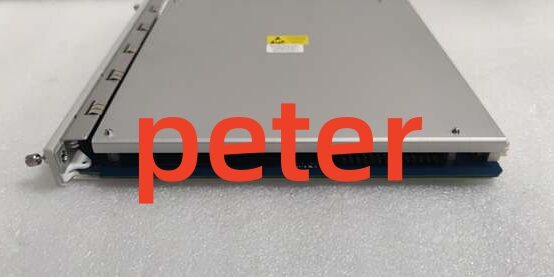
- Model: 3500/91 190782-01 (M-series EGD communication front card, integrated rear rack edge connector)
- Brand: Bently Nevada (Baker Hughes)
- Series: 3500 Machinery Protection TSI Rack System
- Core Function: Rack communication gateway that aggregates all channel vibration, temperature, overspeed data via backplane and broadcasts real-time telemetry over dual Ethernet EGD to DCS, System 1 and historians
- Product Type: Single-slot hot-swappable Ethernet global data communication module
- Key Specs: Dual isolated 10/100 RJ45 ports | EGD v2.01 protocol | Max 7.4W power consumption
- Note: Discontinued OEM legacy hardware; factory-refurbished and limited surplus stock available, superseded by updated 3500/91M variants.
Key Technical Specifications
- Rack slot requirement: Any empty single slot, compatible with all M-series monitor cards, works alongside Slot1 TDI master
- Power draw: Typical 7.4W continuous load, supplied from rack redundant 24VDC backplane bus
- Front communication hardware: Two galvanically isolated 10/100BASE-TX RJ45 Ethernet ports, IEEE802.3 compliant
- Supported industrial protocols: EGD v2.01, Ethernet UDP/IP, Modbus TCP, SNTP network time synchronization
- Backplane performance: Full rack channel data scan cycle ≤200ms; configurable EGD broadcast interval 100–1000ms
- Galvanic isolation: 1500VAC isolation barrier separating dual Ethernet transceivers and internal rack backplane logic
- Operating temperature range: -30°C to +65°C standard ambient; conformal coated version rated -40°C to +85°C offshore cabinet deployment
- Data capacity: Supports full rack tag mapping for displacement, velocity, RPM, temperature, Alert/Danger alarm status and timestamped fault events
- Redundancy function: Dual Ethernet ports connect to separate control LANs for bumpless network failover without data loss
- Physical dimensions: Standard single 3500 rack slot footprint, unit weight 0.79kg, fully hot-swap rated
- Compliance certifications: API 670, CE EMC, UL Class I Div 2, ATEX Zone 2 hazardous cabinet approval
- Critical safety note: All machinery protection relay trip logic operates independent of this unit; network outages do not disable hardwired ESD shutdown circuits.
Product Introduction
This legacy Ethernet gateway acts as a dedicated network bridge for 3500 rack telemetry, polling every monitor card over the proprietary backplane bus to compile standardized EGD data blocks for plant control systems. Dual isolated LAN ports eliminate single points of network failure for critical turbine and compressor monitoring racks.Its primary field limitation is fixed onboard tag memory. High-channel-density compressor racks exceed native tag limits, forcing technicians to split trending tags across multiple network broadcast groups and increase configuration maintenance overhead.
QA & Testing SOP (Transparency Building)
- Incoming Inspection: Cross-reference serial numbers against OEM discontinued production archives to reject counterfeit hardware. Complete physical audit of PCB traces, RJ45 port pins, front panel LINK/ACT/FAULT LEDs; capture timestamped photos of port corrosion or connector deformation.
- Live Power-On Testing: Install the device in a calibrated test 3500 rack fed by a Fluke 115 24VDC supply. Execute a continuous 24-hour load test with simulated full rack channel data traffic to validate consistent power draw and stable dual Ethernet link operation.
- Electrical Isolation Testing: Use a megohmmeter to verify insulation resistance >10MΩ between each Ethernet signal pair and rack protective ground; confirm zero leakage current across isolation boundaries under full network load.
- Firmware & Config Backup: Flash the last OEM-compatible firmware revision, log exact version numbers, and archive a blank EGD tag mapping file to offline storage. Record baseline LED behavior during LAN link failover simulation for post-replacement fault comparison.
- Final QC & Packaging: Generate full rack simulated tag traffic to validate EGD frame transmission and dual-port failover functionality. Place the unit in anti-static foam, attach serialized QC test tag with full test timestamp, and seal inside ESD shielding packaging for transit.
Installation Pitfalls & Guide (Engineer to Engineer)
❗ Firmware Rev Mismatch Risk: Mismatched rack-wide firmware revisions trigger permanent backplane handshake faults and halt EGD data broadcast. Export the full rack firmware stack before swapping the module; never deploy mixed legacy/M-series firmware sets across rack slots.❗ Dual-End Ground Loop Violation Risk: Grounding Ethernet cable shielding at both the module RJ45 ports and plant network switch marshalling racks creates circulating ground loop current that corrupts EGD data frames, causing intermittent full rack tag dropout during VFD startup transients.❗ ESD Damage Risk: Ungrounded field tools discharge static through exposed RJ45 port pins, destroying internal Ethernet transceiver circuits; OEM PCB repair costs exceed $1,700 for obsolete discontinued hardware.❗ Tag Mapping Loss Risk: Failing to export validated EGD tag group assignments prior to replacement resets all DCS trending point mappings to blank factory defaults, cutting off all machinery health visibility to plant operators.❗ LAN Single-Path Design Oversight: Routing both Ethernet ports to the same physical network switch eliminates redundant failover capability; a single switch fault fully disables all TSI telemetry transmission.
4-Step Replacement Guide
- Pre-install: Attach ESD wrist strap, photograph front panel LED link status of the existing unit, export complete rack EGD tag mapping, and record all active rack firmware revision numbers. Document physical LAN port cabling layout for post-install retermination.
- Removal: Unlatch front panel extraction levers to disengage backplane pins, slide the unit straight out of its assigned rack slot without bending PCB edge connectors; label each Ethernet cable to match port numbering from pre-install photos.
- Install: Align the replacement unit’s backplane pins with the rack bus, slide fully into the slot, squeeze extraction levers to lock contact pins, and re-terminate dual LAN Ethernet cabling strictly matching the photographed port layout.
- Power-on Test: Restore rack power, upload saved EGD tag mapping configuration, simulate a single LAN cable disconnect to validate automatic port failover, confirm continuous DCS and System1 tag readback before returning rotating equipment to automatic operation.
FAQ (Frequently Asked Questions)
Q: Does this unit support live hot-swap operation with the rack energized?A: Yes, the hardware is rated for hot-swap without full rack power loss. All monitor hardwired safety relay trip circuits remain fully active during removal and replacement, so machinery emergency shutdown interlocks never drop out mid-swap.
Q: Can this assembly be a direct drop-in replacement for newer split-base 3500/91M communication hardware?A: Physical slot compatibility exists, but cross-installation without a full rack firmware upgrade generates persistent backplane communication faults. Unified rack firmware matching the replacement hardware’s OEM release is mandatory for bumpless swap.
Q: What warranty coverage applies to refurbished surplus inventory?A: Refurbished stock carries a 12-month functional warranty covering PCB Ethernet transceivers, backplane communication circuits and onboard tag memory; cosmetic scratches and port pin wear are excluded from claims. No factory-new OEM stock is available for this discontinued part number.
Q: Will rack power cycling erase stored EGD tag mapping configurations?A: No. All tag group assignments, broadcast intervals and SNTP time sync parameters write to non-volatile onboard flash memory; power loss or full rack shutdown does not clear saved communication configuration data.
Q: Does this module store transient vibration waveform snapshots independently of the Slot1 TDI master?A: No. High-resolution post-fault waveform capture and local flash storage functionality is managed exclusively by the rack’s Slot1 TDI unit; this hardware only handles steady-state network data transmission.
Q: Can I operate the module with only one Ethernet port cabled to the plant control LAN?A: Yes, single-port operation is supported for non-critical auxiliary machinery racks. Redundant dual-port wiring is mandatory per API 670 standards for turbine and high-pressure compressor safety monitoring racks.
Q: What happens if one Ethernet port suffers a cable break or switch failure mid-operation?A: The module automatically switches all EGD data broadcast traffic to the secondary functional port within 500ms, with zero loss of channel trending data and no operator-visible DCS tag gaps. A front-panel FAULT LED illuminates to flag the failed LAN path for maintenance crews.