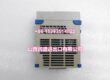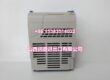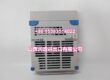
Component Snapshot At-a-Glance
- Model: SC520, full factory part number 3BSE003816R1
- Alt. P/N: SC510 (basic bus coupler, no integrated slave processor, cannot run local MasterBus logic)
- Product Series: ABB S100 I/O, Advant OCS, Advant Controller 450 (PM511V16 CPU) legacy DCS platform
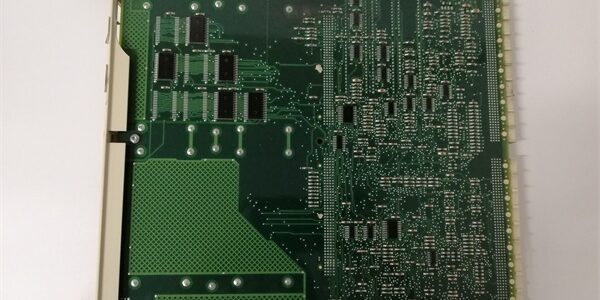
- Hardware Type: Single-slot RF522 master rack plug-in submodule carrier PCB, dual isolated bus segments, front diagnostic LED array
- Key Feature: Embedded dedicated slave processor to execute MasterBus 300 logic locally, cuts main PM511 CPU scan load by offloading I/O preprocessing
- Primary Field Use: Bridge main controller to remote S100 I/O subracks, run distributed bus processing independent of master CPU to maintain fast deterministic control cycles
Hard-Numbers: Technical Specifications
- Protocol Support: Proprietary S100 parallel backplane bus, MasterBus 300 distributed communication stack, compatible with all DSBC176 remote bus extenders
- Port Count: 1 master CPU bus port, 1 isolated external bus expansion port for DSBC176 trunk cabling
- Baud/Data Rate: Fixed 1 Mbit/s native S100 bus speed; onboard slave processor runs asynchronous background bus processing
- Operating Temperature: -25°C to +60°C cabinet operational; -40°C to +85°C storage, non-condensing 5–95% RH
- Isolation Rating: 1500VAC galvanic isolation between master CPU bus domain and remote extended I/O bus domain
- Power Draw: Max 4.8W total module load, 24VDC fed from RF522 master rack backplane rail
- Max Supported Remote Subracks: 5 independent DSRF197/DSRF190 I/O subracks via DSBC176 extenders
- Slave Processor Function: Local MasterBus data filtering, fault aggregation, pre-scaling analog values before sending to main CPU
- Redundancy Support: Hot standby dual SC520 pair approved for SIL-rated turbine safety control racks
- Physical Weight: 0.44 kg, standard S100 single slot dimensions, IP20 cabinet-only mounting
- Certifications: CE, UL/cUL, IEC 61010-1 industrial control safety compliance
The Real-World Problem It Solves
Standard SC510 bus couplers push all raw I/O traffic straight to the PM511 main CPU. Sites with 3+ remote subracks overload the master processor, stretching control scan time and slowing critical safety interlock response.Unprocessed bulk analog and pulse counter data increases bus traffic volume; long cable runs amplify signal noise, creating constant register timeouts and unsteady valve loop tuning.Systems without local slave processing cannot aggregate channel fault codes on the coupler level, forcing the main CPU to poll every single I/O module individually and waste bandwidth.Where you’ll typically find it:
- Combined cycle power plant RF522 master turbine racks paired with PM511V16 CPU and multiple remote boiler DSRF197 I/O subracks
- Refinery central Advant OCS DCS cabinets handling tank farm RTD temperature, flow AO and ESD DI/DO distributed I/O
- Pulp mill recovery boiler control chassis with high-speed DSDP encoder pulse counting banks requiring heavy data pre-filteringThis slave-equipped bus coupler offloads repetitive I/O preprocessing from the main CPU, consolidates fault alarms locally, and maintains tight deterministic scan timing even with five remote I/O subracks connected.
Hardware Architecture & Under-the-Hood Logic
This board integrates a dedicated slave RISC processor alongside bus timing and isolation ASICs; it runs independent MasterBus logic without relying on the PM511 master CPU for data sorting or fault filtering.
- 24VDC RF522 rack backplane power feeds internal EMI filters, isolated dual-domain DC-DC converters, slave processor power supply, and front-panel status LED drivers.
- Incoming CPU master bus signals pass TVS surge suppression before entering isolated buffer circuitry to block rack power transients from propagating to remote subracks.
- Galvanic isolation barrier electrically separates master chassis ground and remote MCC cabinet ground, eliminating circulating ground loop noise currents on long bus trunks.
- Onboard slave processor continuously scans all remote I/O modules, filters high-frequency pulse counter noise, scales raw ADC values, and compresses fault registers before transmitting to the main CPU.
- Front LED bank displays master bus link, remote bus traffic, slave processor active state, cable open/short faults, and standby redundant coupler status; aggregated fault codes forward to PM511 for HMI alarming.
Field Service Pitfalls: What Rookies Get Wrong
Replacing SC520 Slave Coupler With SC510 Basic Bus Interface
Junior technicians install SC510 spare boards without checking CPU scan load metrics. The loss of local slave processing floods the main PM511 CPU with unfiltered raw I/O data, expanding control scan cycle and triggering safety interlock lag alarms.
- Field Rule: Only mount SC520 for layouts with 3+ remote DSRF197 subracks or high-density pulse counter/RTD I/O banks; reserve SC510 spares for small single-subrack low-point-count systems.
Running Unshielded Bus Cable Between SC520 And DSBC176 Remote Extenders
Field crews deploy generic unshielded control wire for S100 bus trunk runs. Inductive coupling from adjacent motor drive power cables distorts clock waveforms, triggering daily cyclic I/O dropout alarms during peak production loads.
- Quick Fix: Install factory specified shielded twisted pair bus cable; single-point ground cable shield only at the master RF522 rack SC520 terminal end, leave remote subrack shield floating.
Hot-Swapping Module With Master Rack Energized
’s slave processor and bus buffer circuits lack hot-swap rated hardware. Removing the live coupler creates open bus transients that crash the PM511 master CPU and initiate full plant safety shutdown sequences.
- Field Rule: Cut RF522 master rack 24VDC supply breaker and wait 30 seconds for bus rails to discharge before removing or inserting the submodule carrier.
Commercial Availability & Pricing Note
Please note: The listed price is for reference only and is not binding. Final pricing and terms are subject to negotiation based on current market conditions and availability.