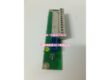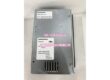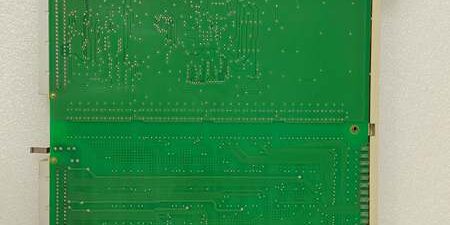
Component Snapshot At-a-Glance
- Model: DSDI110AV1, factory P/N 3BSE018295R1
- Alt. P/N: DSDI110V1 (no internal wetting supply, external 24V required); DSDI110A (Advant S100 legacy 32CH DI, rack/backplane incompatible)
- Product Series: ABB S800 I/O, AC 800M / 800xA DCS & SIS control system
- Hardware Type: Rack plug-in 16-channel wetting digital input module, hot-swap compatible with S800 I/O unit baseplates
- Key Feature: Built-in 24VDC wetting voltage for passive dry contacts, split 8+8 opto group isolation, software adjustable channel debounce
- Primary Field Use: Read status from passive valve limit switches, motor auxiliary contacts, ESD interlock pushbuttons, NAMUR proximity sensors without external field power supply.
Hard-Numbers: Technical Specifications
- Protocol Support: S800 proprietary I/O bus, ModuleBus communication via CI840A/CI845 communication interfaces
- Port Count: 16 discrete input channels split into two isolated 8-channel banks; backplane gold finger connector; terminal base screw field wiring landing
- Baud/Data Rate: Fixed bus scan cycle; channel debounce configurable 1–100ms per channel
- Operating Temperature: 0°C to +60°C cabinet operational; -40°C to +85°C storage
- Isolation Rating: 500Vrms opto galvanic isolation between each 8-channel group and module backplane
- Power Draw: 24VDC rack supply, typical module consumption 4.1W
- Internal Wetting Supply: Onboard 24VDC loop power, 3mA nominal sink current per channel
- Input Logic Threshold: ON ≥10VDC, OFF ≤5VDC; supports dry contact closure or external 10–30VDC active signals
- Diagnostics: Open wire leakage detection, group overvoltage flag, module power loss, bus communication fault
- Certifications: CE Class B EMC, UL/cUL, IEC 61010-1, ATEX Ex ec IIC T4 Zone 2 cabinet approved
- Physical Weight: 0.44kg single module assembly
The Real-World Problem It Solves
Standard DSDI110V1 dry input modules require separate external 24VDC field power wiring for passive contact devices. Extra power marshalling terminals crowd cabinet wiring and add loose splice points that create intermittent open-circuit faults during vibration.Shared non-grouped DI hardware lets a single channel short pull down all 16 input points at once; splits channels into two independent 8-channel banks to contain fault impact.Fixed hardwired debounce filters cannot tune for slow mechanical limit switches or fast solid-state NAMUR sensors, forcing external RC filter wiring that adds maintenance points. Without internal wetting supply, low-resistance contact corrosion creates weak signal levels the DCS fails to detect, hiding failed interlock switches until safety events occur.Where you’ll typically find it:
- Refinery ESD interlock racks monitoring emergency shutdown valve open/closed limit switches
- Fossil power plant boiler MCC panels tracking pump run, trip, and breaker auxiliary dry contacts
- Chemical batch DCS cabinets reading safety gate interlock pushbuttons and NAMUR proximity sensorsThis wetting voltage DI card eliminates external field 24V wiring for passive contacts, limits fault propagation to half the channel count, and tunes contact bounce filtering per channel to stop nuisance interlock alarms.
Hardware Architecture & Under-the-Hood Logic
This module uses two independent opto-isolated 8-channel banks with dedicated onboard wetting power regulators, separated from the backplane communication ASIC to block field EMI noise.
- Passive dry contact field wiring lands on matched terminal base; internal 24V wetting supply feeds 3mA sink current through closed contact paths.
- Each 8-channel bank has independent optocoupler isolation barriers breaking ground loop paths between field equipment and DCS cabinet ground.
- Software-configurable digital debounce filters suppress mechanical contact bounce, adjustable per channel to match slow valve switches or bounce-free solid-state sensors.
- Continuous leakage current monitoring detects open wire circuits where no contact closure exists, generates dedicated channel fault alarms to the AC800M controller every scan cycle.
- Isolated ModuleBus transceiver transmits all 16 discrete status bits and group fault flags to the CI840 communication interface without backplane noise bleed-through.
- Front panel dual-color LED array displays module RUN status, aggregate bank fault, and general bus communication loss for quick cabinet troubleshooting without workstation access.
Field Service Pitfalls: What Rookies Get Wrong
Swapping DSDI110V1 Non-Wet DI Module In Place Of
New techs install DSDI110V1 spare cards to cut inventory cost. No internal wetting voltage means dry contact switches cannot trigger ON logic; all valve/motor status points stay invalid on HMI.Field Rule: Only deploy for passive dry contact field circuits; segregate wet and non-wet DI spares in clearly labeled storage bins to avoid cross-installs.
Leaving Default 1ms Fast Debounce On Heavy Mechanical Limit Switches
Apprentices retain factory minimum debounce setting for large valve mechanical switches. Contact bounce generates rapid alternating open/closed status toggles, triggering repeated nuisance interlock alarms and erratic trend traces.Quick Fix: Set debounce time to 20–50ms for mechanical limit switches; retain 1–5ms setting exclusively for solid-state NAMUR proximity sensors.
Routing Unshielded DI Cable Parallel To VFD Motor Power Cables
Crews pull unshielded twisted pair for long valve switch wiring routed alongside variable frequency motor power cables. EMI noise induces false ON logic signals on DI channels, causing uncommanded safety interlock trips during motor startup transients.Field Rule: Use foil-shielded instrument cable for all DI runs longer than 50m near VFD loads; terminate shield drain wire only at the cabinet side, tape and isolate field end shield from earth ground.
Commercial Availability & Pricing Note
Please note: The listed price is for reference only and is not binding. Final pricing and terms are subject to negotiation based on current market conditions and availability.