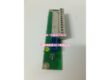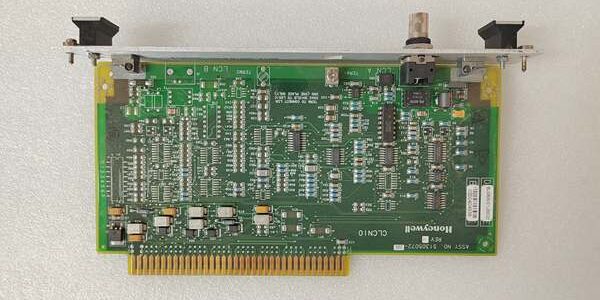
Component Snapshot At-a-Glance
- Model: 51305072-200 (CLCN-A)
- Alt. P/N: 51305072-300 (CLCN-B secondary redundant counterpart)
- Product Series: Honeywell TDC3000 / TPS LCN Local Control Network
- Hardware Type: Single-width slot LCN primary coax paddle board, hot-swap capable
- Key Feature: Factory calibrated 75Ω impedance matching for primary LCN-A trunk coax with on-board signal equalization
- Primary Field Use: Provide primary LCN-A communication trunk path for dual-node HPM/NIM/History chassis, paired with CLCN-B for full LCN network redundancy.
Hard-Numbers: Technical Specifications
- Protocol Support: Honeywell proprietary synchronous LCN Local Control Network bus
- Port Count: 1 x BNC coax LCN-A port; gold finger edge connector to dual-node chassis backplane
- Baud/Data Rate: Fixed 1 Mbps synchronous LCN polling speed, max 255 nodes per trunk
- Operating Temperature: 0°C to +50°C operational cabinet; -40°C to +85°C storage
- Isolation Rating: 1500VDC galvanic isolation between LCN coax field bus and chassis logic backplane
- Power Draw: Chassis 24VDC rail, nominal 320mA, max 0.8W total module power consumption
- Coax Impedance: Precision 75Ω matching network, built-in cable loss equalizer for runs up to 1000ft
- Vibration Tolerance: 0.5g continuous 10–60Hz cabinet vibration rating
- Shock Rating: 30g peak 11ms transient shock for offshore platform skid installations
- Certifications: CE EMC, UL Class I Div2 / Zone 2 hazardous location compliant
- Form Factor: Standard TPS single slot paddle board, 114 × 12.7 × 118mm
- Weight: 0.16kg single board assembly
The Real-World Problem It Solves
Chassis populated only with CLCN-B hardware cannot establish primary LCN trunk communication; DCS nodes fail to register and all controller/transmitter data vanishes from operator displays. Generic aftermarket coax interface boards lack factory 75Ω equalization, creating signal reflection on long cross-cabinet coax runs that spawn cyclic LCN node drop alarms and incomplete history data collection. Without a matched CLCN-A primary blade, there is no bumpless failover path for LCN traffic if the secondary CLCN-B path faults.Where you’ll typically find it:
- Refinery TPS dual-node HPM controller chassis running primary LCN-A trunk communication
- Fossil power plant boiler/turbine control cabinets with redundant LCN history modules
- Offshore FPSO legacy TDC3000 distributed control racks requiring fault-tolerant primary LCN networkThis CLCN-A primary paddle board acts as the main LCN trunk transceiver, pairs with CLCN-B to deliver seamless LCN failover and suppress long-cable signal attenuation.
Hardware Architecture & Under-the-Hood Logic
This isolated LCN transceiver paddle board handles all primary trunk signal conditioning; it does not execute process control logic, only regenerates and buffers synchronous LCN-A bus telegrams.
- Gold finger edge connector pulls regulated 24VDC chassis power and LCN handshake status signals to isolated transceiver circuitry.
- Integrated 75Ω impedance matching + cable loss equalizer offsets signal attenuation on long cabinet-to-cabinet LCN coax trunks.
- Bidirectional surge suppression clamps lightning and welding transients on the BNC port to prevent PCB trace burnout.
- Separate transmit/receive buffer circuits handle synchronous LCN polling frames exclusively on the primary A network path.
- Front panel LED solid green = healthy LCN-A link; flashing red = coax open/short or impedance mismatch fault.
- Backplane handshake logic uploads LCN-A link health status to chassis node controller for system event journal logging and operator alarm generation.
Field Service Pitfalls: What Rookies Get Wrong
Deploying CLCN-A 51305072-200 Without Matching CLCN-B 51305072-300 Redundancy
New technicians only install CLCN-A to cut spare part costs, leaving the secondary B slot empty. Single-path LCN operation creates a single point of failure; any coax damage drops all DCS node communication with zero automatic failover.Field Rule: Every dual-node LCN chassis must mount one CLCN-A (51305072-200) AND one CLCN-B (51305072-300) paddle board for full LCN redundancy.
Using 50Ω CCTV Coax Instead Of Specified 75Ω LCN Coax Cable
Crews reuse spare 50Ω coax for LCN-A trunk runs to reduce material inventory usage. Impedance mismatch creates severe signal reflection, triggering constant LCN node dropout alarms and missing HPM controller real-time data.Quick Fix: Only deploy Honeywell OEM 75Ω LCN coax for all A/B trunk runs; label cable reels by impedance rating to eliminate mix-ups during cabinet builds.
Omitted 75Ω Termination Resistor On End-of-Trunk LCN BNC Tee
Most apprentices remove or forget to fit the required 75Ω termination resistor on the farthest chassis BNC tee port. Unterminated bus signals reflect down the coax trunk, corrupting LCN polling frames and flooding system logs with communication fault codes.Field Rule: Install 75Ω termination resistor on the physical far-end BNC tee of every LCN A/B trunk; remove termination resistors on all intermediate chassis nodes.
Commercial Availability & Pricing Note
Please note: The listed price is for reference only and is not binding. Final pricing and terms are subject to negotiation based on current market conditions and availability.