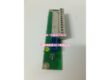
Component Snapshot At-a-Glance
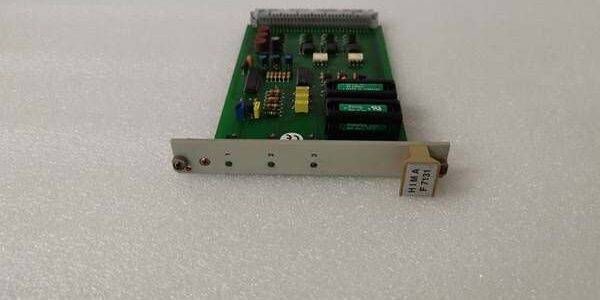
- Model: F7131
- Alt. P/N: 984713102 full factory order part
- Product Series: HIMA HIQuad H41q / H51q QMR Safety Instrumented System
- Hardware Type: 4TE DIN rack-mounted triple power rail monitoring supervisor module
- Key Feature: Simultaneously monitor up to three independent F7126 5V backplane power supplies with dedicated fault telemetry to safety CPU
- Primary Field Use: Continuously track voltage health of redundant rack power supplies, alert QMR safety CPU to undervoltage/complete power loss on SIL3 ESD racks.
Hard-Numbers: Technical Specifications
- Protocol Support: HIMA proprietary X-Bus safety backplane bus, ELOP II / SILworX diagnostic reporting
- Port Count: Front screw terminal bank for PS1/PS2/PS3 power sense inputs; internal rack edge connector for backplane fault data transmission
- Baud/Data Rate: Synchronized 2Mbps X-Bus cycle matching main safety CPU scan timing
- Operating Temperature: -20°C to +60°C operational; -40°C to +85°C storage
- Isolation Rating: 1500VAC galvanic isolation between monitored power rails and safety backplane logic
- Power Draw: 5V rack bus 110mA, 24V auxiliary monitoring 20mA; total module power consumption max 0.6W
- Voltage Trip Threshold: 5V rail undervoltage alarm trigger <4.7VDC
- Monitor Capacity: Supports up to three separate F7126 power supply units (PS1, PS2, PS3)
- Front Panel Indicators: Three independent LED status lights per monitored power rail
- Certifications: IEC 61508 SIL3 TÜV certified, ATEX Zone 2 compatible, GL marine offshore rated, CE Class B EMC
- Form Factor: 4 TE slot width, IP20 cabinet-only installation
- Weight: 0.22kg single module unit
The Real-World Problem It Solves
Racks running dual/triple redundant F7126 power supplies lack centralized rail voltage tracking without . Individual power supply FAULT LEDs are easy to miss behind dense wiring bundles, leaving partial rail failures undetected until a second power unit faults and drops the entire safety backplane. Raw analog voltage sense wiring without isolated monitoring creates ground loop noise that triggers false power fault bits in safety logic.Where you’ll typically find it:
- Refinery large HIPPS ESD racks with triple redundant F7126 backplane power configurations
- Offshore FPSO fire/gas distributed safety cabinets with multiple parallel power supply units
- Fossil power plant boiler BMS and gas turbine SIL3 safety racks requiring full power redundancy audit trailsThis dedicated multi-rail supervisor centralizes all power supply health signals, filters sense circuit EMI, and feeds standardized fault bits to the safety CPU for DCS high-priority alarming.
Hardware Architecture & Under-the-Hood Logic
This module is passive monitoring hardware with no power conversion circuits; it samples raw DC voltage from each output rail and converts analog readings into digital fault flags for the X-Bus safety backplane.
- Sensing wires tap regulated 5V output rails from each power supply and feed isolated voltage divider circuits on front terminals.
- Independent analog comparator circuits for PS1, PS2, PS3 compare measured rail voltage against fixed 4.7V undervoltage threshold.
- Front panel LED illuminates green for healthy rail; switches solid red when voltage drops below trip threshold for instant cabinet visual diagnosis.
- Digital fault latch registers each power rail failure state and transmits status words over isolated X-Bus edge connector to QMR safety CPU every scan cycle.
- Internal low-pass analog filters suppress switching noise from DC-DC converters to eliminate spurious undervoltage fault triggers during normal load transients.
- Safety CPU reads three dedicated diagnostic bits in ELOP II logic to log power supply faults and drive operator DCS alarm notifications via F8621A communication modules.
Field Service Pitfalls: What Rookies Get Wrong
Loose Front Terminal Sense Wiring Creates Intermittent False Power Fault Alarms
New technicians torque the voltage sense terminal screws lightly during cabinet build. Vibration from turbine/compressor skids loosens strands over weeks, creating partial voltage drop that trips persistent undervoltage alarms on healthy power supplies.Field Rule: Torque all front sense terminal screws to 0.8Nm; retorque all power monitor wiring during every annual SIS proof test.
Daisy-Chaining Multiple Sense Outputs To One Input Channel
Crews jumper two power supply sense lines onto a single PS terminal to reduce wiring runs. Cross-connected voltage sense circuits create false low-voltage readings and hide individual single power supply failures from safety logic.Quick Fix: Run one dedicated twisted shielded sense wire pair from each output rail to its unique PS1/PS2/PS3 terminal on ; no shared sense wiring allowed.
Ignoring Fault Diagnostic Bits In ELOP II Safety Logic
Most engineers skip mapping the three power rail fault bits to DCS alarms. Degraded partial power supply operation runs undetected for months, creating a single point of failure if the second redundant unit subsequently faults.Field Rule: Program high-severity DCS alarms for every PS fault bit; force-test each rail fault condition by power cycling individual units during commissioning checkout.
Commercial Availability & Pricing Note
Please note: The listed price is for reference only and is not binding. Final pricing and terms are subject to negotiation based on current market conditions and availability.