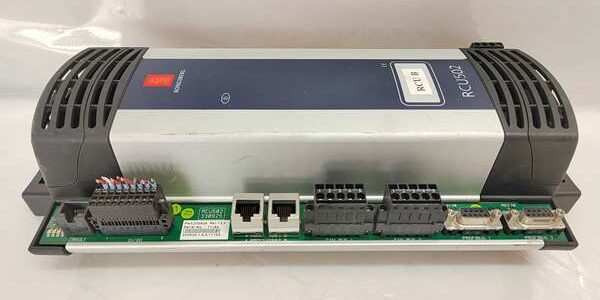
Component Snapshot At-a-Glance
- Model: RCU502
- Alt. P/N: No single spare part number; full assembly unit
- Product Series: Kongsberg K-Chief 700 / AIM Safe Marine Automation
- Hardware Type: DIN rail mounted real-time main process controller
- Key Feature: Dual redundant RBUS field bus + dual Ethernet, SIL 3 capable in triple redundant setup
- Primary Field Use: Executes vessel control logic, polls RMP420 remote I/O, interfaces DP, propulsion and alarm systems.
Hard-Numbers: Technical Specifications
- Protocol Support: Kongsberg RBUS RS485, Modbus TCP/RTU, Profibus DP, CANbus, NMEA 0183, RedundancyNet
- Port Count: 2×RBUS RS485, 2×10/100 Ethernet, 2×Profibus, 2×CAN, 4×DI, 4×DO, multiple serial D-Sub
- RBUS Baud Rate: Fixed 115.2 kbaud
- Operating Temperature: -15°C to +55°C operational; -40°C to +70°C storage
- Isolation Rating: 1000V galvanic isolation between all communication buses and logic core
- Power Draw: 24VDC (18–31.2V), max 30W, dual redundant power input
- CPU: 1GHz 32-bit ARM real-time processor
- Memory: 512MB RAM, 1GB onboard flash program storage
- Certifications: DNV GL, ABS, LR, CCS, Ex Zone 2, SIL1 single / SIL2 dual / SIL3 triple redundant
- Mounting: Standard 35mm DIN rail, IP20 enclosure
- Humidity: 5%–95% non-condensing marine rated
The Real-World Problem It Solves
Older RCU501 controllers lack dual redundant RBUS and insufficient memory for modern DP and safety logic. Single communication buses create full system blackouts during cable damage at sea.Where you’ll typically find it:
- Cargo tankers, container ships engine room alarm & machinery control systems
- Offshore FPSO, drilling rig dynamic positioning and safety interlock racks
- OSV, ferry propulsion, steering and auxiliary process control cabinets
This high-performance controller eliminates single points of failure and supports large distributed RMP420 I/O networks for full vessel automation.
Hardware Architecture & Under-the-Hood Logic
Standalone real-time controller with dual watchdog circuits; no shared rack backplane, works with distributed RMP series remote I/O modules.
- Dual 24VDC power inputs feed isolated power rails for CPU, bus transceivers and onboard local I/O.
- 1GHz ARM core executes user control logic with hard real-time scan cycle <10ms.
- Dual independent RBUS transceivers poll all RMP420 I/O nodes in active/standby redundancy.
- Dual Ethernet interfaces connect to ship SCADA HMI and redundant RedundancyNet for multi-RCU synchronization.
- Onboard 4DI/4DO local hardwired channels for critical watchdog and safety interlock signals.
- Continuous self-diagnostics log bus faults, channel loops and CPU health to internal flash memory.
Field Service Pitfalls: What Rookies Get Wrong
Mismatched RBUS termination and A/B polarity errorsTechs omit 120Ω terminators at bus endpoints or swap RS485 A/B pins. Vessel vibration triggers intermittent I/O dropouts and CRC fault logs.
- Field Rule: Fit terminator resistors on first and last RMP node; strictly match A/B pin labeling on D-Sub connectors.
Unmatched redundant RCU firmware versionsEngineers swap one without updating paired standby unit. Mismatched firmware breaks RedundancyNet sync and splits control logic.
- Quick Fix: Flash identical firmware revision to all redundant RCUs; verify sync LED steady green before sea trial.
Poor cabinet airflow causing thermal overload tripsMounting high-wattage VFDs and power supplies adjacent to blocks convection. Internal overtemp forces controller cold restart mid-operation.
- Field Rule: Maintain minimum 30mm top/bottom clearance; clean cabinet air filters monthly to remove salt dust buildup.
Commercial Availability & Pricing Note
Please note: The listed price is for reference only and is not binding. Final pricing and terms are subject to negotiation based on current market conditions and availability.