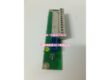
Component Snapshot At-a-Glance
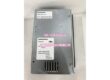
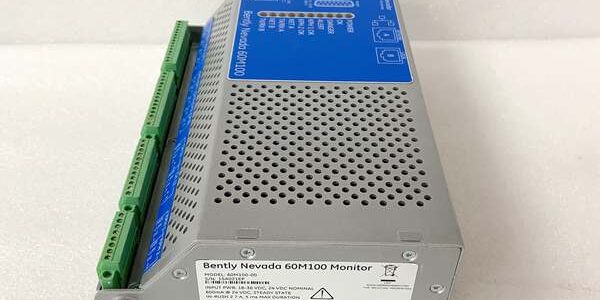
- Model: 60M100-00
- Alt. P/N: 135780-01
- Product Series: Bently Nevada 6000 Series
- Hardware Type: DIN rail standalone multi-channel vibration monitor
- Key Feature: Accepts eddy current, accelerometer and analog field inputs natively
- Primary Field Use: Captures vibration, displacement and speed data for on-site machine protection and diagnostics.
Hard-Numbers: Technical Specifications
- Protocol Support: Ethernet TCP/IP, RS-232, USB
- Port Count: 8 field input channels, 1 Ethernet, 1 RS-232, 1 USB
- Data Rate: Waveform sampling up to 800 samples per revolution
- Operating Temperature: -30°C to +65°C
- Isolation Rating: 1200V channel-to-chassis isolation
- Power Draw: 24VDC ±10%, 14W maximum
- Input Types: Eddy current probe, accelerometer, 4-20mA, 0-10VDC
- Relay Output: 3 form-C alarm relays (OK, Alert, Danger)
- Mounting: Standard 35mm DIN rail
- Enclosure Rating: IP20
The Real-World Problem It Solves
Large rack-based monitoring systems take extra cabinet space and require dedicated rack slots. Smaller critical assets get left unmonitored due to high deployment overhead.
Where you’ll typically find it:
- Wind turbine main shaft and gearbox condition monitoring
- Auxiliary pumps, fans and compressors inside power plant BOP areas
- Skid-mounted process equipment with limited cabinet real estate
This standalone unit delivers full vibration monitoring without needing a large centralized rack system.
Hardware Architecture & Under-the-Hood Logic
Built around a dedicated onboard microprocessor. Each input channel uses isolated signal conditioning circuits; no shared backplane with other modules.
- Field sensor signals pass through transient suppressors and isolation barriers.
- Analog front ends convert raw probe signals to digital data.
- Onboard processor runs sampling, FFT and threshold comparison routines.
- Alarm logic triggers relay outputs when readings cross set points.
- Stored waveform and trend data routes to Ethernet or serial ports.
- Front panel LEDs show power, channel activity and active faults.
Field Service Pitfalls: What Rookies Get Wrong
Mixing shield grounding practices across channelsTechs ground cable shields at both ends on multi-channel runs. This creates ground loops and induces noisy, fluctuating readings across all inputs.
- Field Rule: Ground shield only at the monitor end; leave field side shield floating.
Overdriving input range for eddy current probesUsers set probe gap outside the calibrated linear range. Readings drift continuously and trigger false danger alarms.
- Quick Fix: Maintain factory specified gap; perform trim calibration after probe or cable replacement.
Blocking ventilation on DIN rail installationsMounting other modules tight against top and side surfaces restricts airflow. Internal heat buildup causes random resets and communication drops.
- Field Rule: Keep minimum 20mm clearance on all sides; do not stack high-wattage devices adjacent.
Commercial Availability & Pricing Note
Please note: The listed price is for reference only and is not binding. Final pricing and terms are subject to negotiation based on current market conditions and availability.