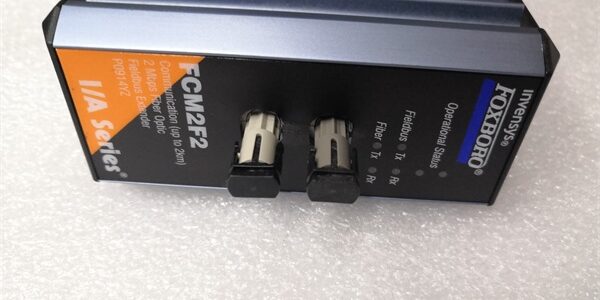
Component Snapshot At-a-Glance
- Model:
- Alt. P/N: P0926GS (factory full part designation)
- Product Series: Foxboro I/A Series Classic DCS Platform, FCP270/FCP280 controller rack compatible
- Hardware Type: Rack-mounted Ethernet to native Modulebus (HDLC) gateway communication card
- Key Feature: Dual isolated bus domains separating front-side copper Ethernet and rear backplane HDLC traffic with galvanic barrier
- Primary Field Use: Bridge DCS controller backplane 2Mbps HDLC Modulebus to 10/100Mbps plant LAN for HMI, historian and remote SCADA data polling
Hard-Numbers: Technical Specifications
- Protocol Support: Foxboro proprietary 2Mbps HDLC Modulebus (backplane), IEEE802.3 10/100BASE-TX Ethernet
- Port Count: 2×RJ45 front-panel Ethernet ports + rear gold-finger backplane edge connector
- Baud/Data Rate: Fixed 2Mbps HDLC backplane; auto-negotiate 10/100Mbps Ethernet copper rate
- Operating Temperature: -20°C ~ +70°C continuous cabinet ambient rating, non-condensing only
- Isolation Rating: 2500VDC isolation between Ethernet LAN side and DCS backplane logic circuitry
- Power Draw: Max 9.8W nominal, fed 21.6~26.4VDC SELV via rack backplane rail
- Hot-Swap Rating: Approved live insert/extract on energized I/A controller baseplate
- Memory Allocation: 3MB onboard DRAM for packet buffering, 6MB flash for firmware storage
- Humidity Rating: 5%~95%RH non-condensing enclosure environment
The Real-World Problem It Solves
Legacy Foxboro I/A controllers lack native onboard Ethernet, forcing field crews to deploy external serial-to-Ethernet converters tied to limited RS485 console ports. Third-party external converters introduce extra marshalling wiring, ground loops and random packet drop that spurs intermittent historian data gaps and HMI freeze-ups mid-run.Where you’ll typically find it:
- Petrochemical main control rack linking FCP controllers to plant central process historian servers
- Coal-fired power plant boiler DCS rack connecting local I/A to corporate remote SCADA LAN
- Offshore crude rig process cabinet tying onboard I/A DCS to shore-side remote monitoring network
Single-slot rack integration eliminates intermediate conversion hardware and cuts LAN-induced intermittent communication faults entirely.
Hardware Architecture & Under-the-Hood Logic
This gateway carries dual independent processing cores; isolation transformers fully separate plant LAN noisy Ethernet domain and clean DCS backplane power domain to block cross-grid ground potential shift, no shared common ground between two bus sides.
- Rear gold-finger connector pulls regulated 24VDC supply and raw HDLC Modulebus packet frames from host FCP controller backplane.
- Primary onboard MCU buffers inbound HDLC bus data, repackages payload into standard TCP/IP Ethernet frame structure.
- High-voltage isolation barrier blocks AC induced noise and ground bounce between internal DCS circuit and front RJ45 LAN transceiver.
- Secondary Ethernet PHY chip pushes formatted TCP/IP data out front RJ45 ports onto site plant LAN for HMI/historian consumption.
- Inbound LAN requests follow reverse path through isolation layer, converted back to HDLC before delivery onto DCS Modulebus backplane.
- Front-panel multi-LED array flags power status, Ethernet link activity, backplane bus fault and port collision errors for on-site diagnostics.
Field Service Pitfalls: What Rookies Get Wrong
Cross-Wire DCS Control LAN With Unfiltered Office IT Network Cabling
Tech daisy-changes RJ45 directly onto unisolated office desktop switch LAN; IT-side broadcast storm floods module buffer, locks backplane HDLC bus and drops entire rack controller communication.
- Quick Fix: Segregate DCS control LAN onto dedicated managed industrial switch; no direct tie to general office IT infrastructure.
Ignore Backplane Slot Position Restrictions for Redundant Pairing
Install redundant mismatched across non-adjacent baseplate slots; rack arbitration logic fails synchronization leading to constant primary/secondary card flapping and intermittent data dropout.
- Field Rule: Pair redundant modules strictly on consecutive paired baseplate slots per Foxboro rack layout drawing.
Run Unshielded CAT5 Ethernet Parallel With MCC/VFD High-Power Cabling
Route unshielded Ethernet wire within 15cm of variable frequency drive power runs; radiated EMI corrupts packet integrity creating random HMI PV blips and lost historian logs.
- Field Rule: Use shielded CAT6 cable with 36cm minimum separation from all high-current motor/MCC wiring runs.
Commercial Availability & Pricing Note
Please note: The listed price is for reference only and is not binding. Final pricing and terms are subject to negotiation based on current market conditions and availability.