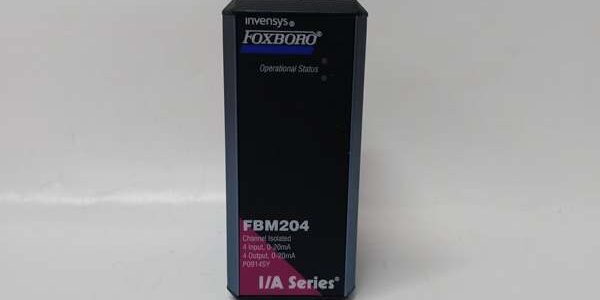
Component Snapshot At-a-Glance
- Model: FBM204
- Alt. P/N: No cross OEM alternate, factory mates exclusively with P0914XB0C terminal base assembly
- Product Series: Foxboro I/A Series FBM200 family hybrid analog I/O module
- Hardware Type: Hot-swappable plug-in rack PCB, aluminum finned heat sink enclosure for cabinet thermal dissipation
- Key Feature: Embedded DPIDA local closed-loop control to run PID onboard without host CP intervention
- Primary Field Use: Read 4–20mA process transmitters and drive modulating control valves; overlay HART digital data across all eight analog loops
Hard-Numbers: Technical Specifications
- Protocol Support: 2Mbps I/A proprietary FBM backplane bus + HART5/HART7 superimposed field communication
- Port Count: 4 isolated analog input channels + 4 isolated analog output channels (total 8 signal paths)
- Baud/Data Rate: Backplane fixed 2Mbps; HART field locked standard 1200bps; ADC sample refresh 25ms per channel
- Operating Temperature: 0°C ~ +60°C continuous rated; condensation below -5°C accelerates PCB trace corrosion in unheated cabinets
- Isolation Rating: 1500VDC per-channel field-to-backplane galvanic isolation, single short does not crash entire card
- Power Draw: Max 4.2W, fully powered from rack backplane 24VDC supply via TA base edge connector
- Input Span: Factory calibrated 4–20mA DC, software configurable 0–20mA full range; accepts 2/3-wire transmitters
- Output Span: 4–20mA DC valve drive; max allowable loop load 700Ω per AO channel with internal current foldback protection
- Channel Accuracy: ±0.1% full span steady-state precision under rated ambient temperature
The Real-World Problem It Solves
Separate standalone AI and AO cards force two spare slots per control loop and introduce extra intermediate wiring points that drift from vibration over plant runtime. Older non-DPIDA modules shift PID calculation onto rack CP; heavy CPU load causes slow PV response during unit throughput swings.Where you’ll typically find it:
- Coal utility boiler rack: Furnace draft pressure AI + dampener modulating AO paired single
- Refinery crude distillation cabinet: Feed flow transmitters + reflux control valve compact loop assembly
- Petrochemical tank farm rack: Level transmitter inputs + outlet modulating valve outputsCombined 4AI/4AO layout cuts cabinet slot usage in half while onboard DPIDA stabilizes fast process loops independent of DCS controller load spikes.
Hardware Architecture & Under-the-Hood Logic
This card carries dedicated onboard 32-bit RISC MCU separate from analog conversion circuits; optocoupler isolation barriers block field surge transients from damaging backplane bus circuitry.
- Field 4–20mA/HART signals pass through P0914XB0C base surge filters into edge connector pins
- Per-channel Sigma-Delta ADC converts incoming analog current to digital register values at fixed 25ms sampling cycle
- Onboard MCU either forwards raw digital data to rack CP via backplane or executes embedded DPIDA PID locally for standalone loop control
- Calculated setpoint values feed individual DAC chips to convert back into regulated 4–20mA output drive for field valves
- Open-loop, overload and HART handshake fault codes compile into status frames and upload cyclically to host DCS diagnostics
Field Service Pitfalls: What Rookies Get Wrong
Exceeding AO Channel 700Ω Max Loop Load RatingNew technicians daisy-chain multiple positioners and long field cable, pushing loop resistance above threshold; output collapses below 4mA with no module FAULT LED trigger, mimicking faulty transmitter calibration.
- Quick Fix: Bench verify full loop impedance with handheld DMM; split overloaded AO loads onto spare unused card channels.
Improper Dual-Point Cable Shield GroundingGrounding both P0914XB0C terminal shield lug and field instrument drain wire creates ground loop; VFD switching noise injects AC ripple causing erratic PV bouncing on DCS screen.
- Field Rule: Terminate cable shield only at cabinet main earth bar; leave field device shield end floating entirely at field instruments.
Ignoring Post-Swap Zero/Span Trim After Hot-Swap ReplacementDrop-in spare without channel calibration creates offset between stored DCS scaling and actual hardware output; PID hunting and unstable valve stroke persist post replacement.
- Field Rule: Complete full 4mA zero and 20mA span trim for every populated AI/AO channel immediately after card seating.
Commercial Availability & Pricing Note
Please note: The listed price is for reference only and is not binding. Final pricing and terms are subject to negotiation based on current market conditions and availability.