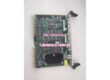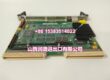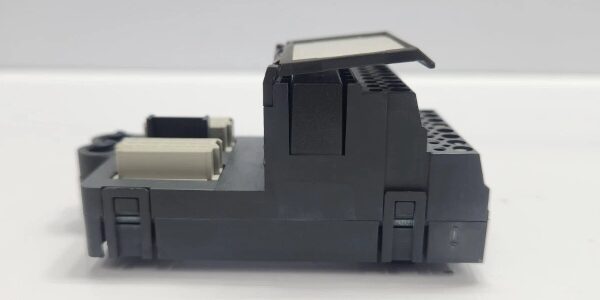
Component Snapshot At-a-Glance
- Model: KJ400X1-CC1 (full part KJ4001X1-CC1)
- Alt. P/N: 12P0733X032, 12P0733X042
- Product Series: Emerson DeltaV S-Series I/O Terminal Base Family
- Hardware Type: 8-channel dedicated four-wire field wiring terminal base
- Key Feature: Independent split terminals for separate field 24V supply and 4–20mA signal routing per channel
- Primary Field Use: Terminate four-wire flow/pressure transmitters paired with DeltaV HART analog input modules inside process control cabinets
Hard-Numbers: Technical Specifications
- Protocol Support: Passive wiring interface only, no onboard bus protocol processing; compatible with HART 7 field signals
- Port Count: 8 independent channels, two screw terminals per single channel (power leg + signal leg)
- Baud/Data Rate: No internal signal conversion, passes native HART 1200bps and 4–20mA analog unchanged
- Operating Temperature: -40°C ~ +70°C rated continuous; 0°C ~ +60°C recommended steady cabinet ambient
- Isolation Rating: 2000V channel-to-backplane dielectric isolation per UL61010 standard
- Power Draw: Zero quiescent backplane power consumption, purely passive copper trace construction
- Max Field Voltage: 30VDC maximum permissible across field terminal pairs
- Acceptable Wire Gauge: 14AWG down to 22AWG solid/stranded field control cable
- Vibration Rating: 0.5g across 16Hz–150Hz for continuous compressor room cabinet mounting
The Real-World Problem It Solves
Generic two-wire terminal bases force users to jumper separate 24V supply onto signal terminals, creating unstable voltage drop across long four-wire transmitter runs. Improvised jumpers loosen under cabinet vibration and trigger intermittent PV dropout during ongoing production shifts.
Where you’ll typically find it:
- Refinery fractionation cabinet: Terminate four-wire vortex flow transmitters on crude feed and reflux piping loops
- Utility boiler DCS rack: Connect four-wire remote mount pressure transmitters for furnace draft monitoring
- Offshore platform MCC enclosure: Wire high-accuracy tank level four-wire transmitters for inventory control loops
This split terminal layout removes field jumper requirements and stabilizes loop voltage for all four-wire instrument installs.
Hardware Architecture & Under-the-Hood Logic
This passive terminal base latches to the bottom of matching DeltaV analog I/O cards; no onboard microcontroller or active semiconductor components exist, only copper bus traces and terminal screw hardware.
- Rear gold plated edge pins make direct contact with mating I/O card channel power and signal circuits
- Internal isolated PCB traces split each card channel into two independent front screw terminal positions
- Field 24VDC instrument supply lands on one terminal per channel, 4–20mA measurement signal routes to the second terminal
- Copper paths run isolated from adjacent channels to block cross-talk leakage between nearby instrument loops
- Keyed plastic housing prevents physical insertion onto mismatched CB1/CB2 two-wire dedicated I/O cards
Field Service Pitfalls: What Rookies Get Wrong
Improper Two-Wire Transmitter Cross-WiringNew technicians fit standard two-wire loop-powered transmitters onto CC1 split terminals, leaving unused power terminal floating open. Stray cabinet induced voltage leaks into signal lines and creates constant PV drift across the affected channel.
- Field Rule: Reserve CC1 exclusively for four-wire devices; deploy CB1 terminal base for all 2-wire 4–20mA transmitters.
Over-Torquing Terminal Screws During TerminationExcess torque crushes terminal barrel copper and fractures internal PCB traces after weeks of cabinet thermal cycling. Multiple field calls stem from hidden cracked traces causing random open-loop faults.
- Quick Fix: Torque field terminal screws between 0.6–0.8 N·m per Emerson published installation spec.
Keyed Base Forced Onto Non-Matching I/O CardsField techs use flat screwdriver to pry open plastic anti-miskey tabs and force CC1 onto incompatible DI/DO cards. Partial pin short damages card front-end circuitry and blows channel input fuses on the paired module.
- Field Rule: Never modify built-in key coding; swap to correct CB/CF series base if key notch does not align with installed I/O hardware.
Commercial Availability & Pricing Note
Please note: The listed price is for reference only and is not binding. Final pricing and terms are subject to negotiation based on current market conditions and availability.