Field Engineer’s Notes (From the Trenches)
Watch the Cold Junction Compensation (CJC) and Shield Grounding.
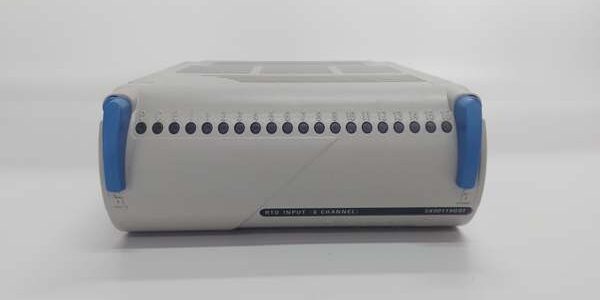
When wiring thermocouples to the 5X00119G01, remember that accuracy is only as good as your CJC. Do not mount this card directly above high-heat devices like power supplies or terminal blocks carrying high-current heater feeds. The localized heat will skew the internal CJC sensor, causing temperature readings to drift across all TC channels on that card.Additionally, for shielded cables, terminate the shield at the field device and use the module’s shield terminal. Do not ground the shield at both ends unless you have verified there is absolutely no potential difference between the field ground and the cabinet ground. I’ve seen fried input channels caused by 20V of ground potential difference driving current straight through the shield and into the module’s isolation barrier.
Real-World Applications
- Hydrocracker Reactor Bed Temperature Monitoring:
In refinery hydrocrackers, precise temperature profiling is critical to prevent runaway reactions. The 5X00119G01 is used to aggregate dozens of Type K thermocouple inputs from the reactor bed. Its high channel density and CJC stability ensure that the DeltaV controller receives accurate thermal profiles to adjust quench valves instantly, maintaining the reaction within the safe operating window. - Pharmaceutical Bioreactor Control:
In biopharma, batch consistency is everything. This module interfaces with high-precision PT100 RTDs for temperature and 4-20mA pH/ORP probes in fermentation tanks. The HART capability allows the system to verify sensor calibration status mid-batch without interrupting the process, ensuring FDA compliance and preventing the loss of high-value product due to sensor drift.
High-Frequency Troubleshooting FAQ
Q: Can I directly replace an older 5X00119G01 with the KJ3221X1-BA1 without software changes?
A: Generally, yes. The KJ3221X1-BA1 is the direct functional replacement. However, you must check your DeltaV firmware version. While the hardware is backward compatible, newer firmware might be required to fully utilize HART 7 features. For a like-for-like swap, the existing device tag configuration usually works, but always perform a “Verify” in DeltaV Explorer after the swap to ensure the Electronic Data Sheet (EDS) matches.
Q: My 4-20mA reading is pegging high (over-range) even with the loop disconnected. What is the issue?
A: This is a classic “open loop” detection behavior. The module injects a small bias current to detect wire breaks. If the loop is open, the voltage rises, and the ADC reads full scale. Check your field wiring for a blown fuse at the marshalling panel, a disconnected terminal, or a failed transmitter power supply. If the reading is pegging low (under-range), check for a short circuit in the cable or moisture ingress in the field junction box.
Q: Can I mix 2-wire and 4-wire transmitters on the same 5X00119G01 card?
A: Yes, because the channels are fully isolated. You can configure Channel 1 to provide loop power for a 2-wire pressure transmitter and Channel 2 to read a passive 4-20mA signal from a 4-wire flow meter. Just ensure you configure the channel properties in the DeltaV software correctly (i.e., enable “Transmitter Power” only for the channels driving 2-wire devices).
Commercial Availability & Pricing
Please note: The listed price is not the actual final price. It is for reference only and is subject to appropriate negotiation based on current market conditions, quantity, and availability.