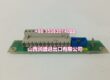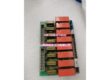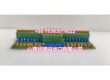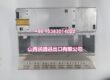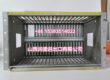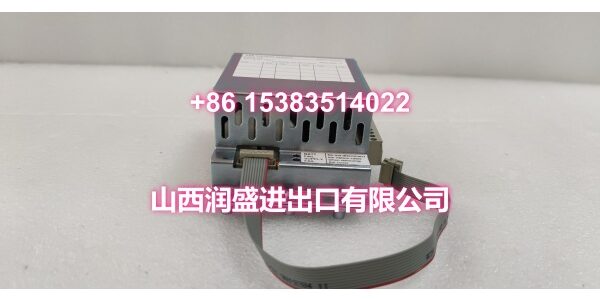
Product Core Brief
- Model: DSSB140
- Order Code: 48980001-P
- Brand: ABB
- Series: ABB AC 800M DCS
- Core Function: Serial communication interface module that bridges serial devices (smart meters, relay protection devices, legacy PLCs, inverters, analytical instruments) with the AC 800M DCS — solves the integration challenge between legacy serial equipment and modern DCS systems in industrial automation scenarios.
- Product Type: Serial Communication Interface Module
- Key Specs: Dual electrically isolated RS-485/RS-422 channels | Up to 115.2 kbps baud rate | ≥500 VRMS channel isolation | 24VDC supply | IP20 rated for control cabinet environments
- Condition: New Original / New Surplus
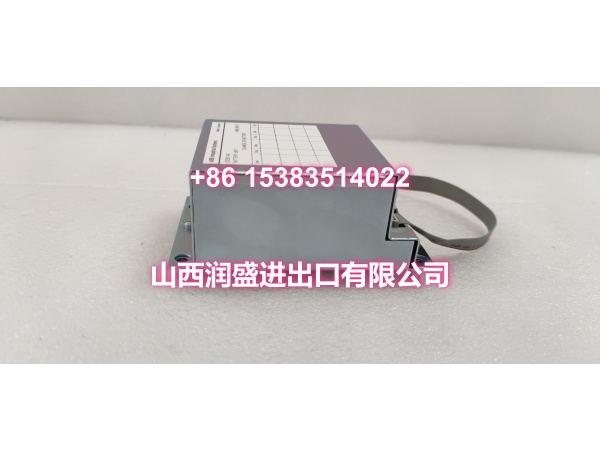
Key Technical Specifications
- Product Type: Serial Communication Interface Module for ABB AC 800M DCS
- Brand: ABB
- Model Number:
- Order Code: 48980001-P
- Series: ABB AC 800M DCS
- Core Function: Provides a stable and efficient data communication channel for serial-based equipment, enabling legacy device compatibility and synchronized data acquisition within the AC 800M control architecture — serial data enters the controller logic in a deterministic manner
- Communication Channels: Dual electrically isolated, independent RS-485/RS-422 channels; interface standards are software-selectable
- Baud Rate: Maximum up to 115.2 kbps
- Data Format: Supports 5–8 data bits, 1–2 stop bits, and odd/even/no parity formats to match communication requirements of different serial devices
- Electrical Isolation: Channel-to-channel and channel-to-backplane isolation voltage ≥ 500 VRMS, effectively blocking ground loops and surge conduction — improves anti-interference performance in high electromagnetic interference environments
- Power Supply: 24VDC ±10%, complying with industrial standard power requirements; can be directly connected to the existing control cabinet power supply and supports modular power distribution
- Operating Temperature: 0°C to +60°C (−20°C to +60°C for extended applications)
- Environmental Rating: IP20 (upgradable to IP65 upon request); suitable for harsh industrial environments including temperature variations, dust, and humidity
- Mounting Method: Modular plug-in design for AC 800M control cabinet — enables straightforward like-for-like replacement during maintenance
- Product Status: Discontinued (spare parts supply) — compatible with ABB AC 800M DCS ecosystems
- Typical Applications: Serial device integration for ABB AC 800M-controlled industrial automation systems — connecting smart meters, relay protection devices, legacy PLCs, inverters, and analytical instruments in power, petrochemical, and metallurgical industries; serving as a critical spare part for lifecycle support of mature AC 800M installations where serial communication module replacement is required
Product Introduction
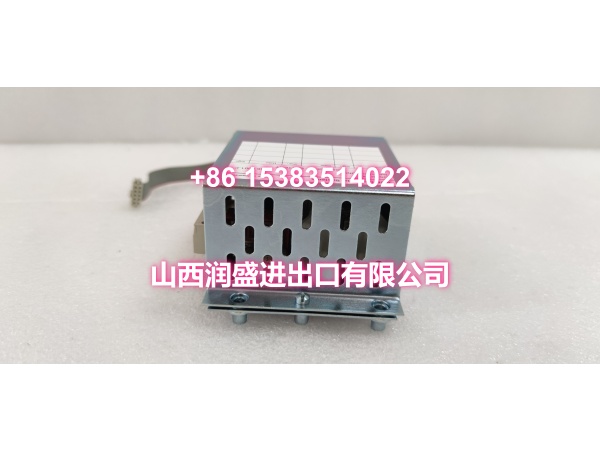
The ABB DSSB140 (order code 48980001-P) is a serial communication interface module designed for the ABB AC 800M Distributed Control System (DCS), engineered to solve one of the most persistent challenges in industrial automation: integrating legacy serial devices with modern DCS architectures. In a typical process plant, operators often need to maintain communication with older equipment — smart meters, relay protection devices, legacy PLCs, variable frequency drives, and analytical instruments — that only support RS-485 or RS-422 serial interfaces. The DSSB140 provides the critical bridge, ensuring that serial data enters the AC 800M controller logic in a deterministic, reliable manner.
What distinguishes the DSSB140 from simple protocol converters is that it is a native I/O module deeply embedded in the AC 800M control architecture. It does not sit as an external gateway between the controller and the field; instead, it plugs directly into the AC 800M rack and communicates over the internal backplane bus. This means serial data is processed with the same determinism and priority as any other I/O signal in the system — no external polling loops, no separate communication stacks, and no additional points of failure.
The module’s dual-channel design provides significant flexibility. Each channel can be independently configured as RS-485 or RS-422 via software selection, allowing a single DSSB140 to connect to two different serial networks simultaneously. With a maximum baud rate of 115.2 kbps and support for standard serial data formats (5–8 data bits, 1–2 stop bits, odd/even/no parity), the DSSB140 can match the communication requirements of virtually any serial device in the field.
Electrical isolation is a critical feature for industrial environments. The DSSB140 provides ≥500 VRMS isolation between channels and between each channel and the backplane. This effectively blocks ground loops and surge conduction — common sources of intermittent communication failures in plants with long cable runs, high-voltage equipment, or multiple grounding points. For system integrators working in power generation, petrochemical, or metallurgical applications, this isolation capability is essential for maintaining reliable communication in electrically noisy environments.
For maintenance engineers supporting mature AC 800M installations, the DSSB140 is a critical spare part. As a discontinued product, availability of genuine units is essential for lifecycle support — a serial communication module failure can prevent the controller from communicating with multiple field devices simultaneously, potentially disrupting process monitoring, protection functions, or equipment control. Having verified genuine DSSB140 modules on hand ensures that serial communication faults can be resolved quickly, keeping production running.
QA & Testing SOP
Every unit undergoes a standardized verification process before shipment:
- Visual & Anti-Counterfeit Check: Inspect the module housing for proper ABB branding and part number marking (DSSB140, 48980001-P). Check for physical damage including cracked housing, damaged connector pins, burnt components, or signs of moisture ingress (corrosion, white residue on contacts).
- Connector Pin Inspection: Examine all connector pins (RS-485/422 terminals, backplane interface) for straightness, corrosion, or bending. Damaged pins can cause intermittent connections or communication errors.
- Backplane Communication Test: Insert the module into an AC 800M rack and verify that the controller recognizes the DSSB140 correctly with no communication errors. Verify that command transmission and response times are within specification.
- Channel Configuration Test: Configure each channel independently as RS-485 and RS-422 via software, verifying that the module correctly switches between interface standards and that both modes operate as expected.
- Baud Rate & Data Format Test: Test communication at various baud rates (up to 115.2 kbps) and with different data format combinations (data bits, stop bits, parity) to verify that the module correctly handles all supported serial configurations.
- Electrical Isolation Test: Verify that galvanic isolation between channels and between channels and the backplane meets the ≥500 VRMS specification — this prevents ground loops and surge conduction from disrupting communication.
- Long-Duration Stability Test: Run the DSSB140 under continuous serial communication for an extended period to verify stable performance with no data dropouts, framing errors, or channel failures.
- Anti-Static & Mechanical Protection: After passing all tests, the module is placed in anti-static shielding with protective caps on connectors. It is then packed in rigid cardboard with foam cushioning to prevent mechanical shock and ESD damage during transit.
Installation Pitfalls & Guide
Real-World Risks When Replacing This Module:
❗ Controller Compatibility: The DSSB140 is designed exclusively for the ABB AC 800M DCS platform. It is not compatible with other ABB controller families such as IRC5 robot controllers, Advant OCS, or Symphony Harmony systems, which use different I/O architectures. Always verify your controller model before ordering.
❗ Channel Configuration: Each of the two channels can be configured independently as RS-485 or RS-422 via software. Before installing the replacement module, document the existing channel configuration from the controller’s hardware configuration. Installing the module with incorrect channel settings will prevent communication with connected serial devices.
❗ Incorrect Slot Placement: The DSSB140 must be installed in the correct AC 800M rack slot position as specified in the controller’s I/O configuration. Installing it in the wrong slot can prevent the controller from recognizing the module, resulting in communication errors. Always verify the slot assignment matches the system documentation before insertion.
❗ Wiring Verification: RS-485 and RS-422 have different wiring requirements. RS-485 is a multi-drop bus that requires proper termination resistors at each end of the bus. RS-422 is a point-to-point connection. After replacing the module, verify that all serial wiring connections are correct for the configured interface standard and that termination is properly applied where required.
❗ Grounding & Shielding: Although the DSSB140 provides electrical isolation, proper cable shielding and grounding practices are still essential for reliable serial communication in noisy industrial environments. Use shielded twisted-pair cable for RS-485/422 connections and ensure the cable shield is properly grounded at one end only.
❗ Baud Rate Mismatch: The DSSB140 and all connected serial devices must use the same baud rate, data bits, stop bits, and parity settings. A mismatch in any of these parameters will prevent communication. Verify that the controller’s serial port configuration matches the settings of all connected devices.
❗ Power-Down Requirement: Always power down the AC 800M controller before inserting or removing communication modules. Handling modules while the system is powered can cause electrical damage to the module or controller.
4-Step Replacement Guide:
- Pre-Install: Identify the failed DSSB140 slot position in the AC 800M rack. Document the existing channel configuration (RS-485 vs RS-422, baud rate, data format) from the controller’s hardware configuration. Back up the current controller configuration. Power down the AC 800M controller and disconnect the main power supply.
- Removal: Disconnect all serial wiring from the DSSB140 terminal block. Release the module locking mechanism and carefully slide the old module out of the rack slot. Inspect the backplane connector and serial cables for damage or debris.
- Install: Insert the new DSSB140 module into the correct rack slot, ensuring proper alignment with the backplane connector. Secure the module with the locking mechanism. Reconnect all serial wiring, verifying correct terminal assignments (RS-485: A+, B−; RS-422: TX+, TX−, RX+, RX−) and that connectors are fully seated. Apply termination resistors where required.
- Power-On Test: Reconnect the main power supply and power up the AC 800M controller. Verify that the controller recognizes the DSSB140 module with no communication errors. Check the module status LEDs for normal operation. Test each channel by establishing communication with connected serial devices and verifying data exchange. Run a test sequence that exercises the serial communication to verify stable performance.
Technical FAQ
What is the DSSB140 used for? The DSSB140 is a serial communication interface module for the ABB AC 800M DCS that provides dual RS-485/RS-422 channels for connecting serial devices to the controller. It bridges legacy serial equipment (smart meters, relay protection devices, legacy PLCs, inverters, analytical instruments) with the modern AC 800M architecture, enabling deterministic data acquisition and control in industrial automation applications.
What are common failure modes for this module? Common failure modes include: connector pin damage from repeated insertion/removal or loose wiring; channel failure from electrical overstress, surge events, or ground loop damage; communication interface failure from electrical noise or connector issues; and configuration errors from incorrect channel settings. In most cases, a failing DSSB140 will trigger communication errors in the controller diagnostics, which can be read from the engineering workstation to identify the specific fault type.
Is the DSSB140 still in production? The DSSB140 is a discontinued product, with supply now limited to spare parts inventory (New Original / New Surplus). For plants maintaining mature AC 800M installations, having verified genuine DSSB140 modules on hand is critical for lifecycle support, as availability from ABB’s direct supply chain may be limited.
What warranty do you offer on New Surplus parts? We provide a full 12-month warranty on all New Original / New Surplus units. This is fundamentally different from refurbished or pulled modules, which often carry 30–90 day warranties and come with unknown operational history, potential connector wear, and degraded component performance. For a serial communication module that is critical to field device integration, the reliability difference between new surplus and refurbished directly impacts production uptime and the risk of unexpected communication faults.