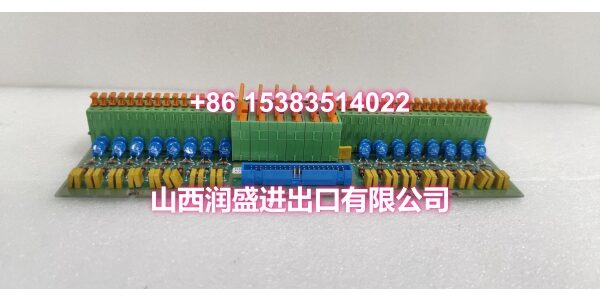
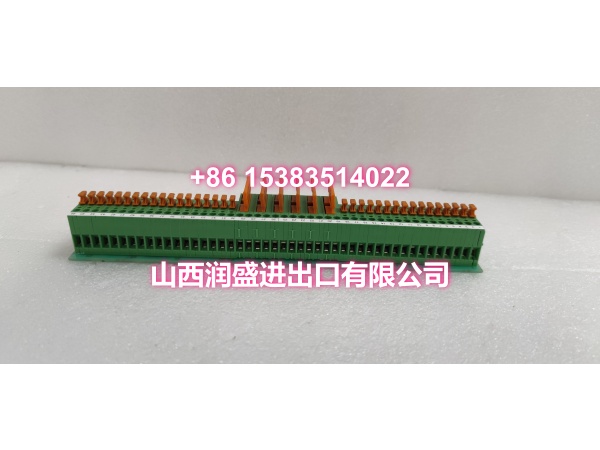
Product Core Brief
- Model: DSTA131
- Brand: ABB
- Series: ABB Distributed Control System (DCS) Module
- Order Code: 2668180-48/2
- Core Function: Distributed control system module for industrial automation, providing decentralized control with centralized management capabilities. Enables independent subsystem operation while maintaining system-wide coordination.
- Product Type: Distributed Control System Module
- Key Specs: Distributed architecture | Independent processor per subsystem | Parallel processing | Hot-swap support | Standardized design | Flexible scalability
- Note: Condition: New Original (New Surplus). Compatible with ABB DCS system architectures.
Key Technical Specifications
| Parameter | Value |
|---|---|
| Device Model | DSTA131 |
| Device Type | Distributed Control System Module |
| Series | ABB DCS Control Module |
| Standard Order Code | 2668180-48/2 |
| Core Function | Decentralized control with centralized management |
| Architecture | Distributed network control system |
| Processing | Independent processor and memory per subsystem |
| Data Transmission | Reduced data transmission load via pre-processing |
| Scalability | Dynamic node addition/removal for system expansion |
| Hot-Swap | Supported for maintenance without system shutdown |
| Design | Standardized modular design for easy maintenance |
| Reliability | Fault-tolerant — subsystem failures don’t affect overall operation |
| System Compatibility | ABB DCS systems |
| Typical Applications | Industrial automation, power generation, chemical processing |
| Condition | New Original (New Surplus) |
Product Introduction
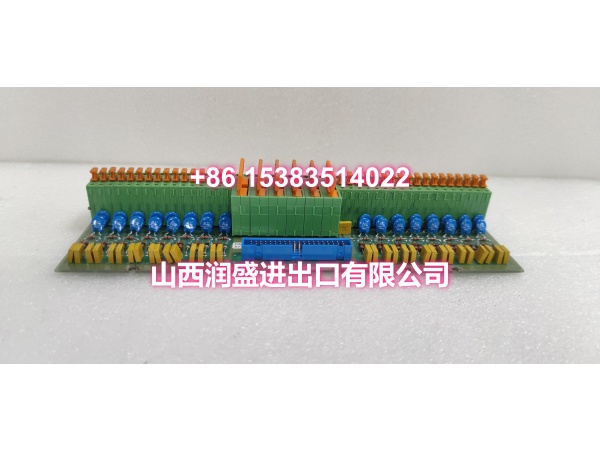
The ABB DSTA131 (Order Code: 2668180-48/2) is a distributed control system module designed for industrial automation applications. Built on a distributed network architecture, it delivers decentralized control functionality combined with centralized management — a design philosophy that has made ABB DCS systems the backbone of critical process industries worldwide.
The module’s core innovation lies in its distributed architecture: each subsystem operates with its own independent processor and memory, running in parallel with other subsystems. This means that if one subsystem experiences a fault, the remaining subsystems continue to operate normally, ensuring the overall system remains functional. This fault-tolerant design is essential for continuous-process industries where unplanned shutdowns carry significant financial and safety consequences.
Data efficiency is another key advantage. Input and output data are pre-processed or selected at the subsystem level before transmission, reducing the data load on the central microprocessor. This architecture improves control speed and simplifies programming — making configuration changes and modifications more straightforward for system integrators and maintenance engineers.
The DSTA131 supports dynamic scalability, allowing control nodes to be added or removed as system requirements evolve. This flexibility makes it suitable for both greenfield installations and brownfield expansion projects, where additional control capacity may be needed without a complete system overhaul.
Standardized design principles ensure that maintenance and upgrades are straightforward. Each subsystem has a clearly defined function, making fault localization and troubleshooting significantly easier than with monolithic control architectures. Replacement modules can be swapped in with minimal reconfiguration, reducing mean time to repair (MTTR).
Common applications include:
- Power generation: Boiler control, turbine monitoring, and auxiliary system automation in thermal and nuclear power plants.
- Petrochemical: Reactor monitoring, distillation column control, and safety instrumented systems in refineries and chemical plants.
- Industrial automation: Production line control, quality monitoring, and utility system management in manufacturing facilities.
- Water treatment: Filtration, chemical dosing, and pump station control in municipal and industrial water treatment plants.
For system integrators and maintenance teams supporting ABB DCS installations, the DSTA131 is a direct drop-in replacement for failed or degraded control modules. When ordering, verify that the order code (2668180-48/2) matches your system’s requirements and that the module is compatible with your existing DCS controller version and system configuration.
QA & Testing SOP
Every unit goes through a structured verification process before shipment:
- Visual Inspection: Check the module housing for cracks, corrosion, physical damage to connectors, and damage to mounting clips. Verify that all components (processor, memory chips, communication ICs, connectors) are securely mounted with no cold joints or solder bridges. Inspect the module housing and connector pins for damage.
- Connector Pin Verification: Inspect all connectors for straightness, corrosion, or bending. Verify that all pins are intact and properly aligned, as bent pins cause communication failures or intermittent connectivity.
- Power-On Self-Test: Install the module in the DCS rack and apply power. Verify that the module powers up correctly and that status indicators illuminate according to the expected sequence. Check for any abnormal heating during the initial power-on.
- Processor Test: Verify that the independent processor operates correctly and can execute control logic. Run a basic diagnostic routine to confirm CPU functionality and memory integrity.
- Communication Test: Connect the module to the DCS network and verify that it can communicate with other subsystems and the central management station. Test data transmission in both directions and verify that no packets are dropped under normal load conditions.
- Parallel Processing Test: Verify that the module can operate in parallel with other subsystems without interference. Confirm that subsystem failures do not propagate to other modules.
- Hot-Swap Function Test: Insert and remove the module while the system is powered to verify that the hot-swap mechanism operates correctly and that the system correctly detects module insertion/removal events without disruption to other subsystems.
- Anti-Counterfeit & Packaging: Verify authenticity markings on the module housing and PCB. Each unit is shipped in anti-static protective packaging with desiccant to prevent moisture absorption and connector oxidation during transit.
Installation Pitfalls & Guide
Installing or replacing a distributed control system module requires careful attention to system configuration, connector integrity, and proper handling.
❗ Power-Down Before Installation: Always disconnect power to the DCS system before removing or inserting the DSTA131 module. Although the module supports hot-swap functionality, it is strongly recommended to replace the module with power off to prevent electrical damage to the module or the rack’s backplane connector.
❗ Anti-Static Protection: Always wear an anti-static wrist strap when handling the DSTA131 module. The PCB contains sensitive electronic components that can be damaged by electrostatic discharge (ESD). Handle the module by its edges only, avoiding contact with components or connector pins.
❗ Document System Configuration: Before removing the original module, carefully document the module’s configuration, including its node address, communication parameters, and control logic assignments. Incorrect configuration after replacement can cause communication failures or control errors.
❗ Verify Backplane Connector Alignment: Before inserting the module into the rack, verify that the backplane connector aligns correctly with the rack slot guides. Misaligned connectors can cause bent pins and permanent communication failures.
❗ Check System Compatibility: Confirm that the replacement module’s firmware revision is compatible with your existing DCS system version. Firmware mismatches can cause communication errors or unexpected behavior.
4-Step Replacement Guide:
- Pre-install: Document the module’s configuration, including node address, communication parameters, and control logic assignments. Back up the DCS system configuration. Verify the replacement module’s model (DSTA131) and order code (2668180-48/2) match the original. Prepare anti-static protection, tools, and a laptop for configuration verification.
- Removal: Disconnect power to the DCS system. Wear an anti-static wrist strap. Release the module’s mounting clips and gently pull the module straight out of the rack. Inspect the rack’s backplane connector for damage or debris.
- Install: Align the new DSTA131’s backplane connector with the rack slot guides. Push firmly and evenly until fully seated. Secure the module with the mounting clips. Verify that the connector is fully seated and locked in place.
- Power-on Test: Apply power to the DCS system. Verify that the module powers up correctly and that status indicators indicate normal operation. Use the system’s diagnostic tools to verify that the module is communicating correctly with other subsystems and the central management station. Test control logic execution and monitor the module for several minutes to confirm stable operation with no communication errors.
Technical FAQ
1. What is the DSTA131 used for in an ABB DCS system? The DSTA131 is a distributed control system module that provides decentralized control functionality within ABB DCS architectures. Each subsystem operates with its own independent processor and memory, enabling fault-tolerant operation where subsystem failures don’t affect the overall system.
2. Does the DSTA131 support hot-swap? Yes, the DSTA131 supports hot-swap operation, allowing modules to be replaced without shutting down the entire system. However, it is recommended to replace the module with power off when possible to minimize risk of electrical damage.
3. What industries commonly use the DSTA131? The DSTA131 is widely used in power generation, petrochemical processing, industrial automation, and water treatment applications — any industry that requires high-reliability continuous process control.
4. How does the distributed architecture improve reliability? In a distributed architecture, each subsystem has its own independent processor and memory. If one subsystem fails, the others continue to operate normally, preventing a single point of failure from causing a system-wide shutdown.
5. Can the DSTA131 be scaled up or down? Yes, the DSTA131 supports dynamic scalability. Control nodes can be added or removed as system requirements change, making it suitable for both initial installations and future expansion projects.
6. What’s the difference between New Surplus and Refurbished for control modules? We supply this unit as New Original (New Surplus) — unused, original factory stock. This comes with a standard 12-month warranty. Refurbished control modules carry risks including degraded processor performance, weakened solder joints, and latent failures in communication ICs that may only manifest under full operational load. For a module that is critical to process control, new surplus is the safer choice.