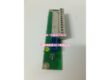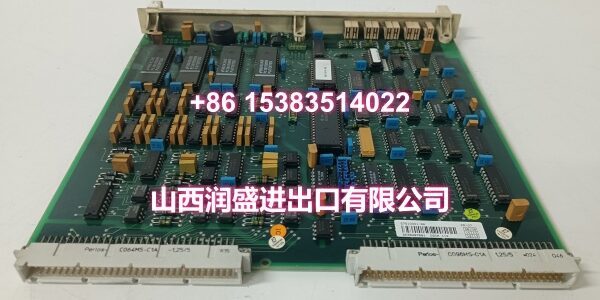
Product Core Brief
- Model: DSCA114
- Brand: ABB
- Series: ABB MasterPiece Series / Legacy DCS Systems
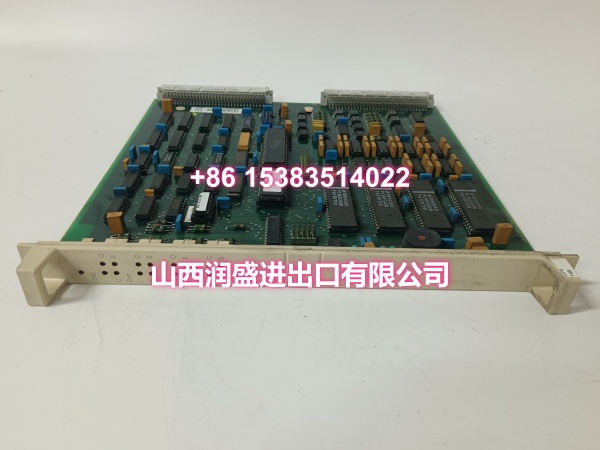
- Core Function: Asynchronous serial communication board that enables data exchange between ABB controllers and external devices (HMIs, printers, barcode scanners, third-party PLCs) via RS-232/RS-422/RS-485 interfaces.
- Product Type: Asynchronous Communication Board / Serial Communication Module
- Key Specs: Supports RS-232/RS-422/RS-485 serial interfaces | Optical isolation for noise immunity | Status LED indicators | Modular plug-in design | Compatible with ABB MasterPiece and legacy DCS controllers
- Condition: New Original / New Surplus
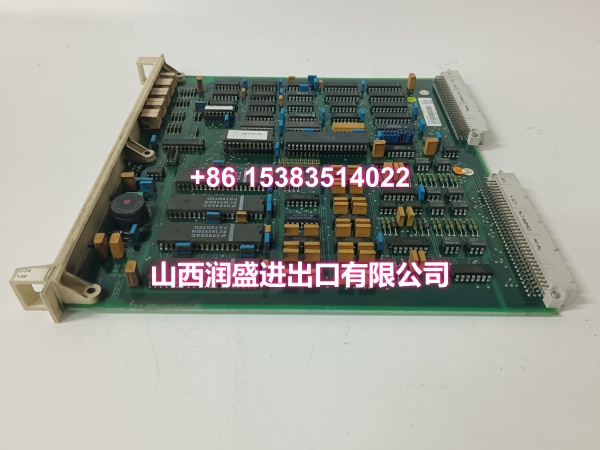
Key Technical Specifications
- Product Type: Asynchronous Communication Board for DCS/PLC Systems
- Brand: ABB
- Model Number:
- Order Code: 57510001-AA
- Series: ABB MasterPiece Series / Legacy DCS Systems
- Communication Interfaces: Supports multiple serial interface standards including RS-232, RS-422, and RS-485, enabling flexible integration with diverse external devices
- Core Function: Asynchronous serial communication — provides a reliable data link between ABB controllers and external serial devices such as operator terminals, printers, barcode readers, and third-party PLCs
- Isolation: Optical isolation on communication lines to protect the controller from ground loops, voltage spikes, and electrical noise common in industrial environments
- Diagnostic Indicators: Front-panel status LEDs for monitoring communication link status and fault conditions, enabling quick troubleshooting during maintenance
- Power Supply: 24V DC (supplied from the host controller backplane or system power supply)
- Mounting Method: Standard modular plug-in design within ABB MasterPiece or compatible DCS controller chassis — drop-in replacement with no rewiring typically required
- Operating Temperature: -20°C to +60°C, suitable for harsh industrial environments
- Environmental Rating: IP20 protection rating, suitable for indoor industrial control room environments
- Physical Dimensions: Approximately 324mm (depth) × 234mm (width) × 18mm (height), net weight approximately 0.4kg
- Compatibility: Compatible with ABB MasterPiece series controllers and legacy DCS systems; supports integration with ABB PLC platforms
- Typical Applications: Connecting operator HMIs and text displays to ABB controllers for local monitoring and control; interfacing with serial printers for batch report printing in food, pharmaceutical, and chemical processes; connecting barcode scanners for product tracking in packaging lines; linking to third-party PLCs or instrumentation via RS-485 for multi-drop communication; serving as a critical spare part for lifecycle support of mature MasterPiece and legacy DCS installations; enabling serial data logging and archiving for regulatory compliance
Product Introduction
The ABB DSCA114 57510001-AA is an asynchronous communication board from ABB’s MasterPiece series, engineered to bridge the gap between ABB controllers and external serial devices in industrial automation systems. As a dedicated serial communication module, the DSCA114 provides the physical interface and protocol handling necessary for reliable data exchange over RS-232, RS-422, or RS-485 links — making it an essential component for applications where the controller must communicate with HMIs, printers, barcode scanners, or third-party equipment.
What sets the DSCA114 apart in legacy ABB installations is its optical isolation and multi-interface flexibility. Industrial environments are electrically noisy, and ground potential differences between devices can introduce communication errors or even damage unprotected ports. The DSCA114’s built-in optical isolation breaks ground loops and shields the host controller from voltage transients on the communication line, ensuring stable data transmission even in challenging electrical environments. Its support for RS-232, RS-422, and RS-485 means a single module type can serve multiple application needs — RS-232 for point-to-point HMI connections, RS-485 for multi-drop networks linking multiple instruments, or RS-422 for longer-distance differential signaling.
For system integrators and MRO procurement teams maintaining ABB MasterPiece or legacy DCS systems, the DSCA114 is a critical spare part. Serial communication failures can isolate the controller from operator interfaces, halt batch reporting, or break integration links with third-party systems — any of which can force a production stoppage. The DSCA114’s front-panel LED indicators provide immediate visual confirmation of link status, dramatically reducing mean time to repair during troubleshooting. Its modular plug-in design means replacement is a straightforward swap with no rewiring or software reconfiguration typically required, allowing maintenance teams to restore communication quickly during a maintenance window.
As plants extend the lifecycle of mature ABB installations while planning phased upgrades to newer platforms, having verified genuine DSCA114 modules on hand ensures continuity of serial communication links and reduces the risk of production disruptions caused by communication board failures.
QA & Testing SOP
Every unit undergoes a standardized verification process before shipment:
- Visual & Anti-Counterfeit Check: Inspect the module housing for proper ABB branding and part number marking (DSCA114, 57510001-AA). Check for physical damage including cracked PCB, damaged connector pins, burnt components, or signs of moisture ingress (corrosion, white residue on contacts).
- Connector Pin Inspection: Examine the backplane connector pins and serial port connectors (DB9/DB25 or terminal block depending on revision) for straightness, corrosion, or bending. Bent pins can cause intermittent connections or short circuits when inserted into the controller chassis.
- LED Indicator Test: Power the module and verify that all front-panel LED indicators illuminate correctly during startup and display appropriate status under normal operating conditions.
- RS-232 Communication Test: Connect the module to a test PC via RS-232 and verify bidirectional data transmission at standard baud rates (e.g., 9600, 19200, 38400 bps). Confirm no data corruption or framing errors.
- RS-485 Communication Test: Connect the module in a multi-drop RS-485 configuration and verify reliable data exchange with multiple slave devices. Confirm proper termination and bias resistor functionality.
- RS-422 Communication Test: Connect the module via RS-422 differential pair and verify reliable data transmission over extended cable lengths, confirming noise immunity and signal integrity.
- Optical Isolation Test: Apply a ground potential difference between the module and the connected device and verify that communication remains stable with no ground loop interference. Confirm isolation voltage rating per specification.
- Backplane Communication Test: Insert the module into a test ABB MasterPiece or compatible DCS chassis and verify that the host controller recognizes the module, can configure communication parameters, and reports no fault codes.
- Anti-Static & Mechanical Protection: After passing all tests, the module is placed in anti-static shielding with protective caps on connectors. It is then packed in rigid cardboard with foam cushioning to prevent mechanical shock and ESD damage during transit.
Installation Pitfalls & Guide
Real-World Risks When Replacing This Module:
❗ Incorrect Interface Configuration: The DSCA114 supports RS-232, RS-422, and RS-485 interfaces, which have different wiring requirements. RS-232 is point-to-point with single-ended signaling, RS-422 is point-to-point with differential signaling, and RS-485 supports multi-drop with differential signaling. If the module is configured for one interface type but wired for another, communication will fail. Always verify the interface configuration in the controller software matches the physical wiring before commissioning.
❗ Termination and Bias Resistor Issues (RS-485/422): For RS-485 and RS-422 links, proper termination resistors (typically 120Ω) are required at both ends of the bus to prevent signal reflections. Missing or incorrect termination can cause intermittent communication errors, especially at higher baud rates or longer cable runs. Verify termination is correctly configured before troubleshooting communication issues.
❗ Baud Rate and Protocol Mismatch: The DSCA114 and the connected device must be configured with matching communication parameters — baud rate, data bits, stop bits, and parity. A mismatch in any of these parameters will prevent communication. Document the existing communication settings before removing the old module.
❗ Ground Loop Risks: While the DSCA114 provides optical isolation, improper grounding of the cable shield can still introduce noise. For RS-485/422 links, connect the cable shield to ground at one end only (typically the controller end) to avoid ground loops. For RS-232, ensure the signal ground is properly connected.
❗ Hot-Swap Risk: While some ABB controllers support hot-swapping of communication modules, removing or inserting the DSCA114 while the system is powered can temporarily disrupt communication links — potentially causing HMI disconnection or data loss in ongoing transactions. Always follow the manufacturer’s hot-swap procedure — if uncertain, schedule the replacement during a planned maintenance window.
❗ Cable Length Limitations: RS-232 is limited to approximately 15 meters at standard baud rates. RS-422 and RS-485 can support much longer distances (up to 1200 meters at lower baud rates). If communication is unreliable, verify that the cable length is within the specification for the interface type and baud rate in use.
4-Step Replacement Guide:
- Pre-Install: Identify the failed module slot and document the existing configuration (slot position, interface type, communication parameters, wiring connections). Back up the current controller configuration and communication settings. If possible, schedule the replacement during a planned maintenance window and notify operations of potential brief communication interruptions.
- Removal: If hot-swap is supported per the system documentation, follow the proper hot-swap procedure. Otherwise, power down the controller chassis. Disconnect all serial communication cables from the module, labeling each cable for reconnection. Release the module locking mechanism and carefully slide the old module out of the chassis slot. Inspect the backplane connector for damage or debris.
- Install: Insert the new DSCA114 module into the correct chassis slot, ensuring proper alignment with the backplane connector. Secure the module with the locking mechanism. Reconnect all serial communication cables to the correct ports, verifying interface type (RS-232/422/485) and wiring polarity. Double-check that termination resistors are correctly configured for RS-485/422 links.
- Power-On Test: Power up the chassis (if it was shut down). Verify that the front-panel LED indicators display normal communication status. Check the controller for any fault codes related to the communication module. Test bidirectional data exchange with the connected device(s) at the configured baud rate. Verify that all expected communication links are operational before returning to full production.
Technical FAQ
What is the difference between the DSCA114 and the DSCA121? The DSCA114 (57510001-AA) is an asynchronous serial communication board supporting RS-232/RS-422/RS-485 interfaces for the ABB MasterPiece series and legacy DCS systems. The DSCA121 is also a communication module for ABB systems but may support different interface types or be designed for a different controller family. Always verify compatibility with your specific controller model before ordering.
Can the DSCA114 support Modbus RTU communication? The DSCA114 provides the physical serial interface (RS-232/422/485). Whether it supports Modbus RTU depends on the host controller’s firmware and configuration software — the controller must be configured to implement the Modbus RTU protocol over the serial link provided by the DSCA114. Consult your controller documentation for protocol support details.
What are common failure modes for this module? Common failure modes include: serial port connector damage from repeated plugging/unplugging; optical isolator degradation over time leading to reduced noise immunity; backplane connector pin damage from repeated insertion/removal; PCB trace corrosion from moisture ingress in humid environments; and communication chip failure due to voltage spikes on the serial line (especially if external surge protection is not installed). In most cases, a failing DSCA114 will show communication timeouts, data corruption, or complete link failure, with the front-panel LEDs indicating the fault condition.
Is the DSCA114 compatible with newer ABB controllers (e.g., AC 800M)? The DSCA114 is designed for ABB MasterPiece series and legacy DCS systems. Compatibility with newer platforms (such as AC 800M) depends on the specific system architecture and whether legacy module interfaces are supported. For newer systems, ABB offers S800 I/O series communication modules that may be more appropriate. Always verify compatibility with your specific controller model and firmware version before ordering.
What warranty do you offer on New Surplus parts? We provide a full 12-month warranty on all New Original / New Surplus units. This is fundamentally different from refurbished or pulled modules, which often carry 30–90 day warranties and come with unknown operational history, potential connector wear, and degraded optical isolation performance. For a communication board that links the controller to critical external devices, the reliability difference between new surplus and refurbished directly impacts communication stability and the risk of unplanned downtime.