Product Core Brief
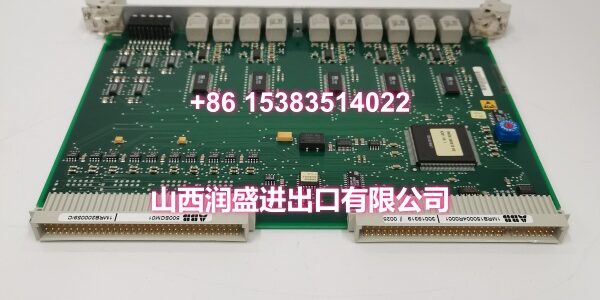
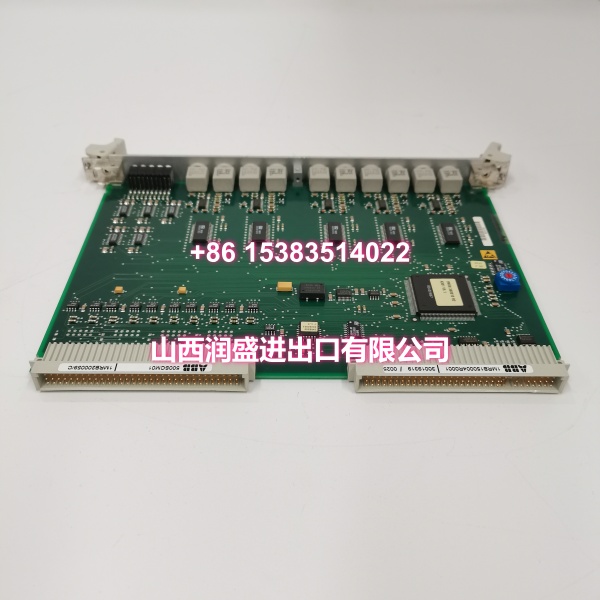
- Model: 500SCM01 (1MRB150004R0001 / 1MRB200059/C)
- Brand: ABB
- Series: ABB SattCon 500 PLC Platform
- Core Function: Serial communication module providing RS-232/RS-485 connectivity and protocol handling for SCADA/HMI links, smart instruments, and drives in SattCon 500 systems.
- Product Type: Serial Communication Module
- Key Specs: RS-232/RS-485 Interfaces | COMLI & Modbus RTU Protocol Support | Configurable Baud Rates | Backplane-Powered | 0°C to +55°C Operating Range
- Note: Condition: New Original (New Surplus).
Key Technical Specifications
| Parameter | Value |
|---|---|
| Manufacturer Part Number | 1MRB150004R0001 |
| Assembly Reference | 1MRB200059/C |
| Device Model | 500SCM01 |
| Functional Type | Serial Communication Module |
| Parent System | ABB SattCon 500 PLC |
| Power Requirements | Supplied via SattCon 500 backplane (no external power required) |
| Signal I/O Types | Serial communications; RS-232 / RS-485 (configurable) |
| Supported Protocols | COMLI (ABB native); Modbus RTU master/slave |
| Communication Settings | Configurable baud rates (typically 9.6–38.4 kbps); parity/stop bits user-configurable |
| Network Topology | Point-to-point (RS-232) or multi-drop networks (RS-485) |
| Operating Temperature | 0°C to +55°C (typical for SattCon modules) |
| Installation Method | Rack-mounted in SattCon 500 base; front-panel terminals/ports |
| Diagnostics | Status LEDs for communication health and fault indication |
| Condition | New Original (New Surplus) |
Product Introduction
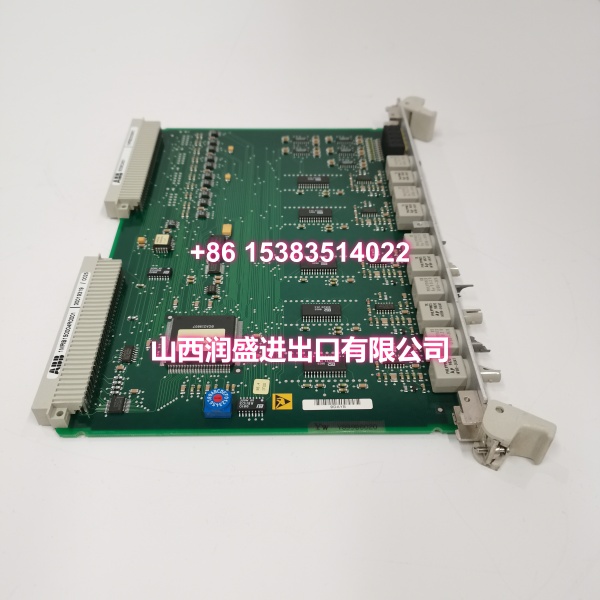
The ABB 500SCM01 (order code 1MRB150004R0001, assembly reference 1MRB200059/C) is a serial communication module for the ABB SattCon 500 PLC platform. It adds reliable RS-232/RS-485 connectivity and protocol handling for SCADA/HMI links, smart instruments, and drives—enabling legacy SattCon installations to exchange data with serial devices without reworking the control strategy or rewiring the entire cabinet.
This module is particularly valued in brownfield upgrades where plants need to pull data from serial meters or integrate third-party subsystems while keeping the existing SattCon CPU and I/O intact. The native SattCon 500 integration means it installs directly in the rack and is powered via the system backplane, eliminating the need for external power supplies or additional wiring.
Protocol flexibility is a key strength: the module supports COMLI (ABB’s native protocol) and, in many configurations, Modbus RTU master/slave via application libraries. Configurable baud rates from low to mid-range (e.g., 9.6–38.4 kbps) provide stable operation over longer cable runs. The noise-resilient design with proper shielding and termination practices makes RS-485 networks stable in industrial environments with VFDs and contactors.
Common applications include SCADA/HMI connectivity to legacy SattCon 500 controls in water, wastewater, and district heating stations; serial integration with VFDs, soft starters, or DC drives using Modbus RTU over RS-485; and data collection from serial instruments such as power meters, barcode readers, and temperature controllers in manufacturing cells.
QA & Testing SOP
Every unit goes through a structured verification process before shipment:
- Visual Inspection: Check for burnt components, swollen capacitors, corrosion on the backplane connector pins, and physical damage to the front-panel terminal blocks and communication ports. Verify that all port covers and terminal screws are present and undamaged.
- Backplane Connector Verification: Inspect the backplane connector for bent or pushed-out pins. A poor backplane connection is the most common cause of intermittent communication faults and module recognition issues.
- Port Continuity Test: Using a multimeter, verify each communication port’s signal pins are intact and properly terminated. Check for short circuits between signal lines and ground that could damage connected devices.
- Communication Loopback Test: Where test infrastructure allows, connect known RS-232/RS-485 test devices and verify the module can transmit and receive data at configured baud rates. This confirms the UART circuitry and protocol handling are functional.
- Protocol Configuration Verification: Verify the module responds correctly to COMLI and Modbus RTU commands at typical baud rates (9.6–38.4 kbps). This catches configuration corruption that can cause communication timeouts in the field.
- Anti-Counterfeit & Packaging: Verify authenticity markings on the PCB and label. Each unit is shipped in anti-static packaging with desiccant to prevent moisture damage during transit.
Installation Pitfalls & Guide
Installing a serial communication module requires attention to wiring practices that differ from standard I/O modules.
❗ RS-485 Termination Resistors: RS-485 multi-drop networks require proper termination at both ends of the bus to prevent signal reflections. Missing or incorrect termination resistors cause intermittent communication errors, especially at higher baud rates or over longer cable runs. Always install 120Ω termination resistors at the first and last devices on the RS-485 bus.
❗ RS-232 Cable Length Limitation: RS-232 is limited to approximately 15 meters (50 feet) at standard baud rates. Exceeding this distance causes signal degradation and communication failures. For longer distances, use RS-485 instead, which supports runs up to 1,200 meters at lower baud rates.
❗ Baud Rate Mismatch: The module’s baud rate configuration must match all connected devices on the serial network. A mismatch between the module and any device on the bus causes complete communication failure. Document the baud rate, parity, and stop bit settings before replacement and verify they match the existing configuration.
❗ Shield Grounding for RS-485: RS-485 cables should use shielded twisted-pair cable with the shield grounded at one end only (typically at the module end). Grounding at both ends creates ground loops that introduce noise into the communication bus, causing intermittent errors in electrically noisy environments.
4-Step Replacement Guide:
- Pre-install: Document the communication protocol (COMLI or Modbus RTU), baud rate, parity, stop bits, and network topology from the existing SattCon configuration. Note the RS-232/RS-485 mode setting and any device addresses assigned to this module.
- Removal: Power down the SattCon 500 rack. Disconnect all communication cables from the front-panel ports. Release the module locking mechanism and slide the module straight out of the rack.
- Install: Insert the new module firmly into the correct slot, ensuring the backplane connector seats fully. Secure the locking mechanism. Reconnect communication cables to the correct ports (RS-232 or RS-485 as configured).
- Power-on Test: Power up the rack. Verify the module’s status LEDs indicate normal operation. Test communication with connected devices at the configured baud rate. Verify data exchange is functioning correctly through the SattCon programming software.
Technical FAQ
1. What protocols does the 500SCM01 support? The module supports COMLI (ABB’s native protocol) and Modbus RTU master/slave. COMLI is used for communication with ABB devices and SCADA systems, while Modbus RTU enables integration with third-party instruments, drives, and controllers. Protocol selection is configured through the SattCon programming software.
2. Can I use both RS-232 and RS-485 simultaneously? The module provides configurable RS-232/RS-485 interfaces. The specific configuration depends on the hardware variant and software settings. Typically, you can configure ports for either RS-232 (point-to-point) or RS-485 (multi-drop) operation. Verify the port configuration in your SattCon project before connecting devices.
3. What baud rates are supported? The module supports configurable baud rates in the low to mid-range, with 9.6–38.4 kbps being the most commonly used range in field installations. The exact range depends on the protocol and hardware configuration. Higher baud rates reduce maximum cable length, so select the lowest baud rate that meets your application’s response time requirements.
4. Can this module be used with AC 500 systems? The 500SCM01 is designed specifically for the SattCon 500 PLC platform. While both are ABB products, the SattCon 500 and AC 500 are different platforms with incompatible backplane connectors and module formats. This module is not directly compatible with AC 500 racks.
5. What’s the difference between New Surplus and Refurbished for communication modules? We supply this unit as New Original (New Surplus)—unused, original factory stock, typically still in its anti-static packaging. This comes with a standard 12-month warranty. Refurbished communication modules carry risks including degraded UART circuitry from previous overvoltage events, damaged communication ports from repeated cable connections, and undocumented firmware modifications. Refurbished units typically come with 30-90 day limited warranties that don’t cover latent communication errors.