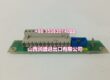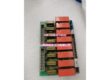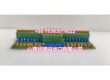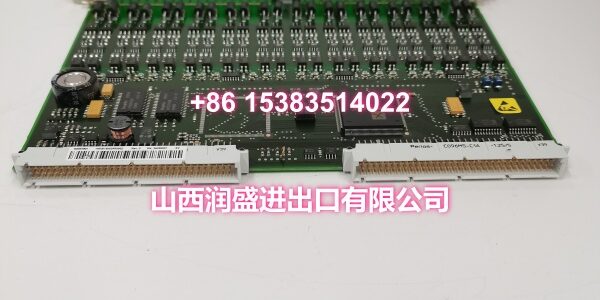
Product Core Brief
- Model: 500BIM01 / 1MRB150024R0002
- Brand: ABB
- Series: ABB 500-Series Control System Racks / AC 500 PLC Series
- Integration Role: 16-channel 24VDC binary (digital) input module for ABB 500-series control racks and AC 500 PLC systems — brings field on/off signals (pushbuttons, limit switches, relay contacts, interlocks) safely into the controller with opto-isolation and integrated noise filtering, ideal for brownfield maintenance, legacy cabinet upgrades, and DC drive revamps where existing 24VDC wiring is retained.
- Product Type: Binary / Digital Input Module
- Key Specs: 16-channel 24VDC digital input | Opto-isolated with channel-to-channel and channel-to-power isolation (500–1000Vrms) | Software-configurable input delay (0.1–16 ms) | Compatible with dry contact, NPN/PNP transistor outputs | ≤3–8W power consumption via backplane | Built-in debounce and noise filtering | Front-panel status LEDs for quick troubleshooting | DIN rail / 500-series rack plug-in mount
- Note: Condition: New Original (New Surplus)
Key Technical Specifications
- Product Type: Binary / Digital Input Module
- Brand: ABB
- Model Number: 500BIM01 / 1MRB150024R0002
- Series: ABB 500-Series Control System Racks / AC 500 PLC Series
- Number of Channels: 16 independent digital input channels
- Signal Input Type: 24VDC binary (digital) inputs, opto-isolated
- Input Voltage Levels:
- Logic 0 (OFF): –3V to +5V DC
- Logic 1 (ON): +15V to +30V DC
- Input Impedance: Approximately 4.7 kΩ
- Input Delay / Response Time: Software-configurable, 0.1 ms to 16 ms (debounce and noise filtering)
- Compatible Field Devices: Dry contacts (pushbuttons, limit switches, relay contacts), NPN/PNP transistor outputs from sensors and interlocks
- Power Supply: Module power via system backplane, 24VDC (±20%), typical power consumption ≤3–8W
- Isolation:
- Channel-to-channel isolation: 500Vrms
- Channel-to-power supply isolation: 1000Vrms
- Strong anti-interference capability with ±2kV ESD protection and ±1kV EFT protection (EN 61000 series compliant)
- Communication Interface: Proprietary ABB 500 backplane bus — direct plug-in to rack/drive backplane, no external fieldbus required; data refresh cycle ≤5 ms with real-time status feedback to CPU
- Status Indication: Front-panel status LEDs (module-level and channel-group level) for quick on-site troubleshooting
- Mounting Method: Standard DIN rail mounting or direct plug-in to ABB 500-series rack backplane
- Dimensions: 120mm (H) × 100mm (W) × 22.5mm (D), approximately 0.25 kg
- Operating Temperature: -25°C to +60°C (some sources cite 0°C to +55°C — verify against your specific cabinet rating)
- Typical Applications: Brownfield plant maintenance (steel stands, rolling lines, paper machine auxiliaries, mining conveyors, water treatment skids); DC drive revamps; mixed cabinets with relays, contactors, and safety circuits; logic control, equipment status monitoring, and safety interlocking in industrial automation systems
Product Introduction
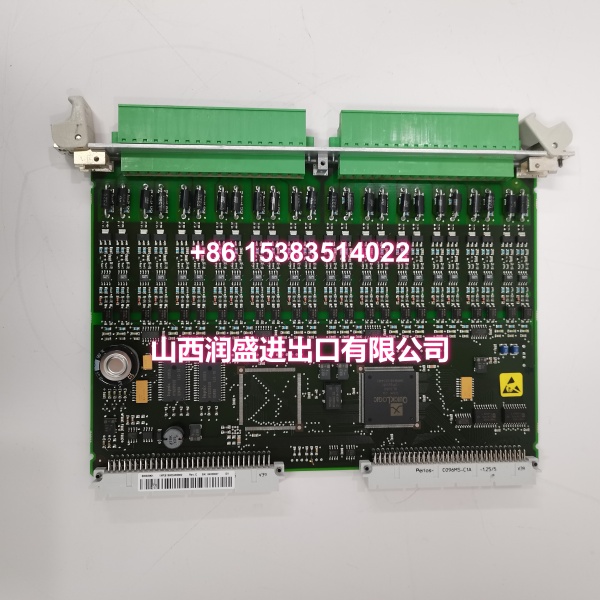
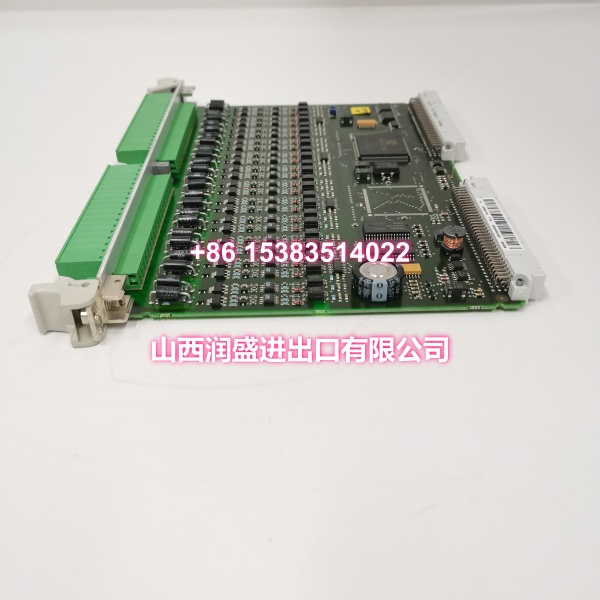
The ABB 500BIM01 (order code 1MRB150024R0002) is a 16-channel 24VDC binary (digital) input module designed for ABB 500-series control racks and AC 500 PLC systems. It serves as a critical I/O interface that brings field on/off signals — from pushbuttons, limit switches, relay contacts, proximity sensors, and safety interlocks — safely into the controller with opto-isolation and integrated noise filtering.
This module is particularly valued in brownfield maintenance and legacy cabinet upgrades. Because it slots directly into standard 500-series backplanes and follows ABB’s familiar wiring conventions, it enables fast drop-in replacement with minimal disturbance to existing cabinet wiring — keeping commissioning time short and avoiding the need to rework the entire I/O scheme. It is also commonly used in DC drive revamps where existing 24VDC wiring is retained and stable input acquisition with clean backplane communication is essential.
The 16-channel architecture supports both dry contact and NPN/PNP transistor output types, accommodating a wide range of field devices. The software-configurable input delay (0.1–16 ms) allows engineers to tune debounce and noise filtering to match the characteristics of each field signal — critical for rejecting false transitions on long cable runs or in electrically noisy environments.
Opto-isolation is a key feature for industrial environments. With channel-to-channel isolation at 500Vrms and channel-to-power isolation at 1000Vrms, the module protects the backplane and CPU from noise, ground loops, and voltage transients that commonly occur in mixed-voltage cabinets. The module also meets EN 61000 series electromagnetic compatibility standards, with ±2kV ESD protection and ±1kV EFT (electrical fast transient) protection, ensuring stable operation in high-EMI areas near VFDs, contactors, and heavy power electronics.
The module draws its 24VDC power (±20%) directly from the system backplane, with typical power consumption of ≤3–8W. It communicates with the CPU module via the proprietary ABB 500 backplane bus — no external communication dongles or adapters are required — with a data refresh cycle of ≤5 ms and real-time status feedback.
Front-panel status LEDs at both the module and channel-group levels provide immediate visual feedback during commissioning and routine maintenance, allowing technicians to quickly verify signal presence and module health without software diagnostics. The compact form factor (120mm × 100mm × 22.5mm, ~0.25 kg) mounts on standard DIN rail or plugs directly into the 500-series rack backplane, supporting efficient cabinet layouts.
System integrators and maintenance engineers specify this module for its proven compatibility with ABB 500-series and AC 500 systems, reliable digital signal acquisition in noisy industrial environments, and straightforward drop-in replacement that minimizes retrofit risk and reduces downtime during module swaps.
Installation & Integration Notes
- Backplane Compatibility: This module is designed for ABB 500-series control racks and AC 500 PLC systems. Verify that your backplane revision is compatible with the 500BIM01 before installation. The module communicates over the proprietary ABB 500 backplane bus — no external communication dongles or adapters are required.
- Input Voltage Verification: Confirm that your field devices provide 24VDC signals within the module’s input voltage range (Logic 0: –3V to +5V DC; Logic 1: +15V to +30V DC). Signals outside this range may not be correctly interpreted or could damage the module.
- Input Delay Configuration: The software-configurable input delay (0.1–16 ms) should be tuned to match the characteristics of each field signal. Use a longer delay for mechanical contacts (pushbuttons, limit switches) to debounce contact bounce, and a shorter delay for fast electronic sensors to maintain response time.
- Wiring Compatibility: The module supports dry contact inputs and NPN/PNP transistor outputs. Verify that the field wiring matches the configured signal type for each channel — for example, NPN sensors require a different common terminal connection than PNP sensors.
- Shielded Cable Requirement: Use shielded twisted-pair cable for all digital signal connections, especially for long cable runs. Ground the shield at the cabinet end only (single-point grounding) to minimize electromagnetic interference from nearby power cables and drive systems.
- Isolation Verification: The module provides channel-to-channel (500Vrms) and channel-to-power (1000Vrms) galvanic isolation. Ensure that field wiring does not bypass this isolation by incorrectly commoning signal grounds — doing so defeats the noise-rejection benefit and can introduce ground loops.
- Power Supply Verification: Confirm your cabinet’s 24VDC backplane supply is within the ±20% tolerance and can deliver at least 3–8W per module. An unstable or under-powered supply can cause input misreads or module malfunction.
- ESD-Safe Handling: As a rack-mounted control module, the 500BIM01 requires ESD-safe handling procedures. Always use an anti-static wrist strap when handling the module outside of its protective packaging. Avoid touching terminal blocks or circuit traces directly.
- Diagnostics Utilization: The front-panel status LEDs (module-level and channel-group level) provide immediate visual feedback during commissioning. Use these indicators to verify signal presence and module operation before proceeding to software configuration.
- Compatibility Note: Always cross-reference the full part number (1MRB150024R0002) against your system’s spare parts list, as revision-specific variants may have minor differences in firmware or terminal assignments.
Integrator’s FAQ
What signal types does this module support? The 500BIM01 supports 24VDC binary (digital) inputs from dry contacts (pushbuttons, limit switches, relay contacts) and NPN/PNP transistor outputs from sensors and interlocks. The input voltage thresholds are Logic 0: –3V to +5V DC and Logic 1: +15V to +30V DC.
Can this module be used in non-ABB control systems? This module is designed specifically for ABB 500-series control racks and AC 500 PLC systems, communicating over the proprietary ABB 500 backplane bus. It is not a standalone module and requires an ABB 500-series backplane and compatible controller. It cannot be directly integrated into third-party PLC systems without an ABB 500-series rack as the host platform.
How does the opto-isolation protect my system? The opto-isolation provides channel-to-channel isolation at 500Vrms and channel-to-power isolation at 1000Vrms, breaking ground loops between field devices and the controller. This prevents common-mode noise and voltage transients from corrupting digital inputs or damaging the CPU — especially important in mixed-voltage cabinets with relays, contactors, and VFDs.
What is the purpose of the software-configurable input delay? The input delay (0.1–16 ms) provides debounce and noise filtering at the module level. For mechanical contacts like pushbuttons and limit switches, a longer delay (e.g., 5–16 ms) filters out contact bounce that would otherwise cause false transitions. For fast electronic sensors, a shorter delay (e.g., 0.1–2 ms) maintains quick response time. This is configured in software — no hardware jumpers are required.
How do I troubleshoot a channel that doesn’t respond? First, verify the field wiring — check for loose connections, broken wires, or incorrect polarity (NPN vs. PNP). Second, use a multimeter to confirm that 24VDC is present at the input terminal when the field device is activated. Third, check the front-panel status LEDs to see if the module detects the signal. Fourth, verify the software configuration — ensure the input delay is set appropriately and the channel is not masked or disabled in the program. If the LED indicates a fault, check the field device and wiring. If the LED is normal but the CPU doesn’t see the input, verify the backplane communication and CPU configuration.
Can I mix dry contact and transistor inputs on the same module? Yes, the module supports both dry contact and NPN/PNP transistor inputs. However, ensure that the external wiring matches the signal type for each channel — for example, NPN sensors require the common terminal to be connected to 24VDC positive, while PNP sensors require the common to be connected to 24VDC negative. Verify the wiring configuration in your cabinet drawings before applying power.
What warranty do you offer on New Surplus parts? We provide a full 12-month warranty on all New Original / New Surplus units. This is fundamentally different from refurbished I/O modules, which often carry 30–90 day warranties and come with unknown thermal cycling history, degraded opto-isolators, and potential terminal wear. For digital input modules where reliable signal acquisition is critical to safety interlocks and process control, the reliability difference between new surplus and refurbished is significant — it’s the difference between a planned maintenance replacement and an unexpected input failure during operation.
Why is your pricing lower than OEM direct but higher than used parts? Our pricing reflects New Original / New Surplus inventory sourced from factory overstock and authorized distributors. You pay less than OEM list because these are surplus units, not current production. You pay more than used/refurbished because the part has zero operating hours, no degradation of the opto-isolators or input circuitry, and no wear on the backplane connectors. For digital input modules where signal integrity and isolation performance are critical, the difference between new surplus and refurbished is not marginal — it directly impacts system reliability.