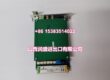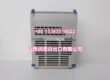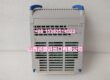
Product Core Brief
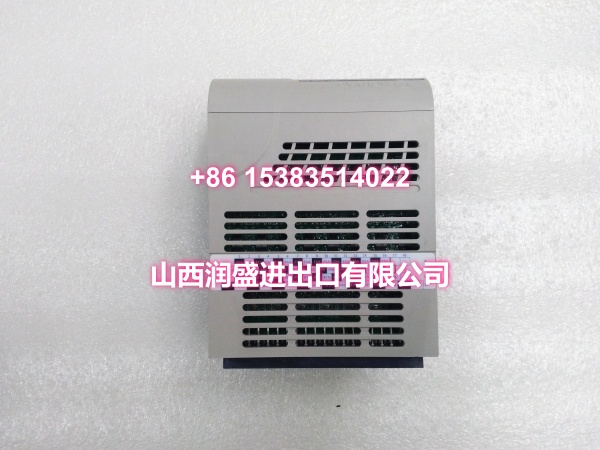
- Model: 5X00622G01
- Brand: EMERSON (Ovation / Westinghouse)
- Series: Ovation DCS
- Core Function: High-density RTD (Resistance Temperature Detector) input module for the Ovation DCS, collecting temperature signals from field RTD sensors and converting them to digital values for process monitoring and control.
- Product Type: RTD Input Module / Temperature Input Card
- Key Specs: 16 Isolated Channels | High-Precision ADC | Supports Pt100/Pt1000/Ni100 | Channel-to-Channel Isolation
- Condition: New Original / New Surplus
Key Technical Specifications
- Module Type: RTD (Resistance Temperature Detector) Input
- Channel Count: 16 independently configurable isolated channels
- Input Types: Configurable per channel for RTD types including Pt100, Pt1000, and Ni100
- Wiring Support: 2-wire, 3-wire, and 4-wire RTD configurations (3-wire and 4-wire compensate for lead resistance)
- Accuracy: ±0.1°C for Pt100 (typical, -200°C to +850°C range); high-precision ADC ensures measurement accuracy
- Resolution: 16-bit or higher (configurable)
- Sampling Rate: Up to 100 samples per second per channel (configurable)
- Isolation:
- Channel-to-channel: 2.5kV AC (1 minute)
- Channel-to-backplane: 5kV AC (1 minute)
- Signal Conditioning: Built-in configurable digital filtering to reduce noise; automatic lead resistance compensation for 3-wire and 4-wire RTD wiring
- Power Supply: 24V DC (18–32V range supported); redundant power inputs
- Power Consumption: ~8W per module (excluding field device power)
- Protection: Overvoltage, reverse polarity, and open/short circuit detection per channel
- Operating Temperature: -40°C to +70°C
- Storage Temperature: -55°C to +85°C3
- Installation: Plug-in module for Ovation I/O base; hot-swappable
- Physical Dimensions: 160mm (W) × 220mm (H) × 80mm (D)
- Certifications: IEC 61010-1 (safety), ATEX Zone 2 (hazardous areas), UL 508 (industrial control)
- Diagnostics: Real-time self-diagnostics (open circuit, short circuit, overrange, sensor failure) with status reporting to the Ovation DCS
Product Introduction
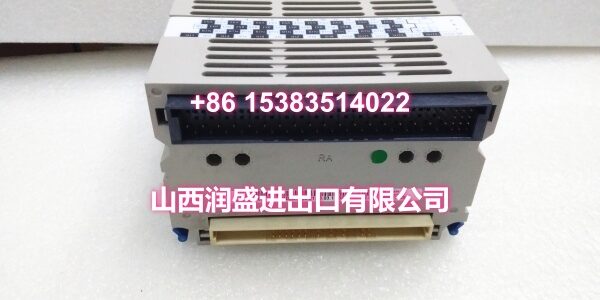
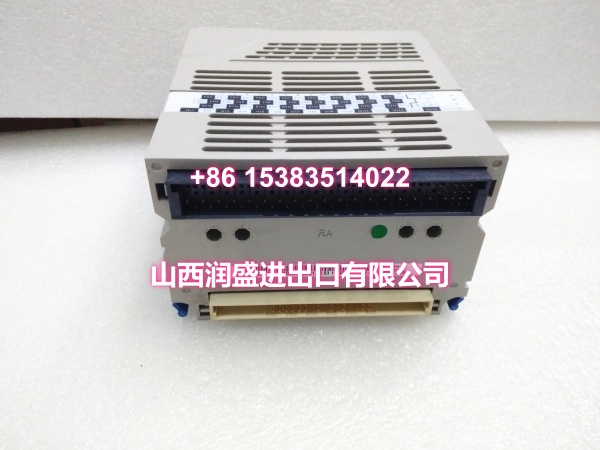
The 5X00622G01 is a high-density RTD input module for the Emerson Ovation distributed control system, designed to collect temperature signals from field RTD sensors and convert them to precise digital values for process monitoring and control. This module is a core component in Ovation I/O subsystems, commonly deployed in power generation, petrochemical, water treatment, and metallurgical applications where accurate temperature measurement is critical.
Unlike basic temperature input cards that support only a single RTD type, the 5X00622G01 is configurable—each of its 16 channels can be independently set for Pt100, Pt1000, or Ni100 RTD types, and supports 2-wire, 3-wire, or 4-wire wiring configurations. This flexibility eliminates the need to stock multiple specialized module types and simplifies spare parts inventory for plant maintenance teams.
The module features a high-precision ADC that ensures measurement accuracy of ±0.1°C for Pt100 sensors across the -200°C to +850°C range. Built-in configurable digital filtering reduces noise from motors, VFDs, and high-voltage equipment, while automatic lead resistance compensation for 3-wire and 4-wire RTD wiring eliminates measurement errors caused by long cable runs—a common issue in large industrial facilities.
Each channel is galvanically isolated from adjacent channels (2.5kV AC channel-to-channel, 5kV AC channel-to-backplane), preventing ground loops and electrical interference from propagating across the module. This is especially important in power plant and refinery environments where field wiring runs long distances through electrically noisy areas.
The 5X00622G01 supports redundant 24V DC power inputs and hot-swap replacement, minimizing downtime in mission-critical systems. Real-time self-diagnostics detect open circuits, short circuits, overrange conditions, and sensor failures, reporting fault status directly to the Ovation DCS for proactive maintenance—allowing engineers to identify and address wiring or sensor issues before they cause process upsets.
In typical applications, the 5X00622G01 is used for:
- Boiler temperature monitoring: Connecting RTD sensors on boiler tubes, superheaters, and economizers
- Turbine temperature measurement: Monitoring bearing temperatures, lube oil temperatures, and exhaust gas temperatures on steam and gas turbines
- Heat exchanger monitoring: Reading RTD sensors on shell-and-tube and plate heat exchangers
- Pipeline temperature tracking: Measuring process fluid temperatures in steam, feedwater, and chemical pipelines
- Reactor temperature control: Monitoring temperature in chemical reactors and distillation columns
The module’s solid-state design with no mechanical wear points ensures long service life and low maintenance. It draws power directly from the Ovation I/O backplane and features comprehensive overvoltage, reverse polarity, and surge protection to safeguard against wiring errors and transient events.
QA & Testing SOP
RTD input modules are critical for temperature-dependent processes—if they report incorrect values, the controller may overheat or underheat equipment. Here’s our verification procedure:
- Visual & Anti-Counterfeit Inspection: We inspect the PCB for cold solder joints around the ADC ICs, isolation barriers, and backplane connectors. We verify the OEM holographic label and cross-check the silkscreen part number against the Ovation master parts list. Counterfeit RTD modules in the surplus market may have degraded ADCs that cause temperature drift, channel-to-channel crosstalk, or inaccurate readings under temperature extremes.
- Backplane & Connector Verification: The module is seated into a dedicated Ovation test rack. We inspect the backplane connector pins for bends or corrosion—bent pins on the signal side cause open circuits; bent pins on the power side prevent the module from powering up.
- Controller Recognition Test: We install the module in a complete Ovation controller assembly and verify the controller recognizes the module without fault codes. We confirm the module appears in the Ovation I/O diagnostic screen with the correct module type and channel count.
- Channel-by-Channel Accuracy Test: We use a precision RTD simulator to inject known resistance values into each channel individually and verify the temperature readings at the Ovation engineer station. For Pt100 channels, we simulate 100Ω (0°C), 138.5Ω (100°C), and 175.86Ω (200°C) and verify the displayed values are within ±0.1°C. For Pt1000 channels, we simulate 1000Ω (0°C) and 1385Ω (100°C). Every channel must pass accuracy verification.
- Wiring Configuration Test: We verify each channel correctly handles 2-wire, 3-wire, and 4-wire RTD configurations. For 3-wire and 4-wire tests, we add simulated lead resistance and confirm the module compensates correctly.
- Isolation Verification: We verify channel-to-channel isolation (2.5kV AC) and channel-to-backplane isolation (5kV AC) using a hipot tester. We also check for channel-to-channel crosstalk by injecting a signal into one channel and verifying adjacent channels are not affected.
- Diagnostic Function Test: We simulate open circuit, short circuit, and overrange conditions on each channel and verify the module reports the correct fault status to the Ovation DCS.
- Anti-Static Packaging: Passed units are sealed in static-shielded bags with desiccant, then double-boxed for transit.
Installation Pitfalls & Guide
RTD input modules handle low-level resistance signals that are susceptible to noise and lead resistance errors—proper installation is critical for accurate temperature measurements. Here’s what to watch for:
- ❗ Channel Configuration: Each channel on the 5X00622G01 must be configured in the Ovation I/O Builder for the correct RTD type (Pt100, Pt1000, or Ni100) and wiring configuration (2-wire, 3-wire, or 4-wire). Installing a Pt100 sensor on a channel configured for Pt1000 will produce readings that are 10× too low. Always verify the channel configuration in the I/O Builder before connecting field wiring.
- ❗ Wiring Shielding & Grounding: RTD signals are susceptible to EMI from motors, VFDs, and high-voltage equipment. Field wiring should use shielded twisted-pair cable with the shield grounded at the cabinet side only (field side floating) to prevent ground loops. Running RTD signal wiring in the same conduit as power wiring will introduce noise and cause measurement errors.
- ❗ Lead Resistance Compensation: For 2-wire RTD installations, lead resistance adds directly to the measurement error (approximately 2.5°C per ohm for Pt100). If your RTD cables run more than 10 meters, use 3-wire or 4-wire configuration and configure the I/O Builder accordingly. For 3-wire RTDs, ensure all three wires are the same gauge and length to maintain accurate compensation.
- ❗ RTD Sensor Compatibility: Verify that the field RTD sensor matches the configured type. A Pt100 sensor has 100Ω at 0°C; a Pt1000 has 1000Ω at 0°C. Mixing them up will cause gross measurement errors. Also verify the RTD sensor’s temperature range matches your process requirements—some Pt100 sensors are rated only to 400°C, while others go to 850°C.
- ❗ Hot-Swap Procedure: While the module is hot-swappable, always follow the proper Ovation hot-swap procedure: set all points on the module to Out of Service (Scan Off) in the I/O Builder before removal, then restore to In Service (Scan On) after installation. This prevents the controller from acting on invalid temperature readings during the swap.
- ❗ Terminal Block Wiring: Double-check terminal block wiring against the module’s wiring diagram. RTD wiring has specific terminal assignments for 2-wire, 3-wire, and 4-wire configurations—incorrect wiring will cause open circuit faults or inaccurate readings.
4-Step Replacement Guide:
- Pre-Install: In the Ovation I/O Builder, select the slot containing the faulty module. Right-click and select Service → Set all Points Out of Service (Scan Off). Apply the change. Verify that all temperature readings from this module are flagged as bad quality in the HMI. Backup the current I/O configuration.
- Removal: Open the blue locking lever on the front of the module. Pull the electronic module straight out of the base. If the module includes a personality module (terminal block adapter), remove it separately. Inspect the base connector for debris or damaged pins before installing the replacement.
- Install: Insert the personality module (if applicable) into the base first, then slide the new electronic module into the base until it seats fully. Close the blue locking lever to secure the module. Verify the module is seated in the correct slot per the I/O configuration.
- Power-on Test: In the I/O Builder, select the slot and choose Restore Points to Original Status (Scan On). Apply the change. Monitor the Ovation diagnostic screen for module recognition. Verify all front-panel LEDs indicate normal operation. Perform a channel-by-channel accuracy test: connect a precision RTD simulator to each channel at the terminal block and verify the temperature readings at the Ovation engineer station are within ±0.1°C of the simulated value. If readings are incorrect, recheck the channel configuration in the I/O Builder and verify field wiring.
Technical FAQ
Q: What’s the difference between 5X00622G01 and other Ovation temperature input modules? A: The 5X00622G01 is a dedicated RTD input module supporting Pt100, Pt1000, and Ni100 sensors with 16 isolated channels. Ovation also offers thermocouple-only modules (e.g., 5X00070G04 for Type J/K/T/E TCs) and universal analog input modules (e.g., 5X00499G01) that accept RTD, TC, mA, and V inputs on the same card. The 5X00622G01 is optimized for high-density RTD applications and may offer slightly better accuracy and faster scan rates for RTD-only installations compared to universal modules.
Q: Can I mix RTD types on the same module? A: Yes. Each of the 16 channels on the 5X00622G01 can be independently configured for a different RTD type (Pt100, Pt1000, or Ni100) and wiring configuration (2-wire, 3-wire, or 4-wire). You can have channels 1–8 configured for Pt100 3-wire and channels 9–16 for Pt1000 4-wire—all on the same module. Configure each channel in the Ovation I/O Builder to match the connected field sensor.
Q: Why are my temperature readings drifting or inaccurate? A: The most common causes of RTD measurement errors are: (1) incorrect channel configuration (wrong RTD type or wiring mode), (2) using 2-wire configuration for long cable runs without accounting for lead resistance, (3) unshielded or improperly grounded field wiring picking up EMI, or (4) a degraded RTD sensor. First, verify the channel configuration in the I/O Builder matches the actual sensor type and wiring. Then check if 3-wire or 4-wire configuration is being used for cable runs over 10 meters. If the issue persists, test the field RTD sensor with a multimeter to verify its resistance at a known temperature.
Q: Is this module compatible with Ovation 4.0? A: The 5X00622G01 is supported on Ovation 4.0 as a legacy-compatible component for existing I/O racks. For brownfield replacements, it is a direct drop-in replacement. Note that firmware version must match your controller OS version—a firmware mismatch can cause the module to fail to register. Verify compatibility with your specific Ovation version and controller model in the system documentation.
Q: What is the warranty on surplus units? A: We provide a 12-month warranty from the date of delivery on both new original and new surplus stock. This covers manufacturing defects, DOA failures, and any measurement accuracy or integration issues discovered during commissioning. It does not cover damage from improper installation—such as reversed polarity, incorrect RTD type configuration, ESD damage from handling without proper grounding, or firmware incompatibility issues.
Need the compatible personality module (PMOD) part number for this RTD card? The correct PMOD is required for field wiring termination.