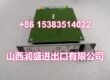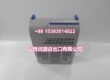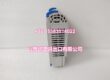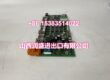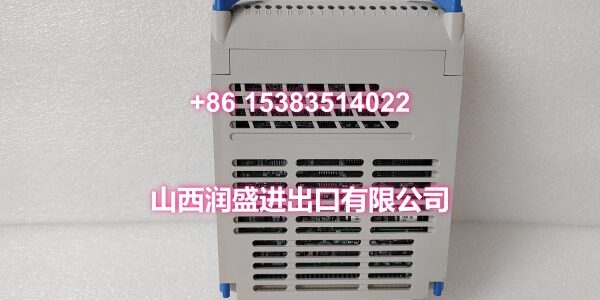
Product Core Brief
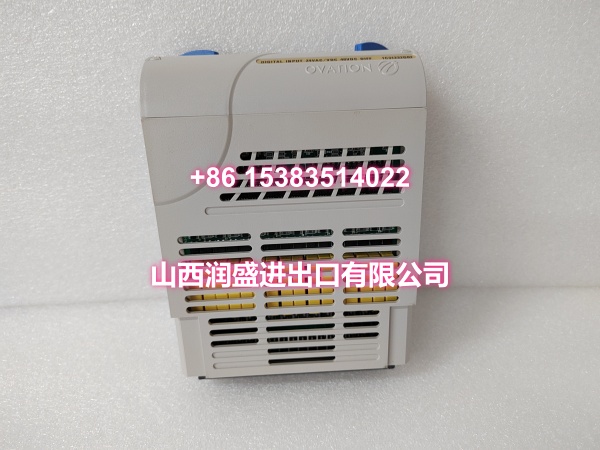
- Model: 1C31232G02
- Brand: EMERSON (Ovation / Westinghouse)
- Series: Ovation DCS
- Core Function: Digital input electronic module (DI EMOD) that acquires discrete field status signals—such as breaker positions, valve limit switches, and motor run/stop feedback—and converts them into digital data for the Ovation controller.
- Product Type: Digital Input Electronic Module (DI EMOD)
- Key Specs: Differential Digital Input | High-Voltage Isolation | Multi-Channel
- Condition: New Original / New Surplus
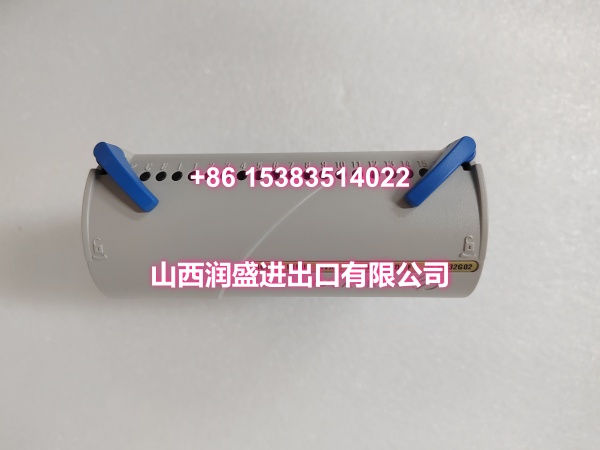
Key Technical Specifications
- Input Type: Differential digital input (compatible with dry contact closure or wet voltage signals)
- Channel Configuration: Multi-channel discrete input (exact channel count varies by PMOD pairing)
- Input Voltage Range: Compatible with standard industrial control voltages (verify specific voltage rating against your Ovation configuration—common variants support 24VDC, 48VDC, or 120VAC/DC)
- Field-to-Logic Isolation: High-voltage dielectric isolation between field inputs and the Ovation backplane I/O bus
- Input Filtering: Configurable software debounce filtering to reject contact bounce and electrical noise transients
- Status Indicators: Per-channel LED status indicators for real-time field signal verification
- Operating Temperature: 0°C to +60°C
- Storage Temperature: -40°C to +85°C
- Humidity: 5% to 95% RH, non-condensing
- Compatibility: Ovation DCS 3.5 and higher; direct replacement for legacy Westinghouse Ovation racks
- Hot-Swap Capable: Yes—supports removal and replacement without powering down the I/O rack
Product Introduction
The 1C31232G02 is a Digital Input Electronic Module (DI EMOD) for the Emerson Ovation DCS. It serves as the critical interface between field discrete devices and the Ovation controller, acquiring status signals from circuit breakers, valve limit switches, motor run/stop feedback, pressure switches, and other binary field devices across power plants, water treatment facilities, and petrochemical operations. The module converts these discrete field signals into digital data that the controller uses for interlock logic, permissive checks, alarm annunciation, and sequence control.
The 1C31232G02 is part of Ovation’s EMOD/PMOD architecture—the EMOD plugs into the Ovation backplane and handles signal digitization, filtering, and communication with the controller, while a compatible Personality Module (PMOD) provides the field terminal block and channel isolation. The differential input design rejects common-mode noise from VFDs and large motor starters, while the high-voltage field-to-logic isolation protects the Ovation backplane from field-side transients that commonly occur in high-voltage switchyard and turbine environments.
QA & Testing SOP
DI modules are often overlooked during testing, but a single bad channel can prevent a critical interlock from functioning. Here’s how we verify every unit:
- Visual & Anti-Counterfeit Inspection: We inspect the PCB for cold solder joints, burnt traces around the input optocouplers, and verify the OEM holographic label. Counterfeit DI cards in the surplus market often have degraded optocouplers that fail to trigger at rated voltage.
- Backplane & Connector Verification: The module is seated into a dedicated Ovation test rack. We inspect the backplane connector pins for bends or corrosion—bent pins on the I/O bus side kill communication with the controller; bent pins on channel inputs kill individual channels.
- Full-Scale Input Sweep Test: Using a calibrated DC power supply, we apply rated voltage to each input channel and verify the module correctly registers the ON state. We then remove voltage and verify the OFF state is correctly registered. We test all channels simultaneously to check for crosstalk between adjacent channels.
- Debounce Filter Verification: We apply a pulsed input signal at varying frequencies to verify the software debounce filter correctly rejects contact bounce while still capturing legitimate state changes within the configured scan time.
- Isolation Resistance Test: Using a megohmmeter, we verify the dielectric isolation between the field input terminals and the logic common meets Ovation specifications. Failed isolation is a silent failure that can allow field transients to damage the entire rack.
- Anti-Static Packaging: Passed units are sealed in static-shielded bags with desiccant, then double-boxed for transit.
Installation Pitfalls & Guide
DI cards are deceptively simple. Here are the mistakes that cause field headaches:
- ❗ Wet vs. Dry Contact Confusion: The 1C31232G02 can accept both wet (voltage) and dry (contact closure) inputs, but the wiring configuration differs. For dry contacts, the module provides the excitation voltage internally. For wet contacts, the field device supplies voltage. Mixing these up results in channels that never trigger or, worse, backfeed voltage into the module’s internal circuitry. Always verify the input type in your Ovation configuration before wiring.
- ❗ Common-Mode Noise on Long Cable Runs: Field wiring for DI signals often runs hundreds of feet through cable trays alongside VFD output cables. The differential input design rejects common-mode noise, but only if the wiring is balanced. Unbalanced wiring—such as using a single-conductor cable without a twisted pair—defeats the noise rejection and causes false triggers.
- ❗ Ground Loop Through Shield: If the DI cable shield is grounded at both the field device and the DCS cabinet, you create a ground loop that injects 50/60Hz hum into the input. Ground the shield at the DCS cabinet end only.
- ❗ PMOD Mismatch: The 1C31232G02 is the EMOD—it requires a compatible PMOD (Personality Module) to provide the field terminal block. The PMOD part number varies depending on your input voltage and channel count requirements. Verify the correct PMOD pairing in your Ovation system documentation before ordering.
4-Step Replacement Guide:
- Pre-Install: Place any interlock or sequence logic that depends on this module’s channels in a safe state (e.g., bypass critical permissives if procedure allows). Backup the current Ovation controller configuration. Verify the replacement module’s firmware revision matches the system requirements.
- Removal: The 1C31232G02 supports hot-swapping. Carefully disengage the locking lever and pull the faulty module straight out of the rack. Do not twist or rock the card.
- Install: Align the new module with the rack guides and slide it in firmly until the backplane connector seats fully. Engage the locking lever. Verify the PMOD is correctly mated and field wiring is secure on the terminal block.
- Power-on Test: Monitor the Ovation diagnostic screen. Verify the module comes online without faults and all channel LEDs indicate correct status. Perform a live signal check: actuate each field device (e.g., open/close a valve, trip a breaker) and confirm the module’s digital reading matches the actual field state.
Technical FAQ
Q: What’s the difference between 1C31232G01, 1C31232G02, and 1C31232G03? A: These are all digital input EMODs in the Ovation family, but they differ in input voltage ratings and channel configurations. The 1C31232G03 is specifically documented as a differential DI module for 120VAC/DC applications. The G01 and G02 variants support different voltage ranges—typically lower voltages such as 24VDC or 48VDC. The suffix indicates the hardware revision and voltage rating. Always match the exact part number called out in your Ovation configuration, as substituting a different voltage-rated card can result in channels that never trigger or are damaged by overvoltage.
Q: Can I hot-swap this module while the plant is running? A: Yes. The 1C31232G02 supports hot-swapping, meaning you can remove and replace it without powering down the I/O rack. However, you should still place any interlock or sequence logic that depends on this module’s channels in a safe state before removal. Pulling a DI card while interlocks are active can cause the controller to see all channels go to a fault state, which may trigger unintended trips depending on your logic design (fail-safe vs. fail-secure).
Q: What PMOD do I need to pair with this EMOD? A: The 1C31232G02 requires a compatible Digital Input PMOD that provides the field terminal block and channel isolation. The specific PMOD part number depends on your input voltage rating and channel count. Common pairings include the 1C31238H01 for 48VDC applications. Verify the correct PMOD pairing in your Ovation system documentation or parts list—using an incompatible PMOD can result in incorrect channel mapping or missing isolation.
Q: Why does one channel flicker between ON and OFF? A: Channel flickering is almost always caused by one of three things: (1) contact bounce on a mechanical switch or relay that exceeds the configured debounce filter time, (2) electrical noise from a nearby VFD or motor starter coupling into the field wiring, or (3) a marginal input voltage that sits near the module’s trigger threshold. First, check the debounce filter setting in your Ovation configuration and increase it if necessary. If the problem persists, verify the field wiring is twisted-pair and the shield is grounded at the DCS end only.
Q: Is this module compatible with Ovation 4.0? A: The 1C31232G02 was originally designed for Ovation 3.5 and legacy Westinghouse Ovation systems. It remains supported on Ovation 4.0 and later versions as a legacy-compatible DI module. However, Emerson has introduced newer DI module models with enhanced diagnostics for greenfield 4.0 installations. For brownfield upgrades and replacements, the 1C31232G02 is a direct drop-in replacement. If you’re unsure, verify compatibility with your specific Ovation version in the system documentation.
Q: What is the warranty on surplus units? A: We provide a 12-month warranty from the date of delivery on both new original and new surplus stock. This covers manufacturing defects, DOA failures, and any optocoupler degradation discovered during commissioning. It does not cover damage from improper installation—such as bent backplane pins, overvoltage from incorrect wet/dry contact wiring, ground loop damage from improper shielding, or ESD damage from handling without proper grounding.