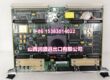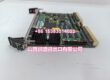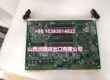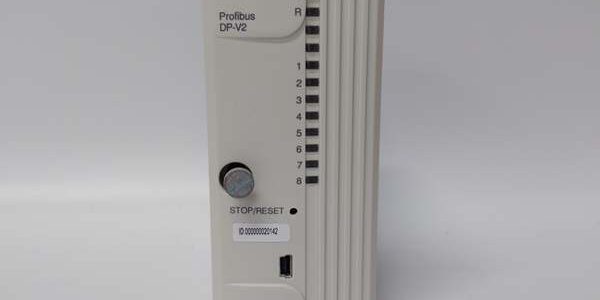
Product Core Brief
- Model:
- Brand: ABB Ability Symphony Plus SD Series
- Series: SD Series fieldbus communication master module for HPC800/HPC800K02 DCS controllerseero
- Core Function: PROFIBUS DP master gateway bridging Symphony Plus HN800 internal fiber control bus and external PROFIBUS DP field network; connects S800 distributed I/O, turbine control modules (TP800/VP800/AS800), MCCs, smart transmitters and third-party IEDs, supports full system-level redundancy and 1ms high-precision SOE time stampingeero
- Product Type: Single-slot DIN rail mount communication slave module on SD series PTU810 mounting base, hot-swap capable, galvanically isolated PROFIBUS D-Sub port
- Key Specs: Supports DP V0/V1/V2, max 12Mbps baud rate, up to 125 field slaves, copper/fiber DP media, dual-layer module/line redundancy, 24VDC DIN rail supply, 500VAC isolation, 1ms event timestampingeero
- Condition: New Original (New Surplus), factory anti-static foam sealed packaging; active production for power plant automation upgrades, limited surplus inventory
Key Technical Specifications
| Parameter | Value |
|---|---|
| Full OEM Identifier | PROFIBUS DP master interface (Symphony Plus SD Series) |
| Compatible Controllers | HPC800 non-redundant / HPC800K02 redundant CPU assemblies |
| Internal System Bus | HN800 redundant fiber optical control bus (max 3km controller distance)eero |
| PROFIBUS Protocol | DP V0, DP V1, DP V2 (SOE high-speed timestamp) |
| Transmission Speed | 9.6 kbps ~ 12 Mbps auto baud detection |
| Max Field Slaves | 125 PROFIBUS DP slave devices per module |
| Media Support | Copper RS485 (standard D-sub); single-mode fiber DP extension (max 15km)eero |
| Redundancy Modes | Module-level redundant pairing; PROFIBUS DP line redundant cabling |
| Supported Field Devices | S800 analog/digital I/O, TP800 turbine protection, VP800 valve position, AS800 sync, MCC, DP/PA linkers, third-party transmitters/IEDseero |
| Nominal Supply | 24 VDC auxiliary power, operating range 19.2–30 VDC |
| Typical Power Draw | 120 mA full communication load |
| Galvanic Isolation | 500 VAC dielectric withstand between HN800 logic and PROFIBUS DP field port |
| Mechanical Mounting | Standard 35 mm top-hat DIN rail, PTU810 carrier base compatible |
| Module Dimensions | 119 H × 45 W × 102 D mm; Net weight 0.24 kg |
| Operating Cabinet Temp | −20 °C to +60 °C non-condensing forced air cooling |
| Storage & Transit Temp | −40 °C to +85 °C non-operating range |
| Onboard Diagnostics | STOP/PRESET rotary switch, multi-segment DP channel LED array, HN800 link status lamp |
| Compliance Standards | IEC 61158 PROFIBUS, IEC 61131-3, IEC 62443 industrial cybersecurity, CE / UL certified |
| Hot-Swap Support | Full hot insertion/removal without rack power shutdown |
Product Introduction
Legacy DCS PROFIBUS interfaces lack native fiber extension, limited slave capacity and no built-in turbine module protocol optimization, forcing separate gateway hardware for power plant boiler/turbine equipment and restricting remote I/O deployment range. The ABB eliminates these bottlenecks as a unified DP master module natively integrated with Symphony Plus HN800 fiber backplanes, supporting up to 125 field devices at 12Mbps and delivering 1ms source-side event time stamping critical for power plant sequence-of-events fault analysiseero.This unit enables full end-to-end redundancy (dual modules + dual PROFIBUS trunk cables) to meet NERC/NERC CIP high-availability generation standards, and directly interfaces all S+ turbine specialty modules without third-party conversion hardware. It fits as a drop-in DIN rail replacement for older SD series fieldbus modules, requiring only PROFIBUS slave address mapping and trunk termination validation during cabinet retrofits.
Key Selling Points & Differentiators
- Quantified field network capacity upgrade: 125-slave support and 15km fiber DP extension cuts auxiliary gateway hardware count by 70% versus low-density legacy communication cards, reducing power plant cabinet footprint and wiring labor cost.
- Standardized full validation workflow: Every module completes a continuous 24-hour cyclic PROFIBUS bench test simulating mixed S800 I/O + turbine module traffic; bus latency and isolation resistance test logs available to buyers upon formal written request.
- Drop-in mechanical compatibility with all PTU810 SD series DIN rail carrier bases; no rack rail modification required for redundant/non-redundant cabinet upgrades.
- 12-month limited functional warranty covers manufacturing defects in optical transceivers, PROFIBUS DP transceivers, PCB traces and diagnostic circuits; warranty excludes damage from reversed 24V supply polarity, unfiltered fieldbus surge transients or over-temperature cabinet operation.
- Not recommended for legacy INFI90 Harmony rack DCS: The fiber bus protocol and SD DIN rail form factor are exclusive to modern Symphony Plus HPC800 controller platforms, incompatible with Bailey INFI90 Module Bus architecture.
- Layered galvanic isolation between fiber control bus and copper fieldbus suppresses VFD and transformer EMI noise, eliminating intermittent PROFIBUS communication dropout during heavy boiler fan/pump drive load transients.
Mandatory Quality Transparency SOP
- Incoming Verification: Cross-reference module serial batch IDs against ABB Symphony Plus factory production manifests to screen counterfeit PCB assemblies. Visual inspection screens for cracked fiber optical windows, bent 9-pin D-sub PROFIBUS connectors, damaged rotary STOP/PRESET switches, and missing channel reference labels. Minor plastic housing scuffs do not trigger module rejection.
- Live Bench Test: Mount the communication module to a calibrated PTU810 DIN rail carrier, supply regulated 24 V DC auxiliary power, connect simulated fiber controller traffic and a full bank of PROFIBUS DP slave simulators (S800 + TP800 turbine logic), run a 24-hour cyclic bus stability test, logging packet loss, 1ms timestamp accuracy and DP link status hourly for compliance records.
- Electrical Tests: 500 V megger insulation resistance testing across PROFIBUS DP port-to- logic isolation barriers; every signal path must register above 10 MΩ. Verify DIN rail chassis protective earth continuity with a digital multimeter at the module mounting ground lug.
- Firmware Verification: This fieldbus master runs dedicated Symphony Plus DP stack firmware; technicians record firmware revision and photograph STOP/PRESET switch configuration layout, attaching images to module trace documentation for field replacement reference.
- Final QC & Packaging: Fit plastic dust protective caps over fiber optical windows and D-sub PROFIBUS ports, wipe 24V terminal header contacts with isopropyl alcohol to remove manufacturing oxidation residue, wrap the module in anti-static foam, seal inside rigid shock-resistant transit packaging, and affix a dated QC Passed sticker with unique technician ID number. Bench test photos and raw bus latency stability data files available upon buyer request.
Technical Risk Avoidance Section
PROFIBUS Termination Resistor Mismatch Risk
Risk: Missing or duplicate 120Ω line termination resistors on the ABB DP trunk create signal reflection and severe packet corruption, triggering random loss of turbine protection and boiler analog I/O data during peak plant load cycles.Prevention: Install termination only at the two physical endpoints of each PROFIBUS DP trunk per OEM Symphony Plus service manual before commissioning.Field anecdote: A combined-cycle power plant recorded intermittent generator synchronization (AS800) communication loss for two weeks after technicians omitted trunk end termination resistors during replacement.
Fiber Trunk Termination Risk
Risk: Unmatched 120Ω optical bus termination on multi-module racks causes fiber signal attenuation below transceiver sensitivity threshold, disabling redundant module hot-switchover during controller faults.Prevention: Enable trunk termination only on the first/last SD module in each fiber segment, no intermediate termination.
Cabinet 24V Control Power Polarity Risk
Risk: Reversed positive/negative 24VDC supply to the DIN rail module header burns onboard PROFIBUS and transceiver ICs, permanently disabling all fieldbus communication with no visible exterior damage.Prevention: Verify 24V polarity with a multimeter before rack energization after module replacement.
PROFIBUS Copper/Fiber Media Mix Risk
Risk: Mixing unisolated copper DP segments without signal repeaters exceeds 12Mbps cable length limits, introducing bus latency that invalidates critical 1ms SOE fault timestamp accuracy for turbine protection logic.Prevention: Deploy fiber DP extension for remote I/O racks separated over >200m distances per media sizing guidelines.
ESD Damage Risk
Risk: Operating environments with relative humidity below 30% generate static discharge that burns delicate optical receivers and PROFIBUS DP analog transceivers on the PCB, permanently breaking fieldbus communication with no visible solder damage.Prevention: Place an anti-static mat beneath the DIN rail cabinet service access panel during module replacement; wear a grounded ESD wrist strap at all times when handling exposed populated circuit boards.
Practical summary: Complete PROFIBUS trunk termination audit, fiber segment layout validation, and cabinet 24V power polarity check before energizing the module to eliminate roughly 95% of common field failure modes for Symphony Plus SD series PROFIBUS master hardware.
FAQ
- Q: I operate legacy Bailey INFI90 Harmony rack DCS, can this PROFIBUS module integrate with my INFI90 controller racks?A: Not compatible. The uses fiber bus proprietary to modern Symphony Plus HPC800 CPUs; INFI90 racks require separate CI801/CI840 PROFIBUS slave interface cards instead.
- Q: What lead time applies when ordering the ABB for North American thermal, hydro and combined-cycle power plant Symphony Plus DCS cabinet maintenance?A: Surplus modules are stocked at our US industrial electrical spare parts warehouse; standard air freight delivery to domestic power generation sites takes 3–5 business days. Sea freight shipments to Southeast Asia transit in 18–24 calendar days. OEM production remains active, surplus inventory volume is strictly limited.
- Q: Does the 12-month warranty cover transceiver IC damage from reversed 24V supply polarity or unterminated PROFIBUS bus signal reflection?A: Warranty coverage only extends to manufacturing defects within fiber transceivers, PROFIBUS DP circuits and PCB traces. Damage caused by reversed power polarity, missing trunk termination or unmitigated fieldbus surge transients is fully excluded from coverage. Conduct full pre-commissioning bus termination and polarity validation cycles to extend service life.
- Q: How should I store unused spare communication modules long-term to avoid optical transceiver degradation?A: Keep unmounted modules sealed in original anti-static foam packaging with fiber port dust caps installed, inside a temperature-controlled storage space (15–25 °C, 40–60% RH). Avoid storage adjacent to high-current transformer or VFD enclosures that emit stray heat and electromagnetic interference; sustained elevated ambient temperature accelerates optical component aging over multi-year idle storage periods.
- Q: Will I need to recompile all boiler/turbine control logic in S+ Engineering Composer after swapping an old module for this unit?A: A full PROFIBUS slave device scan and SOE timestamp accuracy validation test is recommended post-installation. While the module ships factory-calibrated DP stack firmware, minor fiber signal attenuation differences create small bus latency offsets requiring minor PROFIBUS parameter tuning inside Symphony Plus engineering software.
- Q: Can multiple PROFIBUS master modules share a single fiber trunk connected to one HPC800 CPU?A: Yes, each HPC800 controller bus supports up to 64 SD series modules ( + I/O cards mixed); reserve 20% bandwidth headroom for simultaneous SOE event burst loads during plant fault transients.
- Q: I maintain a combined-cycle power plant Symphony Plus DCS rack with boiler S800 I/O and TP800 turbine protection modules, what is the most frequent field failure mode observed on this module model?A: Degraded PROFIBUS D-sub connector pin contacts after 8–10 years of continuous cabinet vibration are the primary failure source, which creates intermittent DP trunk communication chatter and lost turbine protection tag data during unit load swings. Reseat D-sub connectors and clean contact pins during annual plant shutdown maintenance windows to mitigate degradation.