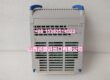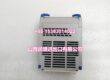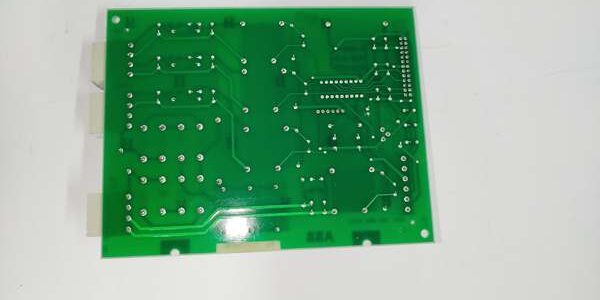
Product Core Brief
- Model: DSTS104, OEM part 3BSE007285R1
- Brand: ABB
- Series: Advant OCS / Advant Master legacy DCS thyristor control hardware
- Core Function: Amplify low-level DCS logic pulses to high-current gate signals for SCR rectifier bridges
- Product Type: Rack-mount plug-in pulse driver PCB
- Key Specs: 4 galvanically isolated channels | 10A peak gate drive output | 20Hz–2kHz pulse frequency rangeNote: Discontinued legacy unit, inventory stock is New Surplus with factory anti-static packaging.
Key Technical Specifications
- Rated auxiliary supply: 24VDC, ±20% tolerance
- Input control signal: Logic-level pulse, max 15mA input draw per channel
- Output drive rating: 10A peak pulsed current for SCR gate terminals
- Channel isolation: 500VAC dielectric separation between each channel and supply ground
- Integrated protection: Per-channel short-circuit current foldback, reverse voltage blocking, undervoltage lockout
- Operating temperature range: -20°C to +55°C full load; linear performance derate above 55°C
- Storage conditions: -40°C to +70°C, 5%–95% RH non-condensing
- Physical dimensions: 130.5mm H × 31.5mm W × 63.23mm D
- Unit mass: 0.22kg
- Compliance standards: CE, UL, RoHS, IEC 61000-6-2 Class A industrial EMC
- System compatibility: Advant OCS, Advant Master Controller 450; incompatible with S800, AC800M, UNITROL, AC500 platforms
Product Introduction
This plug-in driver takes weak milliamps-level pulse commands from Advant DCS controllers and amplifies them to high-current waveforms capable of reliably firing large thyristor rectifiers used in generator excitation and electrolysis plants.Independent channel isolation stops single-bridge short faults from disabling all four control outputs, reducing forced equipment downtime during rectifier stack maintenance cycles.
QA & Testing SOP (Transparency Building)
- Incoming Inspection: Cross-reference serial numbers against ABB legacy component trace databases; inspect PCB capacitors for bulging, terminal springs for tension loss, plastic housing for crack damage; validate unopened factory anti-static packaging seal on surplus stock.
- Live Testing: Mount the unit to a rack test bench paired with an Advant Controller 450 signal simulator and resistive SCR load banks; run continuous 24-hour cyclic pulse generation across the full 20Hz–2kHz frequency band; use a Fluke 115 to log stable 24VDC auxiliary supply voltage through the full test window.
- Electrical Testing: Perform 500VAC hipot insulation testing between every output channel and module supply ground; pass threshold set at >10MΩ insulation resistance; inject reversed DC supply voltage to verify hardware reverse-polarity lockout activates without component damage.
- Firmware/Config Backup: No user-programmable onboard firmware; photograph terminal pin assignments and document factory pulse timing profiles for field commissioning reference.
- Final QC & Packaging: Torque all terminal screw connections to OEM torque values; seal the module in static-dissipative foam; attach a printed QC tag listing serial number and completed test metrics before final carton packing.
Installation Pitfalls & Guide (Engineer to Engineer)
❗Firmware Mismatch Risk: Outdated Advant Master AMPL control software lacks calibrated pulse timing parameters for the unit. Fault outcome: Asymmetric SCR firing angles, unstable DC rectifier output current. Mitigation: Load factory-matched AMPL program revisions before rack power-up; archive validated program files to plant engineering servers.❗Terminal Wiring Misconfiguration: Commoning negative return lines across isolated output channels breaks galvanic separation. Fault outcome: Cross-channel pulse crosstalk, random SCR misfire events during contactor switching transients. Mitigation: Maintain fully isolated return wiring for each of the four gate drive channels per the Advant rack wiring schematic.❗Platform Incompatibility Risk: Attempting to install the device into S800, UNITROL, or AC800M racks creates physical pin misalignment and unregulated voltage exposure. Fault outcome: Burned PCB input circuits, permanent driver failure. Mitigation: Only deploy the device within Advant OCS / Advant Master dedicated thyristor control racks.❗Residual DC Bus Hazard: Failing to discharge rectifier DC bus capacitors before rack disconnection exposes the module to destructive high-voltage transients. Fault outcome: Ruptured power semiconductors on the PCB, complete channel loss. Mitigation: Lock out all AC input power, wait a minimum 15 minutes for capacitive discharge, and verify bus voltage reads <50VDC via multimeter before handling.❗ESD Dangers: Dry control cabinet air creates static charge that damages fragile pulse transformer windings on the board. Field data shows ungrounded handling can cause $1,800 in rectifier downtime from intermittent misfire faults that take weeks to isolate. Mitigation: Make direct contact with bare cabinet chassis ground metal for three full seconds before touching PCB terminals or rack slot contacts.
4-Step Replacement Guide
- Pre-install: Lock out AC rectifier power, wait for DC bus discharge, photograph all input control pulse wiring and four SCR gate output terminal assignments on the faulty hardware.
- Removal: Disconnect all terminal wiring harnesses one channel at a time and label each conductor; release the rack slot retention latch and extract the faulty board vertically to avoid scraping surface-mount components against cabinet metal.
- Install: Seat the new unit evenly into the Advant rack slot and engage the retention latch; replicate every photographed terminal wiring connection to match channel numbering exactly.
- Power-on Test: Restore 24VDC auxiliary supply only (main rectifier AC feed remains off for initial testing); send cyclic pulse commands from the Advant controller and confirm clean, symmetric gate pulse waveforms on all four output channels before energizing the main rectifier stack.
FAQ (Frequently Asked Questions)
Q: Can this unit directly replace older hardware with different revision codes?A: Yes, all R-series hardware revisions share identical terminal pinout, pulse timing, and mechanical rack form factor. No edits to Advant AMPL control logic are required for cross-revision replacement.Q: Does the hardware support hot-swapping while the Advant rack remains powered?A: Hot-swap is not rated or supported. Removing the unit under live power creates unfiltered pulse transients that trigger uncontrolled SCR conduction and can short the rectifier DC bus. Full auxiliary power shutdown is mandatory for all card swaps.Q: What warranty coverage applies to surplus inventory units?A: A 12-month limited warranty covers factory manufacturing defects only. Damage from residual DC bus voltage, ESD mishandling, cross-platform installation, or sustained output short-circuits is excluded from warranty coverage.Q: Is a single channel failure grounds for full module replacement, or can individual channels be repaired?A: Field repair of damaged internal channels is not recommended for critical generator excitation and electrolysis rectifier loads. Repaired internal trace paths degrade pulse waveform stability and raise risk of unplanned production outages; full module swap is the standard site maintenance procedure.Q: Can multiple units share a single 24VDC auxiliary power circuit in one Advant rack?A: Multiple units may share one 24VDC supply only if the supply unit carries 20% extra current headroom above total combined module draw. Separate power feed wiring is recommended for racks with four or more installed units to eliminate voltage sag during peak pulse current draw.Q: Is this hardware rated for Class 1 Div 2 hazardous cabinet deployment?A: No, the open PCB rack design lacks intrinsic safety certification for flammable vapor environments. Flameproof dedicated thyristor control racks are required for refinery or chemical plant hazardous area rectifier installations.Q: What long-term upgrade path exists as this hardware reaches end-of-support from ABB?A: ABB’s modern UNITROL excitation platforms use integrated on-board pulse generation that eliminates discrete gate drive cards entirely. Direct one-to-one functional retrofits require full Advant OCS rack migration to UNITROL hardware and control logic rework in the DCS HMI layer.