Product Core Brief
- Model: MVME2432 (MVME2400 series entry-level PowerPC VME SBC, variants -1 / -3)mvme.com
- Brand: Motorola Computer Group (later Emerson / NXP Embedded)
- Series: 6U VME64 Single Board Computer, widely deployed as secondary/auxiliary subsystem controller on LAM TCP9400 / Kiyo 300mm plasma etch cluster tools; cannot serve as full system master CPU
- Core Function: Executes auxiliary subsystem real-time control tasks: remote node board communication, secondary analog signal acquisition, peripheral I/O sequencing, MFC auxiliary telemetry forwarding; acts as VME slave processor offloading low-priority tasks from the primary MVME2434 master SBC; runs VxWorks real-time OS for distributed chamber control.
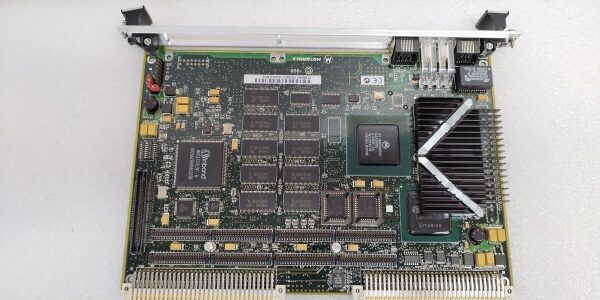
- Product Type: Standard 6U Eurocard VME64x dual P1/P2 rear connector PCB, passive copper heat sink, single PMC mezzanine expansion slot, front-panel industrial I/O ports
- Key Specs: MPC750 PowerPC (266/350MHz) | Max 64MB ECC SDRAM | Single PMC PCI expansion | VME64 slave/DMA capability | ~8μs deterministic interrupt latency
- Condition: New Original (New Surplus); Discontinued legacy OEM spare, limited stock reserved for auxiliary rack expansion of LAM 300mm etch fleets and general industrial VME automation.
Key Technical Specifications
Core Compute
- Processor: Motorola MPC750 PowerPC RISC, standard fab grade 350MHz (266MHz low-power variant)
- Cache: 32KB L1 Instruction + 32KB L1 Data; 1MB backside L2 cache
- Memory: Onboard ECC-protected SDRAM, factory fixed 32MB / 64MB max (half the capacity of MVME2434)mvme.com
- Non-Volatile Storage: Up to 8MB onboard Flash for PPCBug firmware + OS boot; 8KB battery-backed NVRAM + RTC for auxiliary subsystem calibration data
Bus Architecture
- VME Interface: Full VME64 / VME64x A16/A24/A32 addressing, D8/D16/D32/D64 data; supports slave DMA, limited system controller functionality (insufficient for full chamber master duty)
- PCI Expansion: Single independent 32-bit PMC slot only (MVME2434 dual PMC design for full chamber expansion)mvme.com
Integrated I/O Interfaces
- Ethernet: Single 10/100BASE-TX isolated RJ45 front panel port
- Serial: 1 debug RS232 console + dual multi-mode RS232/422/485 serial channels for auxiliary Modbus telemetry
- Storage: Integrated SCSI-2 DMA controller for local auxiliary log storage
- Auxiliary: Parallel port, six 32-bit programmable timers + hardware watchdog fail-safe timer
Electrical & Environmental
- Power Input: Standard VME backplane +5V / ±12VDC; typical power draw 12–16W full load (lower than MVME2434)
- Operating Temp: Commercial grade 0°C ~ +70°C fab cabinet standard
- EMI Suppression: Multi-layer segmented ground planes, ferrite filtering for 13.56MHz chamber plasma RF noise
- Mechanical: 6U VME Eurocard form factor, dual ejector latches, fanless passive heat sink (zero particulate contamination risk)
- MTBF: ≥98,000 hours under continuous 24/7 high-volume fab 24/7 operation
- Compliance: CE, UL, SEMI S2 certified for front-end semiconductor wafer processing equipment
Product Introduction
MOTOROLA is the entry-level auxiliary VME single board computer within the MVME2400 family, used alongside the flagship MVME2434 master CPU in Lam TCP9400/Kiyo 300mm etch tools. It offloads non-critical distributed subsystem tasks such as remote signal node polling, secondary thermal monitoring, and auxiliary gas valve sequencing to reduce compute load on the primary master SBC.
Critical Difference vs MVME2434
- Memory ceiling capped at 64MB ECC SDRAM ( up to 512MB)
- Only one PMC expansion slot ( dual PMC for multi-I/O mezzanine cards)
- Limited VME system controller DMA bandwidth; cannot run full chamber recipe sequencing as primary master
- Lower peak processing throughput, unsuitable for synchronized multi-axis robot motion control workloads
Generic substitute VME SBCs lack ECC memory and optimized VME slave timing, leading to auxiliary telemetry dropout and delayed interlock response under high plasma RF interference. The board supports controlled hot-swap for auxiliary rack maintenance without full chamber RF/vacuum shutdown.
Firmware & Software Compatibility
- Supported Real-Time OS: VxWorks (primary for Lam auxiliary racks), pSOS+, QNX, embedded Linux
- Onboard Firmware: PPCBug diagnostic/boot monitor pre-flashed on onboard Flash; supports limited VME memory mapping and single-PMC self-test diagnostics
- Lam Tool Software Match: Compatible with Lam PCS v6.0 ~ v8.4 for auxiliary rack slave tasks only; cannot host full chamber master recipe execution
- Upgrade Risk Note: Downgrading PCS below v6.0 breaks VME slave handshake with VIOP motion and gas I/O subboards; firmware revision must match chamber auxiliary software release before replacement
- OEM Firmware Access: Motorola/NXP restricted official PPCBug firmware distribution to certified fab service partners post-2023; backup of auxiliary subsystem NVRAM calibration data mandatory prior to board swap
Frequently Asked Questions
- Can I remove the auxiliary CPU while the etch chamber remains pressurized and RF generators active?VME slave bus buffering prevents backplane I/O damage during hot-swap, but vent chamber vacuum, disable all 13.56MHz RF power supplies, and engage cabinet safety lockouts before extraction. Live plasma RF noise corrupts auxiliary sensor calibration offsets stored in battery-backed NVRAM. Complete a full auxiliary parameter backup via the tool HMI first.
- Can replace as the chamber main master CPU for TCP9400/Kiyo etch tools?No, direct cross-replacement is impossible. insufficient memory capacity, single PMC slot, and limited VME DMA bandwidth cannot support full wafer recipe sequencing, synchronized multi-axis robot motion, and all gas/thermal subsystem parallel telemetry. Installing as primary master will trigger continuous VME handshake faults, aborted wafer batches, and unstable etch CD uniformity.
- Will swapping the erase auxiliary subsystem sensor scaling or valve interlock thresholds?All auxiliary process tuning data, secondary sensor offsets, and peripheral safety trip limits reside in the board’s battery-backed NVRAM flash. Complete full auxiliary parameter export backup via the tool HMI before replacement to restore calibration data if VME slave communication errors occur post-install.
- What warranty coverage applies to New Surplus OEM vs refurbished units?New Surplus original factory stock carries a 12-month full functional warranty matching Motorola industrial spare specifications. Refurbished aftermarket assemblies only carry 3–6 month limited coverage; aged memory ICs and flash storage create mid-run auxiliary telemetry loss risk that disrupts chamber background monitoring.
- Why is original New Surplus hardware higher cost than aftermarket refurbished substitutes?Original factory units retain factory-calibrated VME slave DMA timing tolerances, zero operating-hour thermal fatigue on PowerPC core & memory semiconductors, full component validation traceability. Refurbished boards reuse aged PCBs, generic memory chips, and skip plasma RF interference environmental cycling testing; hidden memory bit-error drift leads to unplanned auxiliary rack downtime.
- What cross-compatibility exists between , MVME2433, ?
- : Entry-level, max 64MB RAM, single PMC, auxiliary slave only
- MVME2433: Mid-tier, max 128MB RAM, single PMC, limited mixed master/slave capability
- : Flagship, max 512MB RAM, dual PMC, full chamber system master controllerOnly is certified as primary CPU for Lam TCP9400/Kiyo etch tools; /2433 are exclusively for secondary auxiliary expansion racks.
- What routine maintenance interval applies to this auxiliary VME SBC in high-volume 24/7 fabs?Execute full PPCBug self-test, VME slave DMA integrity, and NVRAM data validation every 6 months during chamber PM cycles. Replace the complete unit after 42,000 operating hours; onboard ECC memory and flash storage develop bit-error drift under continuous cabinet heat and long-term plasma RF exposure, degrading auxiliary telemetry stability.