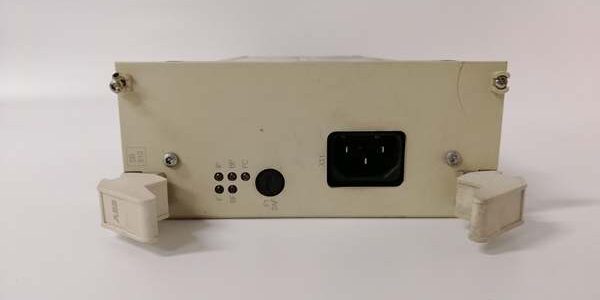
Component Snapshot At-a-Glance
- Model: SB510, full factory part number 3BSE000860R1
- Alt. P/N: None; no substitute passive termination card in S100 series, blank filler panels lack matched bus resistors
- Product Series: ABB S100 I/O, Advant OCS, Advant Controller 450 (PM511 CPU) legacy DCS platform
- Hardware Type: Single-slot passive rack PCB, rear 96-pin S100 backplane edge connector, no front wiring terminals
- Key Feature: Pre-soldered factory matched impedance resistor network for S100 parallel bus end termination
- Primary Field Use: Installed in the final slot of RF522 master racks to absorb bus signal reflections, eliminate intermittent I/O communication timeouts
Hard-Numbers: Technical Specifications
- Protocol Support: Proprietary S100 parallel synchronous backplane bus, passive load only, no communication logic
- Port Count: Single rear S100 backplane connector, zero external field terminals
- Baud/Data Rate: Matches native bus 1 Mbit/s scan speed, designed for full bus signal matching
- Operating Temperature: -25°C to +60°C cabinet operational; -40°C to +85°C storage, non-condensing 5–95% RH
- Isolation Rating: No galvanic isolation; purely passive resistive load network
- Power Draw: Near zero wattage, negligible load on rack 24VDC backplane rail
- Termination Impedance: Factory calibrated resistor bank matched to bus trace characteristic impedance
- Installation Rule: Must occupy absolute last slot of RF522 main chassis
- Physical Weight: 0.18 kg, standard single slot dimensions, IP20 cabinet-only mounting
- Certifications: CE, UL/cUL, IEC 61010-1 industrial control safety compliance
The Real-World Problem It Solves
Leaving the final rack slot empty with a blank filler panel removes required bus termination resistors. Unmatched bus impedance creates signal reflection noise across the entire backplane, triggering random sporadic I/O dropout faults that do not reproduce during bench testing.Improvised hand-soldered resistor packs fail to match factory calibrated impedance values; waveform distortion worsens when DSBC176 remote bus extenders add long cable trunks to the system bus.Without proper end termination, high-speed DSDP pulse counter and DSAI RTD analog cards suffer measurement jitter and offset drift during VFD motor startup transients.Where you’ll typically find it:
- Fossil power plant RF522 master turbine control racks fitted with PM511 CPU, SC520 bus coupler and full banks of analog/digital I/O
- Refinery central Advant OCS main chassis connecting multiple remote DSRF197 I/O subracks via DSBC176 extenders
- Pulp mill recovery boiler control racks with dense DSDP encoder pulse counting and temperature monitoring I/O modulesThis passive end-of-rack termination card delivers factory-calibrated bus load matching, suppresses signal reflection interference, and stabilizes consistent bus communication across all local and remote I/O hardware.
Hardware Architecture & Under-the-Hood Logic
This is a fully passive circuit board with zero semiconductors or processing chips; it only provides a precision resistive load to terminate the open end of the parallel backplane bus.
- Rear backplane edge connector taps all clock, data and power signal traces at the far end of the RF522 chassis.
- Matched precision resistor network pulls all bus signal lines to factory defined reference voltage to eliminate signal waveform reflection.
- Minimal PCB trace length reduces stray inductance and capacitance that would degrade termination performance at 1 Mbit/s bus speed.
- No active power consumption, no LED indicators, no fault reporting functions; its only function is electrical bus impedance matching.
- All bus signal reflections are absorbed at the rack’s terminal slot, preventing noise from bouncing back and distorting data sampled by CPU and I/O modules.
Field Service Pitfalls: What Rookies Get Wrong
Replacing SB510 Termination Card With Blank Plastic Filler Slot
Maintenance staff remove SB510 for spare storage and install empty filler panels to cover the last rack slot. Missing termination creates constant bus reflection noise, triggering daily I/O communication timeout alarms on production shifts.
- Field Rule: The absolute last slot of every RF522 master rack must hold SB510; blank filler panels cannot be used as a replacement.
Mounting SB510 In Mid-Rack Slots Instead Of Terminal Chassis Position
New technicians slot the termination card between CPU and I/O modules halfway through the rack. Termination load splits the bus signal path, creating two unterminated bus segments with severe signal distortion.
- Quick Fix: Rearrange all I/O, CPU and bus coupler cards to free the far right rack slot exclusively for SB510 installation.
Hot-Swapping While RF522 Master Rack Remains Energized
Temporarily removing the live termination card creates an instant unterminated bus state during card swap. Severe signal reflection corrupts active I/O scans and can trigger unplanned process unit trips.
- Field Rule: De-energize the rack SR511 power supply and wait 30 seconds for backplane rails to discharge before removing or inserting .
Commercial Availability & Pricing Note
Please note: The listed price is for reference only and is not binding. Final pricing and terms are subject to negotiation based on current market conditions and availability.