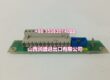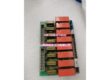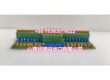
Component Snapshot At-a-Glance
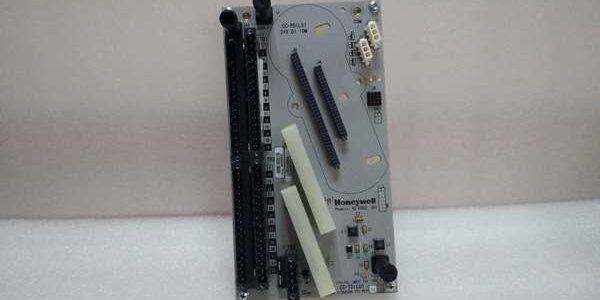
- Model: CC-TDIL01, factory PWA P/N 51308386-175
- Alt. P/N: CC-TDIL11 (redundant dual-IOM IOTA, cannot cross-substitute simplex racks); CC-TFDIxx (FTE DI IOTA, backplane incompatible)
- Product Series: Honeywell Experion PKS Series C standard non-FTE I/O rack hardware
- Hardware Type: Simplex (single IOM slot) 32-channel digital input termination IOTA baseboard
- Key Feature: Jumper-selectable internal/external 24VDC field power, integrated surge suppression, dual-row screw terminal landing for field discrete wiring
- Primary Field Use: Physical wiring interface to mount CC-PDIL01 32pt sink DI IOM, route valve/motor contact signals between field cables and Series C backplane.
Hard-Numbers: Technical Specifications
- Protocol Support: Passive wiring interface only, no onboard processing; routes 32 discrete DI signals to IOM backplane connector
- Port Count: 64-position dual-row screw terminal field landing; vertical edge connector to mate CC-PDIL01 IOM; 24VDC field power jumper terminal block
- Baud/Data Rate: No signal processing, passes raw 24VDC discrete contact signals unmodified to IOM opto-isolators
- Operating Temperature: 0°C to +60°C cabinet operational; -40°C to +85°C storage
- Isolation Rating: 1500Vrms opto-galvanic isolation barrier implemented on paired CC-PDIL01 IOM
- Power Draw: Negligible passive board draw; field 24VDC load supplied through IOTA terminal jumpers
- Field Power Config: Jumper select: internal rack 24V or external independent 24VDC field supply
- Terminal Wire Rating: Accept 14–22 AWG solid/stranded instrument wire, torque spec 0.7 N·m
- Surge Protection: Onboard TVS transient suppressors on every input channel to block lightning/weld noise spikes
- Max Field Cable Length: 500m shielded instrument cable per channel
- Physical Weight: 0.5kg bare IOTA base assembly
The Real-World Problem It Solves
Hardwired marshalling panels add extra rack space and hundreds of intermediate splice points, creating vibration-induced open-circuit faults on valve limit switch circuits. Generic uncertified terminal blocks lack channel-by-channel surge suppression; lightning transients blow CC-PDIL01 optocouplers and take 32 interlock points offline.Dual-redundant CC-TDIL11 bases cost double and waste rack slots for non-critical monitoring points that do not require hot-switchover IOM redundancy. Separate power marshalling terminals force extra wiring runs for field 24V feed, increasing cabinet clutter and troubleshooting time during outages.Where you’ll typically find it:
- Refinery non-SIL auxiliary DI racks for pump run/trip status, bypass valve limit switches
- Fossil power plant balance-of-plant motor control cabinets, non-critical interlock discrete signals
- Chemical batch DCS auxiliary panels with safety gate, local pushbutton status contactsThis simplex DI IOTA consolidates field wiring, surge protection, and configurable power feed into one compact base, eliminates intermediate marshalling panels, and protects paired CC-PDIL01 IOM hardware from field-side voltage transients.
Hardware Architecture & Under-the-Hood Logic
This is a fully passive termination base with no active processing chips; all signal conditioning and opto-isolation lives on the plugged-in CC-PDIL01 IOM card.
- Field discrete wiring lands on dual-row screw terminals, each channel routed to dedicated TVS surge suppression components to clamp overvoltage spikes before reaching the IOM mating connector.
- Jumper block selects power source for all 32 DI loops: internal rack 24VDC or external isolated field 24V supply for noise separation.
- Thick copper PCB traces split the 32 input channels into four isolated 8-channel banks to limit cross-talk between adjacent contact wiring runs.
- Vertical gold finger edge connector mates directly to the bottom edge of CC- IOM, creating a vibration-resistant signal path without loose ribbon cables.
- Mounting standoffs lock the IOTA rigidly to the Series C I/O rack rail; vertical layout keeps field wiring top/bottom entry clear for cabinet cable duct routing.
- No onboard status LEDs; all channel fault and module run indicators reside on the front face of the CC- IOM plugged into the IOTA slot.
Field Service Pitfalls: What Rookies Get Wrong
Mixing CC-TDIL01 Simplex IOTA With CC-TDIL11 Redundant Spare Bases
New techs swap CC-TDIL11 dual-slot redundant IOTA into simplex rack slots to reuse spare inventory. The wider 12-inch CC-TDIL11 does not fit standard 6-inch simplex rack slots, and single CC- IOM cannot fully seat, breaking all 32 DI circuits.Field Rule: Match CC-TDIL01 simplex IOTA exclusively with single CC- IOM; segregate simplex and redundant IOTA spares in labeled storage bins.
Incorrect Jumper Setting For External Isolated Field Power
Apprentices leave jumpers set to internal rack 24V when running independent field 24V supply for instrument contacts. Shared ground potential between rack and field power creates massive ground loop noise, triggering spurious false DI ON states near VFD motor loads.Quick Fix: Remove internal power jumpers and install external power jumpers if field contacts run off separate 24VDC power supply; verify no cross-connected ground between rack and field circuits.
Over-Torquing Screw Terminals Crimping Wire Strands
Crews over-tighten terminal screws past 0.7 N·m torque spec, crushing thin instrument wire strands. Vibration loosens broken strands over months, creating intermittent open-wire DI faults that only surface during plant load swings.Field Rule: Torque all field wiring terminals to 0.7 N·m; retorque all CC-TDIL01 terminals during annual DCS proof testing to eliminate loose strand faults.
Commercial Availability & Pricing Note
Please note: The listed price is for reference only and is not binding. Final pricing and terms are subject to negotiation based on current market conditions and availability.