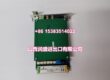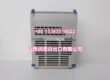
Quick Sizing & Sourcing Snapshot
- Manufacturer: Westinghouse / Emerson Automation Solutions (Ovation™ DCS)
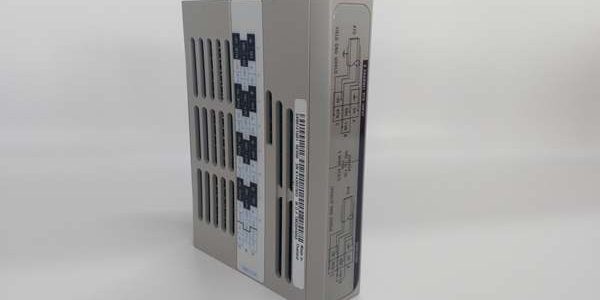
- Part Number: 1C31110G01
- System Platform: Emerson Ovation™ DCS
- Hardware Type: Drop Processor Module (DPM) / Controller Module — also referred to as Ovation Controller (OC) or Drop Controller
- Architectural Role: Plugs into Slot 0 (leftmost) of an Ovation I/O Drop rack (e.g., 1C31116G04 / 1C31132G01). Executes the compiled control strategy, scans local I/O modules via the Drop Backplane, communicates with the Ovation Network Controllers (OCR ←→ Station Controller / Plant Network via UCA / LCN / E-LAN). Contains battery-backed RAM for retentive data and Flash for firmware/configuration.
- Key Specifications: Motorola 68K-class or PowerPC (rev-dependent) CPU, 2-8 MB RAM (battery-backed), Flash for Exec & Config, Redundant Drop Cable Ports (A/B), Requires 3V Lithium Battery (1C31129G01 / IC697ACC701-equivalent — check your site standard).
System Architecture & Operational Principle
The 1C31110G01 is the brain of an Ovation I/O Drop, positioned at Purdue Level 2 (Control). Physically it occupies the dedicated Controller Slot (Slot 0) of an Ovation Drop I/O rack, which also holds Terminal Bases (TBSH/TBQC) with plugged-in I/O modules (AI/AO/DI/DO/SOE/PI).
Upstream (to Plant Network):
- Connects via two redundant Drop Cables (coaxial RG-58 or Fiber ST/SC) to an Ovation Network Controller (NC) or Station Controller (SC) in the Control Room / CCR.
- Supports UCA (Universal Control Architecture) / LCN (Loop Control Network) — the proprietary Ovation token-passing network (typically 10Mbps coax or 100Mbps fiber).
- Downloads compiled logic (Control Blocks, SAMA diagrams, ladder segments) and the I/O database from the Engineering Workstation via the Station Controller. Stores a local copy in Flash/RAM.
Internal Processing:
- Executes the Control Cycle (typical 100ms default, configurable 50-500ms for most drops; Fast I/O drops can go to 20ms if licensed/equipped).
- Scans local I/O modules on the Drop Backplane every cycle, reads inputs, executes control algorithms (PID, Selector, Timer, Interlock Logic), writes outputs.
- Manages Retentive Memory (via battery-backed RAM — holds setpoints, totals, timer accumulators, mode status through power loss if battery good).
- Time-syncs with the Plant Master Clock (GPS-referenced Station Controller) for SOE and historical data correlation.
Downstream (to I/O):
- Drives the VME-based or proprietary Drop Backplane to poll I/O modules (1C31179G01 AI, 5X00121G01 DI, 5X00226G01 DO, etc.) and BIU/Communication modules if present.
- Supports local I/O expansion (typically up to 16-32 I/O modules per drop depending on rack/backplane power).
Core Technical Specifications (Typical — confirm against your unit label/firmware)
| Parameter | Value |
|---|---|
| CPU | Motorola 68040 / PowerPC 603e (depending on revision / date code) |
| User Memory | 2 MB / 4 MB / 8 MB (Battery-Backed SRAM — retains retentive vars on power loss w/ good battery) |
| Flash Memory | 4 MB+ (Stores Exec, Compiled Config, Drop ID) |
| Drop Cable Ports | 2 × BNC (Coax) or ST/SC Fiber (Redundant A/B — auto-switches on cable/NC failure) |
| Battery | 3V Lithium Coin Cell (Typically 1C31129G01 or CR2032 in holder — Emerson p/n varies by vintage; always replace WITH POWER ON) |
| Indicators | RUN (Grn — in Automatic/Run), FAIL (Red — HW/SW fault), COMM A/B (Yel/Grn blink — Drop Cable activity), BAT LOW (Yel — battery < 2.7V) |
| DIP Switches / Rotary | Drop ID (1-255) set via Rotary Switches on module face or via software download (modern revs auto-learn from downloaded config; legacy required DIP set to match database) |
| Operating Temp | 0°C to +60°C (Drop Rack); -40°C to +70°C (Module Storage) |
| Power | From Drop Backplane (48V DC input to Drop Power Supply → regulates to 5V/±12V for modules) |
| Hot-Swap | Yes (Redundant Drops: standby controller can be swapped live; single drops — swap with power down recommended unless you have redundant controller pair) |
Customer Value & Operational Benefits
Local Control Autonomy (Network-Independent)
If the Plant LAN or Station Controller link is lost, the Drop Controller continues executing its control strategy and scanning I/O locally. Pumps keep running, interlocks remain active, PID loops don’t freeze. This “distributed autonomy” is a core Ovation design principle — prevents a network hiccup from tripping the whole unit. The controller only needs the Drop Cables to the NC for communication; the control loop is self-contained.
Retentive Memory with Battery Backup
Setpoints, integral accumulates (totalizers), timer presets/accumulated time, and unit mode (Auto/Man/Cas) are stored in battery-backed SRAM. On a power cycle (with good battery), these values are restored — the unit doesn’t revert to defaults. Critical for batch processes or continuous units where losing a “1000-gal blend ratio setpoint” on a brief power blip would ruin the batch. Combine with “Store to Flash” after major config changes for added recovery safety.
Redundancy Support (R-Drop)
Two 1C31110G01 controllers can be installed in a Redundant Drop (primary + standby in same rack). They synchronize via a cross-cable; if the primary fails (CPU, memory, Drop Cable port), the standby takes over seamlessly — bumpless transfer (outputs hold last good value, control continues). This is standard for Turbine Controls, Boiler Master, and Critical BOP loops where a single-controller failure is unacceptable.