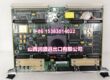
Customer Value & Operational Benefits
Noise-Immune LVDT Processing
The “BFD” revision of the shines in older plants where VFDs or new excitation equipment has been added near the Mark V rack. The enhanced filtering (implied by the F/D suffixes) reduces susceptibility to high-frequency noise coupling into the LVDT secondary wires. This stabilizes valve position feedback (<GCVP>, <SRVP>), preventing nuisance “Deviation Alarms” in TMR votes and avoiding oscillatory control loops caused by jittery position signals.
Deterministic Servo Drive
Unlike generic analog output cards, the drives servos with hardware-current loops. If the LVDT feedback wire breaks (Open Circuit), the board’s internal diagnostics can detect the loss of AC signal amplitude and flag a “LVDT Fail” to the STCA beforethe valve slams full travel due to lost position loop. This allows the <TCEL> logic to hold last good demand or execute a controlled ramp-down, protecting the turbine from actuator runaways.
TMR Hardware Voting
In a Triple Modular Redundant setup, you have three boards (R, S, T cores). The Mark V middleware votes the 4-20mA inputs (e.g., P2 Pressure) and the LVDT positions. If the R-core’s TCQA develops a sticky A/D converter (reading 0% when it’s 50%), the S and T cores outvote it. The system keeps running with a “Deviation Alarm” instead of tripping, which is the primary value prop of keeping these specific Mark V spares on the shelf.
Field Engineer’s Notes (From The Trenches)
The “BFD” suffix isn’t magic, but it matters for noise floors. If you’re replacing a plain “G1B” with a “G1BFD” in a unit with VFD-induced noise on the LVDT cables, you might actually solve intermittent “Position Deviation” trips without changing a line of code.
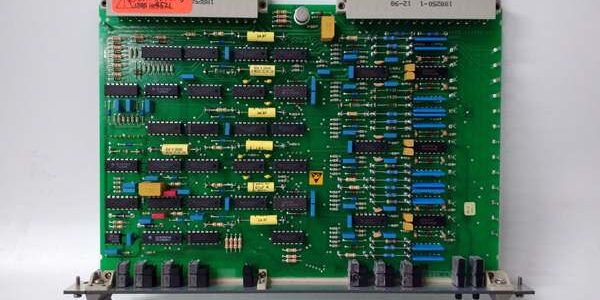
Biggest pitfall: Jumper Blindness. The is functionally identical to older revs only if the jumpers match. I’ve seen techs swap a failed board, and suddenly the GCV (Gas Control Valve) goes full open on startup. Why? Old board had J5/J6 jumped for 200mA servo range (Heavy duty valves); new board shipped with default 20mA jumpers. The valve only got 10% of required current.
Rule: Photo J1 through J8 (macro mode) before removing the old . Pay extra attention to J3/J4 (LVDT Excitation Freq) and J5/J6 (Servo Range). Also, check the JF connector pin tension. These are female headers on the board; after 20 years, the spring tension dies. You’ll see “LVDT A/D Conv Error” that clears when you wiggle the cable—that’s worn pins on the , not a bad cable.
Real-World Applications
- Steam Turbine Reheat/Stop Valve Control: The (R-Core) drives the RS (Reheat Stop) or MS (Main Stop) valve servo via JE. It reads the LVDT feedback via JF to confirm valve stroking during startup sequences (<TVCL>, <RSLC> logic). The “BFD” hardware ensures the 4.8kHz excitation isn’t distorted by long cable runs in the steam chest area.
- Generator CT/PT Signal Conditioning: Via the JG connector, the scales 1A/5A CT secondaries or 120V PT secondaries down to +/- 10V for the STCA’s watt/var calculations. In older units, the “BFD” revision’s improved burden resistors prevent phasor angle drift that can cause erratic MVAR sharing between generators.
High-Frequency Troubleshooting FAQ
Yes, electrically and physically. The “BFD” is a later BOM revision (Build/Fix/Design level) of the “G1B” architecture. You can swap them interchangeably provided you transfer the jumper settings. Do not assume the new “BFD” has the same J1-J8 configuration as the old “B”. Always match the hardware jumpers to the failed unit, or the I/O scaling will be wrong (e.g., 4-20mA read as 0-20mA).
Check the JF Wiring Polarity. LVDTs have two secondaries (S1-S2, S3-S4). If you swap S1 with S3, the phase inverts. The demodulator sees negative voltage and clamps to 0% (or wraps to 100% if scaling is asymmetric). Also, verify J3/J4 jumpers match the LVDT’s nameplate frequency (2.4k vs 4.8k). A 2.4k LVDT on a 4.8k excitation setting will give very low amplitude/noisy readings.
Unlikely. “Hum” means excitation is there; no movement means no current differential. Check J5/J6 (Servo Range). If your valve needs 200mA full stroke and the board is jumpered for 20mA (default), you’re only driving 10% force. Also, measure voltage across the servo terminals under load. If you see ~15V DC but 0mA current, the valve coil is open (burnt out), not the . The board protects itself; an open coil won’t kill it.
Can I mix BFD and non-BFD revisions in R, S, T cores?
Technically yes, the TMR vote handles it, but avoid it if possible. Component tolerances (resistor accuracy, filter caps) differ slightly between “B” and “BFD”. You may see a permanent 0.2-0.5% “Deviation” alarm on analog inputs (like P2 Pressure) because the R-core (BFD) reads 100.1% and S/T (B) read 99.9%. For tight control loops, populate all three cores with to keep gain/offset consistent.
Please note: The listed price is not the actual final price. It is for reference only and is subject to appropriate negotiation based on current market conditions, quantity, and availability.