Quick Sizing & Sourcing Snapshot
- Manufacturer: GE (General Electric)
- Part Number: IS200ECTBG1A
- System Platform: EX2100 / EX2100e Excitation Control (Mark VI)
- Hardware Type: Exciter Contact Terminal Board (ECTB)
- Architectural Role: Provides the physical field termination for redundant trip relays and wet contact inputs, interfacing the M1, M2, and C controllers via the EMIO board.
- Key Specifications: 2 Trip Relays (Lockout), 4 Gen-C Relays, 70V DC Wetting, Redundant Mode Only.
System Architecture & Operational Principle
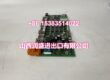
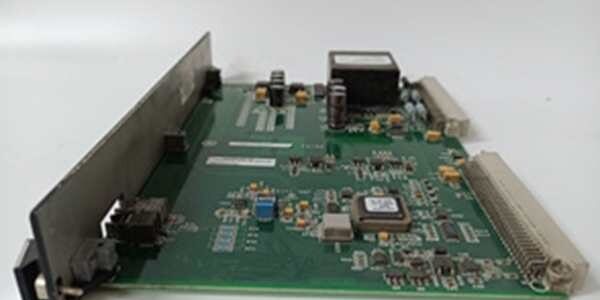
The IS200ECTBG1A is a passive terminal board mounted in the EX2100 Exciter Cabinet, specifically designated for Redundant (TMR) architectures. It serves as the field-facing I/O hub for critical contact signals, bridging the gap between the turbine deck and the VME controllers.
Physically, it mounts to the cabinet frame. Upstream, it connects to the EMIO (Exciter Master I/O) boards in the M1, M2, and C cores via three 25-pin D-Sub connectors (J405, J408, J415). Downstream, it handles the heavy lifting: it terminates six auxiliary contact inputs (powered/wetted by an isolated 70V DC supply from the EPSM) and hosts two heavy-duty Trip Relays (K1, K2) typically used to drive customer lockout circuits or interface with the turbine’s TRLY (Trip Relay) boards. It also provides four General Purpose Form-C relays (K1GP-K4GP) controlled by the EMIO for auxiliary sequencing (e.g., field flashing, cubicle cooling). In a TMR setup, this board is replicated across the M1, M2, and C cores, ensuring that a wiring fault on the ‘M1’ physical terminal doesn’t disable the ‘M2’ or ‘C’ protection paths.
Core Technical Specifications
- Operation Mode: Redundant Only (G1 Suffix denotes Redundant; G2 is Simplex)
- Trip Outputs: 2x Form-C Relays (K1, K2), Rated ~28V DC Coil Drive
- General Relays: 4x Form-C (K1GP-K4GP), Customer Wired (Typically 125V DC)
- Auxiliary Inputs: 6x 70V DC Wet (Sourced from J13M1/J13M2 plugs)
- Monitored Inputs: 52G (Gen Breaker), 86G (Lockout) – 70V Wet
- Controller Links: 3x 25-pin D-Sub (J405->M1, J408->M2, J415->C)
- Power Interface: J13M1, J13M2 (70V DC from M1/M2 Power Supplies)
- Terminals: TB1, TB2 (Barrier Strips for Field Wiring)
- Isolation: 500 V DC Channel-to-Earth (Relay Contacts)
- Indicators: Red LEDs per Input (State Indication), Relay Status (Implicit)
- Mounting: Chassis Mount (Exciter Cabinet)
- Environmental: -40°C to +85°C (Operational)
Customer Value & Operational Benefits
TMR Signal Integrity & Voting
The “G1” (Redundant) design is built so the M1, M2, and C controllers each get their own fanned-out signal path from this single board. If a field wire chafes and shorts the “M1” 52G input at the terminal block, the M2 and C paths remain isolated due to the PCB layout and 70V DC sourcing. This preserves your 2oo3 Vote on Gen Breaker status, preventing a spurious trip or a “blind spot” during a real fault.
Centralized Protection Logic
By hosting the Trip Relays (K1/K2) here, you consolidate the final lockout drivers in one accessible location. Unlike rack-mounted VME cards where you have to pull the core to check a relay, the ECTBG1A is front-accessible. You can megger the K1/K2 contacts or verify 70V wetting on TB1 with the unit running (carefully), cutting troubleshooting time for “Trip Loop Failed” alarms by 20 minutes.
Voltage Isolation for Wetting
The dedicated 70V DC wetting (via J13M1/J13M2) is a GE EX2100 standard. It prevents sneak paths from the 125V DC trip bus (on GP relays) from back-feeding into the 24V/5V logic of the EMIO. This isolation stops a field short on a 125V solenoid from frying the M1 processor’s input optos.