Description
Key Technical Specifications
-
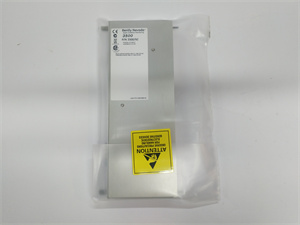
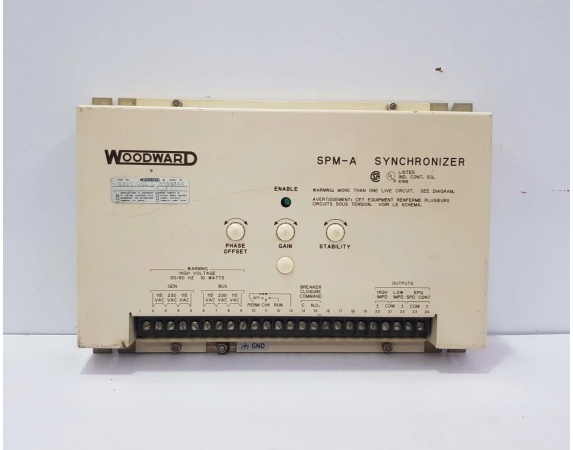
Model Number: 9905-148
-
Manufacturer: Woodward
-
Supply Voltage: 20-40 VDC (low-volt version); 88-131 VAC or 90-150 VDC (high-volt version) selectable on card
-
Actuator Output: 0-200 mA into 40 Ω max load, current-source, short-circuit protected
-
Speed Reference Input: 1-5 VDC (or 4-20 mA via 250 Ω jumper)
-
MPU Input: 1-30 V p-p, 1 kHz–25 kHz, 0.010–0.040 in. air-gap
-
Load Sharing Input: 0-6 VDC from 5 A CT secondary, gain trim on board
-
Droop Range: 0-10 % via 20-turn pot; isochronous when pot CCW
-
Operating Temperature: –40 °C to +85 °C
-
Power Consumption: 8 W typical, 15 W max
-
Isolation: 500 V input-to-output, opto on speed share line
-
Mounting: 8.5″ × 2″ Euro-card, slides in 2301A chassis or DIN clips

Woodward 9905-001-L
Field Application & Problem Solved
Small steam turbines driving boiler-feed pumps or induced-draft fans hate frequency drift—if the grid sags 2 Hz the pump overspeeds and you trip on high vibration. The 9905-148 is the card that keeps that from happening. It lives in the 2301A chassis, takes MPU pulses from the gearbox, and drives a 200 mA Woodward TG-13 actuator on the steam valve. Load-sharing input comes from a 5 A CT on the generator feed; the board biases speed reference so the turbine carries base-load while the grid handles swings. I install it on 5 MW back-pressure units in paper mills—one card replaces the mechanical governor, droop linkage, and a handful of ice-cube relays. Commissioning takes two hours: set droop to 4 %, dial null until the actuator sits at 0 mA, then bump the speed trim until the synchroscope stops. The mill gets rock-solid 60 Hz and never has to babysit the throttle again.
Small steam turbines driving boiler-feed pumps or induced-draft fans hate frequency drift—if the grid sags 2 Hz the pump overspeeds and you trip on high vibration. The 9905-148 is the card that keeps that from happening. It lives in the 2301A chassis, takes MPU pulses from the gearbox, and drives a 200 mA Woodward TG-13 actuator on the steam valve. Load-sharing input comes from a 5 A CT on the generator feed; the board biases speed reference so the turbine carries base-load while the grid handles swings. I install it on 5 MW back-pressure units in paper mills—one card replaces the mechanical governor, droop linkage, and a handful of ice-cube relays. Commissioning takes two hours: set droop to 4 %, dial null until the actuator sits at 0 mA, then bump the speed trim until the synchroscope stops. The mill gets rock-solid 60 Hz and never has to babysit the throttle again.
Installation & Maintenance Pitfalls (Expert Tips)
MPU Air-Gap is Non-Negotiable
Gap over 0.040″ and the board thinks the shaft stopped—valve slams shut and you trip on underspeed. Gap under 0.010″ and you scrape the gear. I set 0.025″ cold, then check again when the turbine is hot; thermal growth closes the gap about 0.003″.
Gap over 0.040″ and the board thinks the shaft stopped—valve slams shut and you trip on underspeed. Gap under 0.010″ and you scrape the gear. I set 0.025″ cold, then check again when the turbine is hot; thermal growth closes the gap about 0.003″.
Droop Pot CCW = Isoch, But Only If You Lock It
Vibration loosens the 20-turn pot. If it drifts CW the unit goes 4 % droop and the plant suddenly drops 200 kW. After I set droop I hit the pot with a dab of nail polish—field techs hate it, but it never moves again.
Vibration loosens the 20-turn pot. If it drifts CW the unit goes 4 % droop and the plant suddenly drops 200 kW. After I set droop I hit the pot with a dab of nail polish—field techs hate it, but it never moves again.
Current Output Needs a 40 Ω Load—No More, No Less
Actuator coil cold is 38 Ω, hot is 42 Ω—perfect. If you parallel two actuators the impedance drops to 20 Ω and the card current-limits at 220 mA; speed swings ±5 Hz. Add a series resistor or use a separate driver card.
Actuator coil cold is 38 Ω, hot is 42 Ω—perfect. If you parallel two actuators the impedance drops to 20 Ω and the card current-limits at 220 mA; speed swings ±5 Hz. Add a series resistor or use a separate driver card.
Verify Speed Reference Polarity Before You Start
Reverse the 1-5 V speed command wires and the valve drives shut when you ask for 100 %. Bump demand to 10 %—actuator should extend; if it retracts, swap the wires at the terminal strip, not at the CPU, so you don’t disturb the DCS loop.
Reverse the 1-5 V speed command wires and the valve drives shut when you ask for 100 %. Bump demand to 10 %—actuator should extend; if it retracts, swap the wires at the terminal strip, not at the CPU, so you don’t disturb the DCS loop.
Woodward 9905-001-L
Technical Deep Dive & Overview
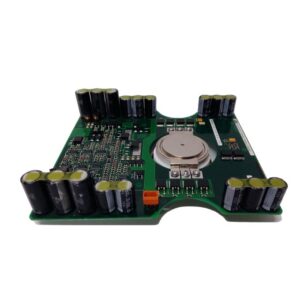
The 9905-148 is an analog speed/load control on a single Euro-card. A magnetic-pickup zero-cross detector feeds a phase-locked loop; the loop compares shaft frequency to an internal 60 Hz crystal and generates a 0-200 mA error signal. Load-sharing current from the generator CT is converted to 0-6 V, summed at the PID junction, and drooped by the front-panel pot. An on-board 5 V reference feeds the speed-set pot; an external 1-5 V or 4-20 mA command can override it via jumper. All outputs are current-limited and short-circuit proof; the card survives reverse battery and 500 V spikes. No microprocessor—everything is op-amps and comparators—so it boots in 50 ms and never needs firmware.
The 9905-148 is an analog speed/load control on a single Euro-card. A magnetic-pickup zero-cross detector feeds a phase-locked loop; the loop compares shaft frequency to an internal 60 Hz crystal and generates a 0-200 mA error signal. Load-sharing current from the generator CT is converted to 0-6 V, summed at the PID junction, and drooped by the front-panel pot. An on-board 5 V reference feeds the speed-set pot; an external 1-5 V or 4-20 mA command can override it via jumper. All outputs are current-limited and short-circuit proof; the card survives reverse battery and 500 V spikes. No microprocessor—everything is op-amps and comparators—so it boots in 50 ms and never needs firmware.