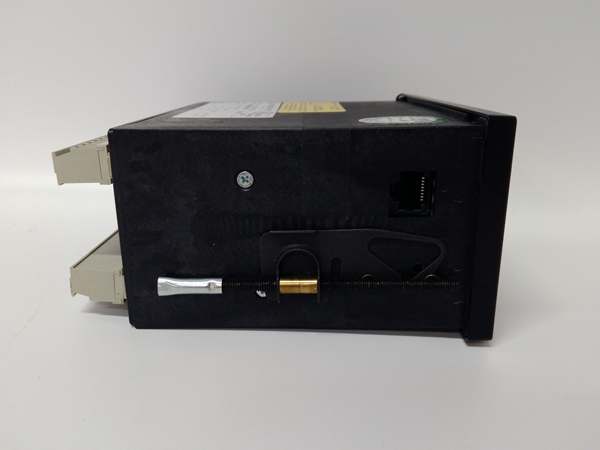
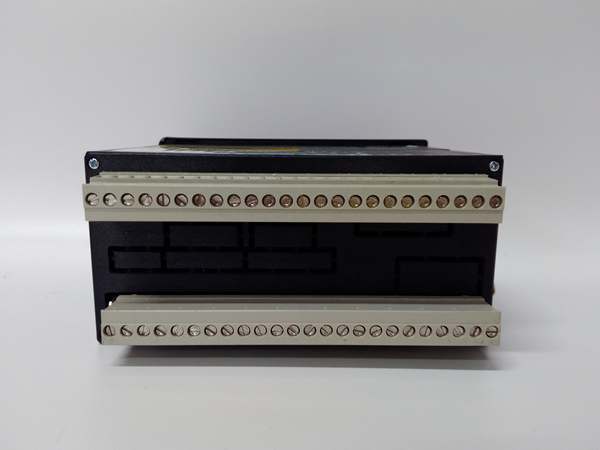
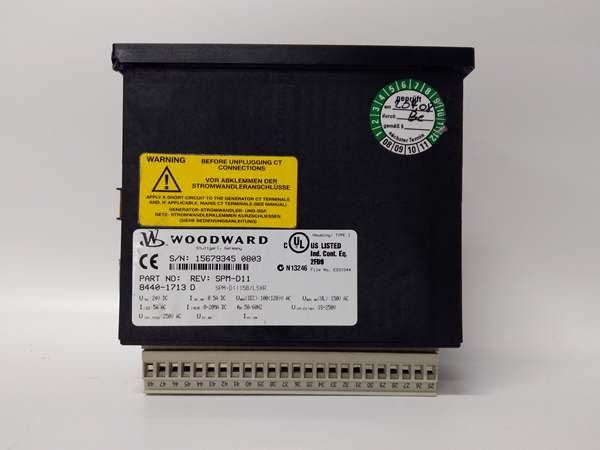
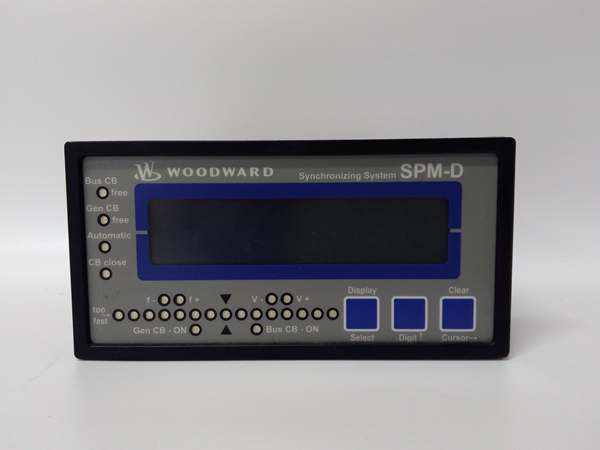
Description
Hard Numbers: Technical Specifications
- Operating Voltage: 8–16 VDC (12VDC nominal system voltage)
- Generator Phases: 3-Phase (Supports 3P4W, 3P3W, and 1P2W configurations)
- Voltage Input Range: 30–600 VAC L-L (direct sensing, no PTs required for low-voltage switchgear)
- Frequency Tracking: 50 Hz / 60 Hz auto-sensing
- Digital Inputs (Discrete): 8 optically isolated inputs (configurable for wetting source)
- Relay Outputs: 8 Form-C relays (5A @ 250VAC resistive, 10A @ 24VDC)
- Communication Ports: 2x Ethernet (Modbus TCP), 1x USB, 1x RS-485 (Modbus RTU), 1x CANopen
- Operating Temperature: -20°C to +70°C (-4°F to +158°F)
- Protection Rating: IP55 (Front face w/ gasket), UL 508 / CE / CSA certified
The Real-World Problem It Solves
Cheap genset controllers handle basic start/stop and alarm logging. But when you need true isochronous load sharing across three generators, or seamless mains failure transition for a hospital, those entry-level units fall apart. The 8440-2050 B acts as the central nervous system for the entire generator package. It doesn’t just monitor; it actively manages the prime mover’s governor and the alternator’s AVR to maintain rock-solid stability, whether running standalone or paralleled to a utility grid.
Where you’ll typically find it:
- Mounted in the local control panel of a 2MW diesel genset, handling AMF (Automatic Mains Failure) duties for a data center.
- Acting as the master controller in a microgrid application, balancing multiple biogas generators against a solar array.
- Installed in rental power containers, utilizing the built-in MQTT protocol to beam real-time telemetry to a cloud-based fleet management dashboard.
It eliminates the need for external synchronizing panels and complex SCADA gateways, putting everything behind a single, sunlight-readable local display.
Hardware Architecture & Under-the-Hood Logic
Forget proprietary bullshit; the 8440-2050 B is built on a highly optimized RISC architecture running a deterministic real-time kernel.
- High-Speed Metering Engine: The A/D converters sample the generator and mains waveforms at 256 samples per cycle. This gives you true RMS calculations and sub-cycle fault detection, crucial for catching voltage sags before they trip the load.
- Paralleling Math: The controller continuously calculates the generator’s position relative to the infinite bus (phase angle, voltage magnitude, and frequency). It then outputs precise analog signals (or CANopen messages) to the Woodward actuator and AVR to drive the breaker closure at the exact zero-crossing point.
- Load Share Regulator: Once synchronized, the internal PI (Proportional-Integral) loops actively adjust the fuel rack and excitation to match the desired kW and kVAr setpoints. It uses a modified droop algorithm that ensures stable load sharing even with wildly mismatched generator sizes.
- Connectivity Core: The integrated dual Ethernet ports aren’t just for Modbus; they handle the MQTT payloads. Sensor data, alarm statuses, and operational counters are packaged into lightweight JSON payloads and pushed to a broker, bypassing the heavy overhead of traditional SCADA protocols.
Field Service Pitfalls: What Rookies Get Wrong
Ignoring CT Polarity During Commissioning
Rookies trust the electrician who wired the current transformers (CTs) and assume the kW reading will be positive. They close the generator breaker, and suddenly the controller sees -500 kW. The load share logic freaks out, and the generator either motores or trips on reverse power.
- Field Rule: Before closing the breaker for the first time, run the generator unloaded. Briefly flash a load bank or even a space heater on the generator bus. If the kW reading is negative, swap the S1/S2 terminals on the CT inputs at the controller. Don’t rewire the high-voltage side.
Chasing “Hunting” by Detuning the Controller
When a generator starts oscillating around its setpoint (hunting) after a load step, rookies dive into the easYgen’s PI gains. They smother the regulator, making the response so slow that the generator can’t recover from a 20% load rejection.
- Quick Fix: If the engine is hunting, the issue is almost always mechanical or hydraulic. Check the Woodward actuator linkage for backlash. Check the turbocharger wastegate. The easYgen is just reporting the physical reality of the prime mover. Leave the PI gains at factory defaults unless you have a known, documented requirement to change them.
Overloading the Power Supply During Firmware Updates
The 8440-2050 B pulls significant current when writing to its internal flash memory. Rookies try to update the firmware over USB while the unit is powered solely by the 12VDC battery bank. If a heavy load kicks on the generator during the update, the voltage dips, the controller resets, and you’ve bricked the unit.
- Field Rule: Never flash firmware unless the genset is running and supplying stable AC power to the controller’s auxiliary 12VDC power supply. Better yet, use a fully charged, known-good 12VDC bench supply connected directly to the controller’s terminals during the upload.
Commercial Availability & Pricing Note
Please note: The listed price is for reference only and is not binding. Final pricing and terms are subject to negotiation based on current market conditions and availability.