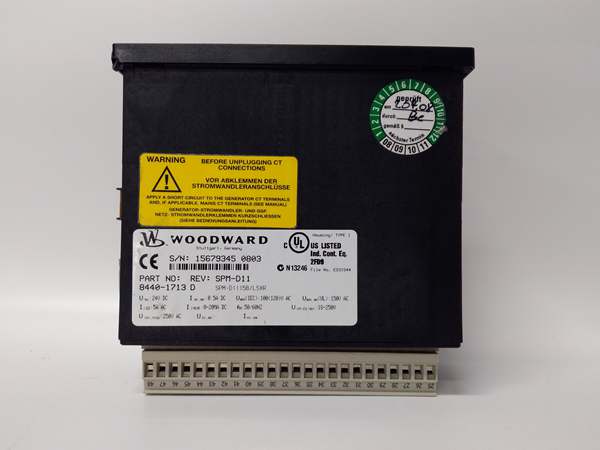
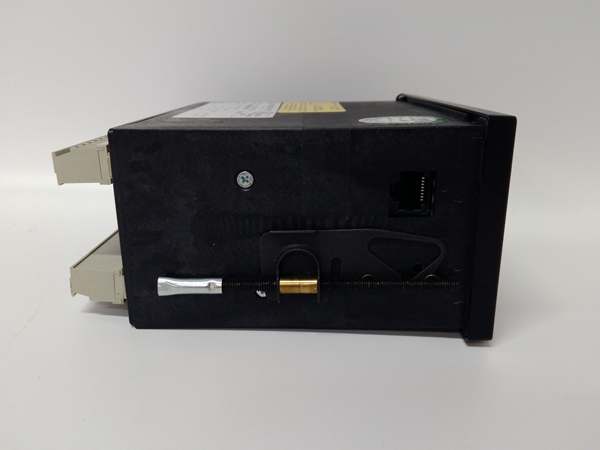
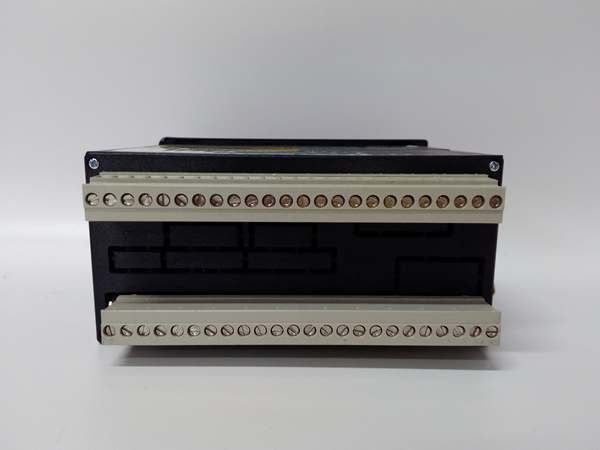
Description
Hard Numbers: Technical Specifications
- Power Supply: 12/24 VDC (Wide operating range 8–35 VDC)
- Display: 5.7-inch monochrome or backlit graphical LCD
- Voltage Sensing (PT Input): Up to 690 VAC (direct sensing, 3P4W/3P3W/1P2W)
- Current Sensing (CT Input): 0–5 A RMS (3-phase)
- Discrete Outputs: Up to 12 relay outputs (Form C)
- Discrete Inputs: Up to 10 optically isolated digital inputs
- Communication Ports: 2x CANbus (CANopen, SAE J1939), 1x RS-485 (Modbus RTU), 1x Ethernet, 1x USB
- Operating Temperature: -20°C to +70°C (-4°F to +158°F)
- Ingress Protection: IP20 (IP54 when installed with front panel gasket)
- Dimensions: 282 mm x 358 mm x 69 mm (11.1″ x 14.1″ x 2.7″)
- Weight: Approx. 1.85 kg (4 lbs)

The Real-World Problem It Solves
Running a single generator is easy; making ten generators play nicely together is a nightmare. Cheap controllers choke when you try to balance reactive power (kVAr) across multiple paralleled sets, leading to circulating currents and overheated alternators. The 8440-1923 eliminates this headache. It acts as both the local HMI and the master logic solver, seamlessly coordinating with the engine’s ECU (via J1939), the AVR (for power factor correction), and external PLCs (via Modbus/Ethernet).
Where you’ll typically find it:
- In data center basements, orchestrating the Automatic Mains Failure (AMF) sequence to bring 6 massive diesel generators online in perfect sync within seconds of a utility blackout .
- On marine vessels, mounted in the engineer’s control console, managing the start/stop sequences of auxiliary diesel gensets based on hotel load demands .
- In remote microgrids, using its Ethernet port to report real-time kW/kVAr telemetry to a central SCADA system while performing peak shaving to avoid expensive utility demand charges .
Hardware Architecture & Under-the-Hood Logic
The 8440-1923 is essentially a ruggedized industrial computer dedicating its entire processing power to power generation mathematics.
- Metering & Protection Engine: Unlike basic controllers that only measure magnitude, the 8440-1923 calculates true RMS values for voltage, current, frequency, and power factor. It uses these calculations to drive its internal protection schema (over/under voltage, over/under frequency, reverse power trip) .
- LogicsManager (Internal PLC): Buried inside the firmware is Woodward’s LogicsManager. Instead of wiring external relays to create complex start/stop sequences or alarm acknowledgments, the 8440-1923 allows engineers to program custom ladder logic directly into the controller. This turns the HMI into a powerful, standalone automation controller .
- Multi-Protocol Bridge: The hardware acts as a universal translator. It can simultaneously talk to a Volvo Penta ECU via SAE J1939, read tank levels from a Modbus RTU slave over RS-485, and push all that data to a Building Management System (BMS) via Ethernet Modbus TCP .
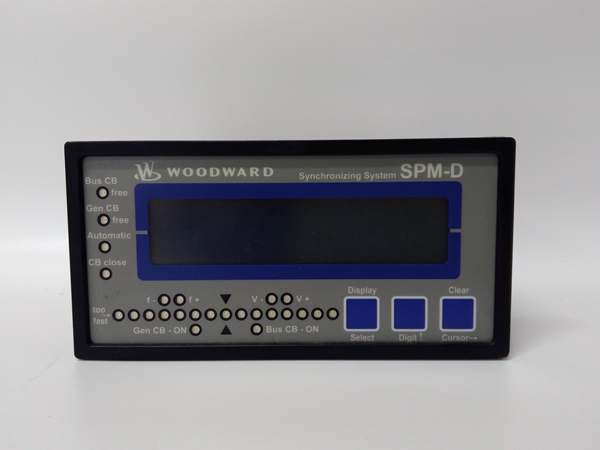
Field Service Pitfalls: What Rookies Get Wrong
Blowing the PT Inputs During Transformer Hookup
Rookies often assume that because the CT inputs can handle up to 5 Amps, the PT (Voltage) inputs are similarly robust. They accidentally connect 480VAC line-to-line directly into terminals expecting 120VAC, or forget to configure the software for the correct Potential Transformer (PT) ratio. The result is instant vaporization of the internal metering resistors.
- Field Rule: Always verify your system voltage and PT ratios beforeapplying power. If using PTs to step down high voltage, double-check your wiring with a voltmeter at the terminal block. In the software, ensure the “PT Primary/Secondary” settings match the physical hardware. If the board is already fried, look for burnt traces near the voltage sensing terminals.
Disabling the Watchdog and Missing a Critical Shutdown
In an attempt to keep the genset running during sensor faults, rookies will go into the configuration and disable the “Watchdog” or “Loss of Comm” failsafe parameters. If the 8440-1923 subsequently loses communication with the engine ECU (due to a frayed CANbus wire), it will happily keep the engine running wide open without any speed limiting or overspeed protection.
- Quick Fix: Never disable the watchdog. Instead, diagnose the communication error. Check the CANbus termination resistors (should be 120 ohms at the extremes of the network). Ensure the shield drain wire is tied to earth at only one point to prevent ground loop interference.
Letting the Real-Time Clock Drift (and invalidating event logs)
The 8440-1923 has a battery-backed Real-Time Clock (RTC) that time-stamps the 300-event internal history log. Rookies ignore this battery during annual maintenance. When the battery dies (usually every 5 years), the clock resets to the year 2000.
- Field Rule: If you are troubleshooting a blackout and look at the event log, check the timestamps. If the controller thinks it’s the year 2000, the RTC battery (usually a CR2032 or supercap on the mainboard) has died. Replace it, update the clock via the front panel or Toolkit software, and advise the site to add “RTC Battery Check” to their PM schedule. Accurate timestamps are critical for post-mortem analysis after a catastrophic failure.
Commercial Availability & Pricing Note
Please note: The listed price is for reference only and is not binding. Final pricing and terms are subject to negotiation based on current market conditions and availability.