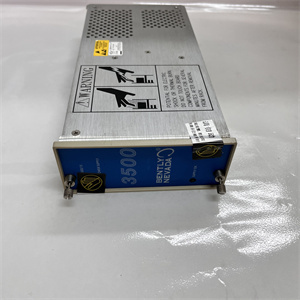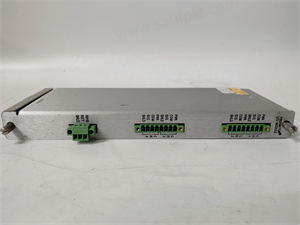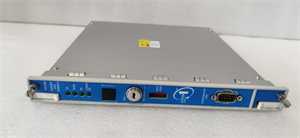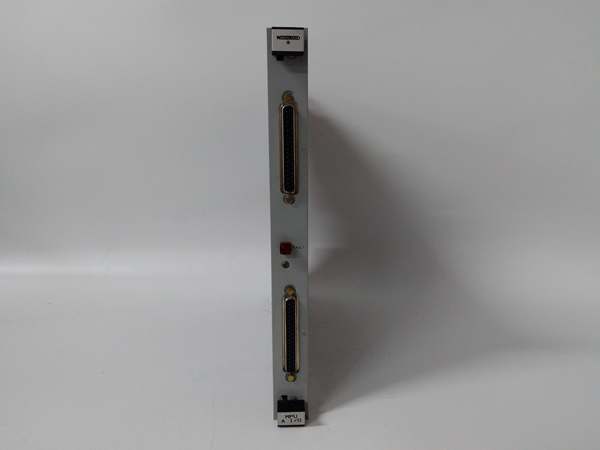
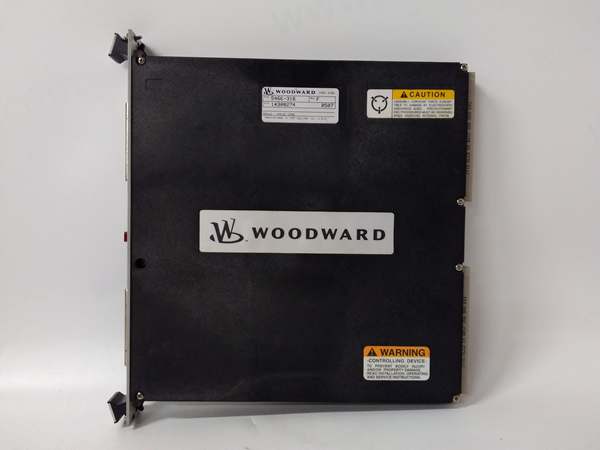
Description
Hard Numbers: Technical Specifications
- Command Input: 4–20 mA, 0–10 VDC, or ±10 VDC (jumper selectable)
- Output Drive Capacity: Up to ±200 mA (sufficient for most I/P converters and small servos)
- Output Compliance Voltage: Up to 30 VDC (depending on loop supply)
- LVDT Excitation: 3 VAC to 24 VAC RMS (fixed frequency, typically 60 Hz or 400 Hz)
- LVDT Feedback Input: Supports dual redundant LVDTs (0–135 VAC RMS range)
- Isolation Rating: 500 VDC minimum (Field I/O isolated from chassis ground)
- Operating Temperature: -40°C to +70°C (-40°F to +158°F)
- Enclosure Type: Enclosed, flanged mount (NEMA 4 / IP65 rated when properly sealed)
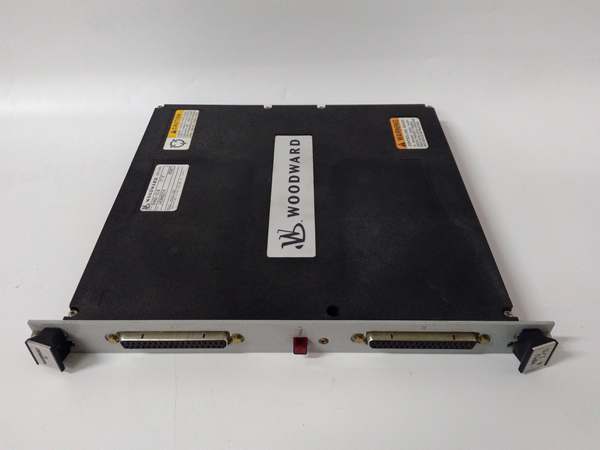
WOODWARD 5466-1002
The Real-World Problem It Solves
Legacy DCS and PLC systems often lack the isolated, high-current analog outputs required to drive modern electro-hydraulic actuators directly. Trying to push a valve using a raw 4-20mA signal results in dead bands, signal degradation over long cable runs, and total loss of control during electrical noise events. The 8239-012 bridges this gap. It takes the weak command signal from your control room, isolates it from the noisy plant floor, and provides the current drive necessary to position the actuator accurately.
Where you’ll typically find it:
- Mounted inside a local junction box near a gas fuel control valve on an older Frame 5 turbine.
- Bolted to the side of a compressor skid, interfacing a modern DCS to a legacy hydraulic governor.
- In retrofit applications where the original analog positioner has failed, and a direct digital replacement isn’t feasible without major control logic rewrites.
It saves you from having to rip out and replace your entire turbine control architecture just to fix a faulty valve driver.
Hardware Architecture & Under-the-Hood Logic
This unit is a rugged analog signal conditioner and amplifier. It doesn’t have a microprocessor running Linux; it’s pure hardware—op-amps, transistors, and isolation transformers. This makes it incredibly fast and nearly immune to the cyber-vulnerabilities that plague modern networked hardware.
- Signal Isolation: The incoming 4-20mA or ±10V command signal passes through a precision optocoupler or isolation amplifier. This completely severs any common-mode noise or ground loops between the DCS and the local actuator.
- Gain Scaling: An internal resistor network (often configured via DIP switches or jumpers) scales the input signal to match the physical stroke of the connected valve (e.g., 0-100% command equals 0-3 inches of valve travel).
- Summing Amplifier: The scaled command is summed with the position feedback signal (from the LVDT). The result is an error signal proportional to the difference between where the valve is and where it needs to be.
- Current Drive Stage: The error signal drives a push-pull transistor output stage. This actively sources or sinks current into the actuator coil until the LVDT feedback matches the command input.
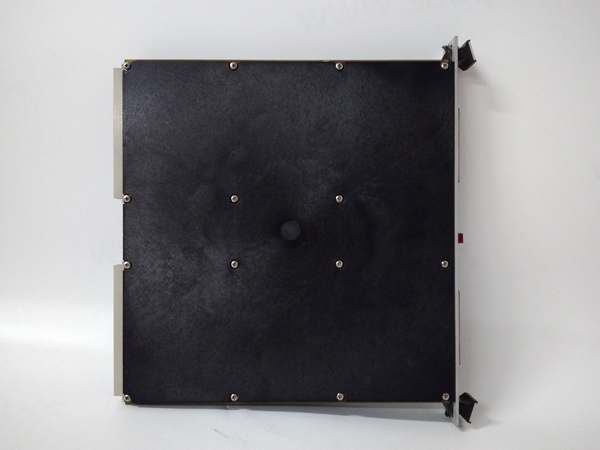
WOODWARD 5466-1002
Field Service Pitfalls: What Rookies Get Wrong
Ignoring the Jumper Settings for Signal Scaling
Rookies assume that a 4-20mA input is universal. They hook up a 0-10V DCS output to the 8239-012 without checking the internal jumper configuration. The valve only moves 25% of its total stroke, or worse, the module saturates and drives the valve full-open the moment the system powers up.
- Field Rule: Never energize the actuator until you have physically verified the jumper settings on the PCB. Use a precision current/voltage calibrator to sweep the input signal while monitoring the output on a multimeter. Ensure 4mA corresponds to 0% output and 20mA corresponds to 100%.
Potentiometer Drift in Feedback Loops
Because the 8239-012 is an analog device, it relies on stable internal resistors and potentiometers for calibration. After 20 years in a hot turbine enclosure, these components drift. Rookies try to tune the loop by adjusting the DCS-side scaling, which masks the problem temporarily but leads to erratic valve behavior during temperature swings.
- Quick Fix: If the valve position “walks” or drifts slowly over time, suspect the internal trim pots. Perform a “four-point calibration” (0%, 25%, 75%, 100%) using a calibrated signal source. Adjust the module’s internal span and zero pots while the system is offline. Lock the pots down with a dab of nail polish or threadlocker to prevent vibration-induced drift.
Improper LVDT Shielding in High-EMI Environments
The 8239-012 excites the LVDT with an AC voltage. Rookies run the LVDT signal wires in the same conduit as the 120VAC valve solenoid wires. The solenoid’s collapsing magnetic field induces voltage spikes into the LVDT feedback, causing the module to violently oscillate the valve (a condition known as “valve scream”).
- Field Rule: Keep LVDT feedback cables and actuator drive cables strictly separated from AC power wiring. Use individually shielded twisted pairs for the LVDTs, and ground the shield drain wire at the 8239-012 end only. If the actuator is screaming, grab an oscilloscope and check the purity of the LVDT sine wave—if it looks like a sawtooth, your shielding is compromised.
Commercial Availability & Pricing Note
Please note: The listed price is for reference only and is not binding. Final pricing and terms are subject to negotiation based on current market conditions and availability.