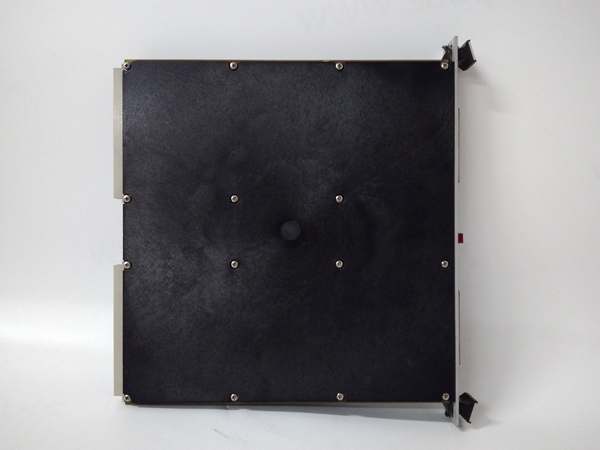
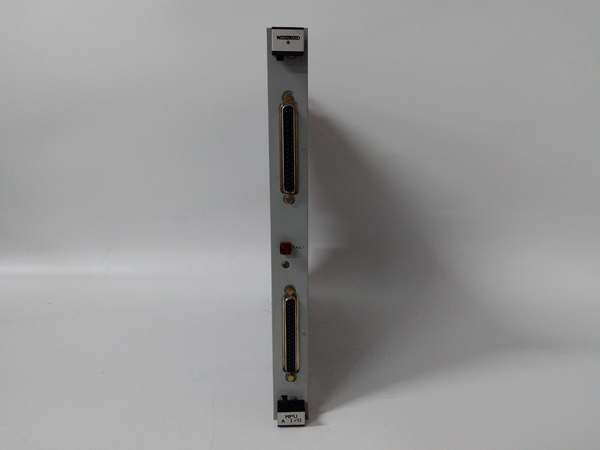
Description
Hard Numbers: Technical Specifications
- Module Type: Network Controller / I/O Control Module
- Network Trunks: 4 Independent Channels
- Max I/O Capacity: Up to 60 I/O modules per trunk (240 modules total)
- Supported Protocols: CAN, Modbus RTU, Ethernet/IP
- Power Supply: 18-32 VDC (24 VDC nominal via backplane)
- Current Consumption: approx. 1.2A at 24 VDC
- Communication Ports: Integrated Ethernet and serial communication interfaces
- Indicators: Integrated LED status indicators for diagnostics and trunk activity
- Mounting: DIN-rail or panel mount within control enclosure
- Operating Temperature: -20°C to +70°C
- Dimensions (cm): 2.2 × 12.4 × 12.6
- Weight: Approx. 3.4 kg
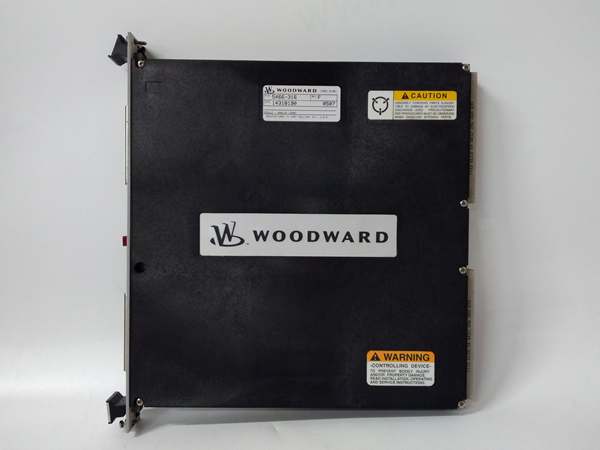
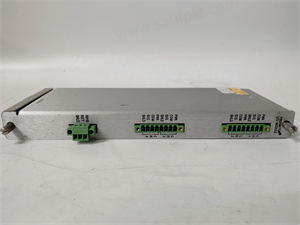
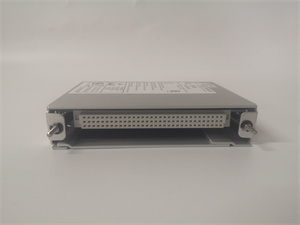
WOODWARD 5466-031
The Real-World Problem It Solves
In modern power generation, marine propulsion, or large-scale process automation, control systems are often sprawling networks of sensors, actuators, and auxiliary machinery spread across vast physical distances. Running thousands of individual wires back to a central CPU rack is a wiring nightmare, expensive, and highly susceptible to electrical noise and signal degradation.
The Woodward 5466-031 is engineered specifically to solve the headache of large-scale, distributed control. Acting as a powerful network communication hub, it allows engineers to build a highly scalable LINKNet architecture. By supporting up to 4 independent network trunks, a single 5466-031 can orchestrate the data flow of up to 240 remote I/O modules. It seamlessly converts and routes data between different industrial protocols (like Modbus RTU and Ethernet/IP), eliminating the need for expensive third-party protocol gateways and drastically reducing cabinet footprint and field wiring costs.
Where you’ll typically find it:
- In power plant auxiliary control panels, managing remote I/O for boiler feedwater pumps, cooling fans, and station blackout batteries.
- As the master communication controller in marine engine rooms, linking various sensors and actuators for monitoring propulsion engines and generators.
- In petrochemical plants, serving as a robust Ethernet/IP to CAN gateway for distributed valve control and tank level monitoring.
Hardware Architecture & Under-the-Hood Logic
Unlike a simple bridge or switch that blindly passes packets, the 5466-031 is an intelligent protocol router designed for deterministic industrial control.
- Multi-Trunk Architecture: The module features 4 independent network trunks. This allows for network segmentation, meaning a cabling fault or electrical storm taking down Trunk A won’t impact the communication on Trunks B, C, or D.
- Protocol Translation Engine: At its core, the 5466-031 features a dedicated communication co-processor capable of simultaneously managing CAN, Modbus RTU, and Ethernet/IP traffic. It essentially acts as a universal translator, allowing a MicroNet TMR system to seamlessly gather data from third-party variable frequency drives (VFDs) or remote I/O blocks without taxing the main CPU.
- Deterministic Data Routing: The module employs store-and-forward logic with priority queuing. Critical shutdown or trip commands are given hardware-level priority, ensuring they are transmitted across the network and acted upon in milliseconds, even during periods of heavy network traffic.
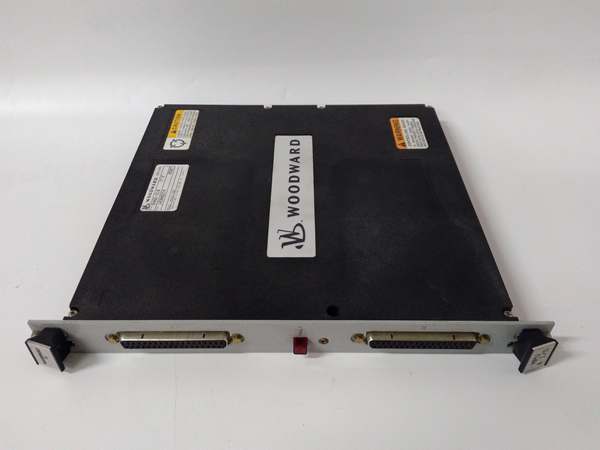
WOODWARD 5466-031
Field Service Pitfalls: What Rookies Get Wrong
The “Broadcast Storm” Shutdown
Rookies often plug a laptop or another Ethernet device into the plant’s main control network to upload a new configuration, forgetting that the 5466-031 is connected to the same network segment. If the laptop has file sharing or automatic backup services running, it can flood the network with broadcast packets. The 5466-031, while robust, has a finite processing buffer. A broadcast storm can overwhelm the module, causing it to drop critical Modbus packets, which the main CPU interprets as a catastrophic network failure, triggering a turbine or process trip.
- Field Rule: Always configure strict IT/OT network segregation. Use managed Ethernet switches with VLAN tagging and broadcast rate limiting. Never connect an unsecured, internet-connected laptop directly to the control network containing a 5466-031 without going through a firewall or isolated jump server.
Mismatching Baud Rates and Termination Resistors
When setting up the CAN or Modbus RTU trunks, rookiеs often daisy-chain multiple I/O modules without checking the dip-switch settings on the 5466-031 or the remote I/O blocks. If the master (5466-031) is set to 250 kbps but the downstream I/O modules are factory-set to 500 kbps, communication will fail. Furthermore, forgetting to enable the 120-ohm termination resistor on the last device in the chain causes severe signal reflection, leading to intermittent “phantom” communication drops every time a large motor starts nearby.
- Quick Fix: Before powering up a new LINKNet trunk, physically inspect the DIP switch positions on the 5466-031 and the first/last I/O modules in the chain. Use an oscilloscope to check the square wave integrity of the CAN/RS-485 signal at the furthest point of the trunk. If the signal looks rounded or has “ghosting,” check your termination resistors.
Ignoring the “Module Healthy” Watchdog in the PLC
The 5466-031 does a fantastic job of reporting its own health via its front-panel LEDs. However, rookiеs often neglect to map the module’s “Health/Status” bit into the main MicroNet CPU’s logic. If the 5466-031 loses power or experiences an internal software crash, the remote I/O it manages will freeze in their last known state. The turbine or compressor might continue operating blindly without critical sensor feedback, leading to a dangerous runaway condition.
- Field Rule: Always program a “Heartbeat Monitor” or “Watchdog Timer” in the main CPU logic. If the 5466-031 fails to toggle a specific status bit within the expected scan time (e.g., 100ms), the main CPU should execute a controlled, safe shutdown of the affected auxiliary systems.
Commercial Availability & Pricing Note
Please note: The listed price is for reference only and is not binding. Final pricing and terms are subject to negotiation based on current market conditions and availability.