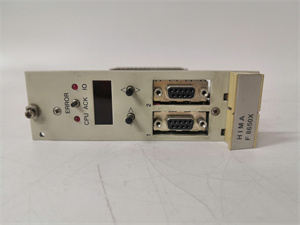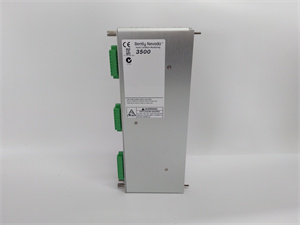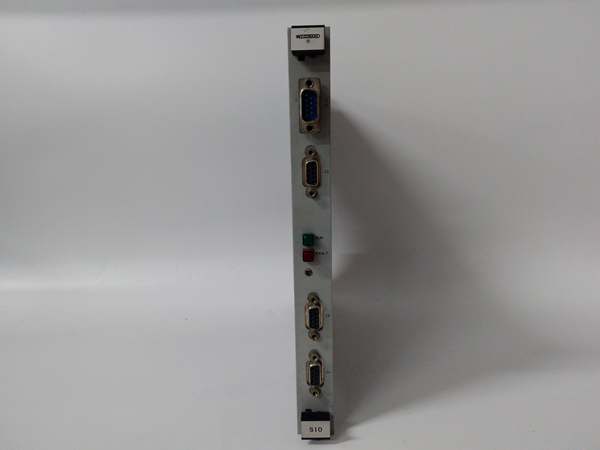
Description
Hard Numbers: Estimated Technical Specifications (Based on 5458 Series)
(Note: Specific parameters should be verified against the official Woodward datasheet for the -127 sub-variant.)
- Architecture: Triple Modular Redundant (TMR) or High-Density Simplex I/O
- Analog Inputs (Typical): 16 to 24 channels (4-20mA / 0-10VDC configurable)
- Analog Outputs (Typical): 8 to 12 channels (4-20mA isolated)
- Digital I/O (Typical): 16 to 32 channels (24VDC, sourcing/sinking)
- Resolution: 16-bit A/D and D/A conversion
- Accuracy: ±0.1% of full scale
- Scan Rate: 10ms to 50ms per channel (deterministic)
- Isolation: 1500 VAC channel-to-backplane and channel-to-channel
- Power Supply: 18-32 VDC (via MicroNet backplane)
- Operating Temperature: -40°C to +70°C (-40°F to +158°F)
- Communication: MicroNet TMR redundant backplane bus
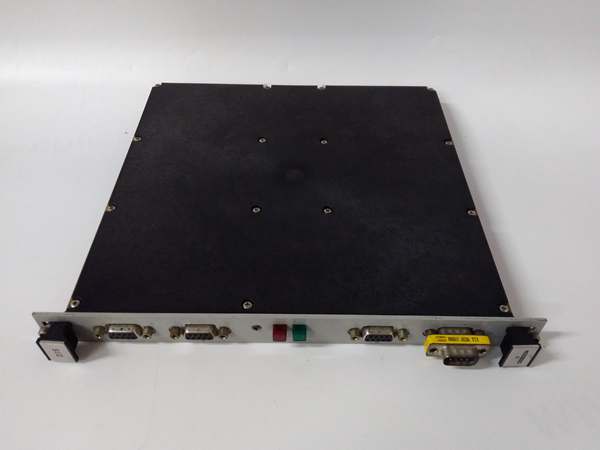
WOODWARD 5501-471
The Real-World Problem It Solves
In a mission-critical power generation or oil & gas compression facility, a single faulty sensor or frayed wire can trigger a catastrophic false trip, costing millions in downtime. The Woodward 5458 series is engineered specifically to eliminate this vulnerability.
By employing TMR architecture, the 5458-127 takes three independent readings for every critical process variable (e.g., turbine exhaust temperature, fuel valve position, or emergency shutdown status). It then uses hardware-based 2oo3 voting logic to instantly identify and discard erroneous or drifting signals. This ensures that the control system always acts on clean, validated data, allowing the plant to tolerate single-point sensor failures without shutting down.
Where you’ll typically find it:
- In the I/O racks of Frame 7EA/9E gas turbine control panels, processing critical temperature and pressure transmitters.
- Managing the analog feedback loops for steam turbine control valves (servo positioning).
- Handling emergency shutdown (ESD) discrete signals in offshore platform compressor stations.
Hardware Architecture & Under-the-Hood Logic
Unlike standard PLC I/O cards that merely pass data to the CPU, the 5458-series modules feature localized intelligence and signal conditioning.
- Localized Signal Processing: Each channel features dedicated sigma-delta ADCs (Analog-to-Digital Converters) or high-speed opto-isolators for digital signals. This offloads the heavy lifting from the main CPU, guaranteeing deterministic scan times regardless of system load.
- Hardware 2oo3 Voting: For TMR configurations, the module evaluates the three incoming signals against predefined tolerance bands. If Channel A reads 50.1%, Channel B reads 50.2%, and Channel C reads 12.5% (a failed sensor), the module automatically votes out Channel C and presents the averaged A/B value to the CPU.
- Advanced Diagnostics: The module continuously performs open-circuit detection (for 4-20mA loops), short-circuit protection, and watchdog timing. Any anomaly is instantly flagged to the CPU via the backplane, long before it can impact the physical process.
Field Service Pitfalls: What Rookies Get Wrong
Assuming All “5458” Modules Are Interchangeable
Rookies often see a spare 5458-050 or 5458-051 on the shelf and assume it’s a direct drop-in replacement for a failed 5458-127. While they share the same form factor and backplane connector, the internal channel configurations (e.g., current vs. voltage, sourcing vs. sinking) can differ drastically.
- Field Rule: Never swap a failed I/O module with a different sub-variant unless you have verified the exact wiring schematic and GAP (Graphical Application Programmer) configuration. Mismatched I/O types can lead to blown fuses on the module or, worse, a short circuit that takes down the entire 24VDC distribution panel.
Neglecting Loop Calibration After a Hot-Swap
Woodward 5458 modules are factory-calibrated with high-precision resistors and store their calibration coefficients in non-volatile memory. However, rookiеs often assume that because the module is “digital,” it requires no calibration after replacement. While the module is accurate, the entire loop(including field transmitters and actuator springs) may drift over time.
- Quick Fix: After hot-swapping a 5458-series module, always perform a “forced calibration” or “trim” routine from the main CPU (using Woodward Toolkit or GAP). Compare the new module’s readings against a known calibrated source. If the new module reads 0.5% differently than the old one, adjust the software scaling factors to ensure a bumpless transfer.
Creating Ground Loops with Improper Shielding
In TMR systems, signal integrity is everything. Rookies often connect the shield drain wire of a 4-20mA transmitter to the module’s ground terminal andthe sensor’s local ground at the turbine. This creates a ground loop. The 5458’s high-precision ADCs will pick up this stray AC noise, causing the turbine’s exhaust temperature spread to fluctuate wildly, which can artificially trigger a turbine trip.
- Field Rule: For any analog input connected to a 5458 module, ground the shield drain wire at the module end ONLY. Keep all 24VDC power supplies and signal commons meticulously isolated from earth ground unless specifically dictated by the panel’s single-point grounding scheme.
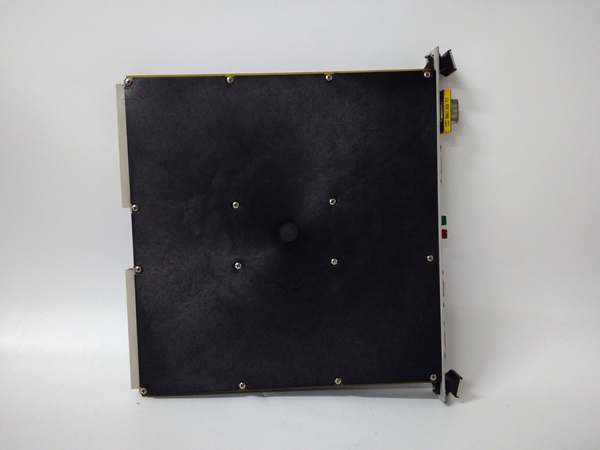
WOODWARD 5501-471
Commercial Availability & Pricing Note
Please note: The listed price is for reference only and is not binding. Final pricing and terms are subject to negotiation based on current market conditions and availability.